Welcome to Shiretoko, a World Heritage Site
Are you familiar with Shiretoko, a World Heritage Site? Located at the eastern tip of Hokkaido, it is a special place registered as a UNESCO World Natural Heritage Site and is also protected as a national park of Japan. It can also be said to be a place where people’s daily lives and fishing practices coexist in harmony with the natural environment, embodying UNESCO’s philosophy of “coexistence between humans and nature.”
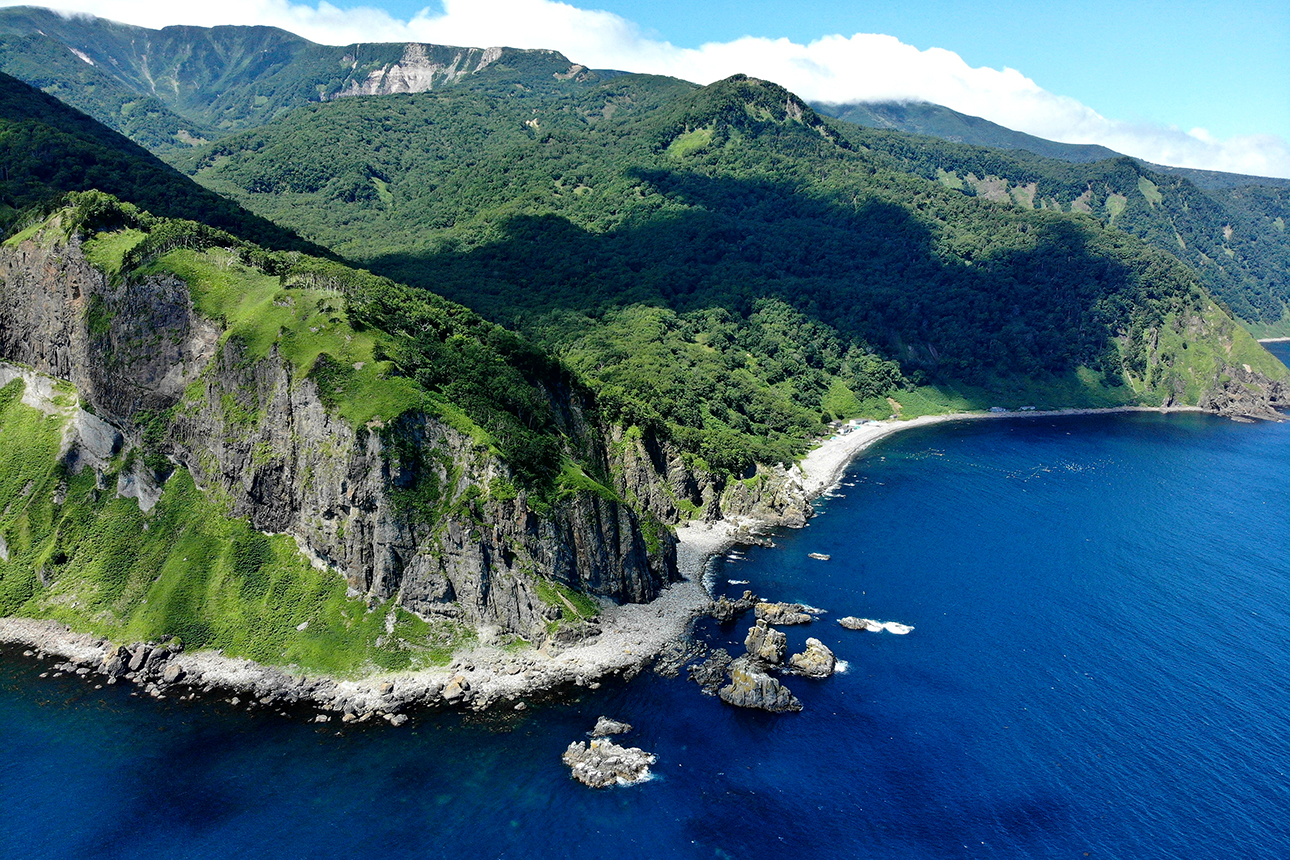
Visitors to Shiretoko can experience up close the way nature and people coexist, through its majestic mountains, forests, pristine rivers, and abundant seas. Especially in the waters off Rausu, encounters with ocean rulers like orcas and whales await you.
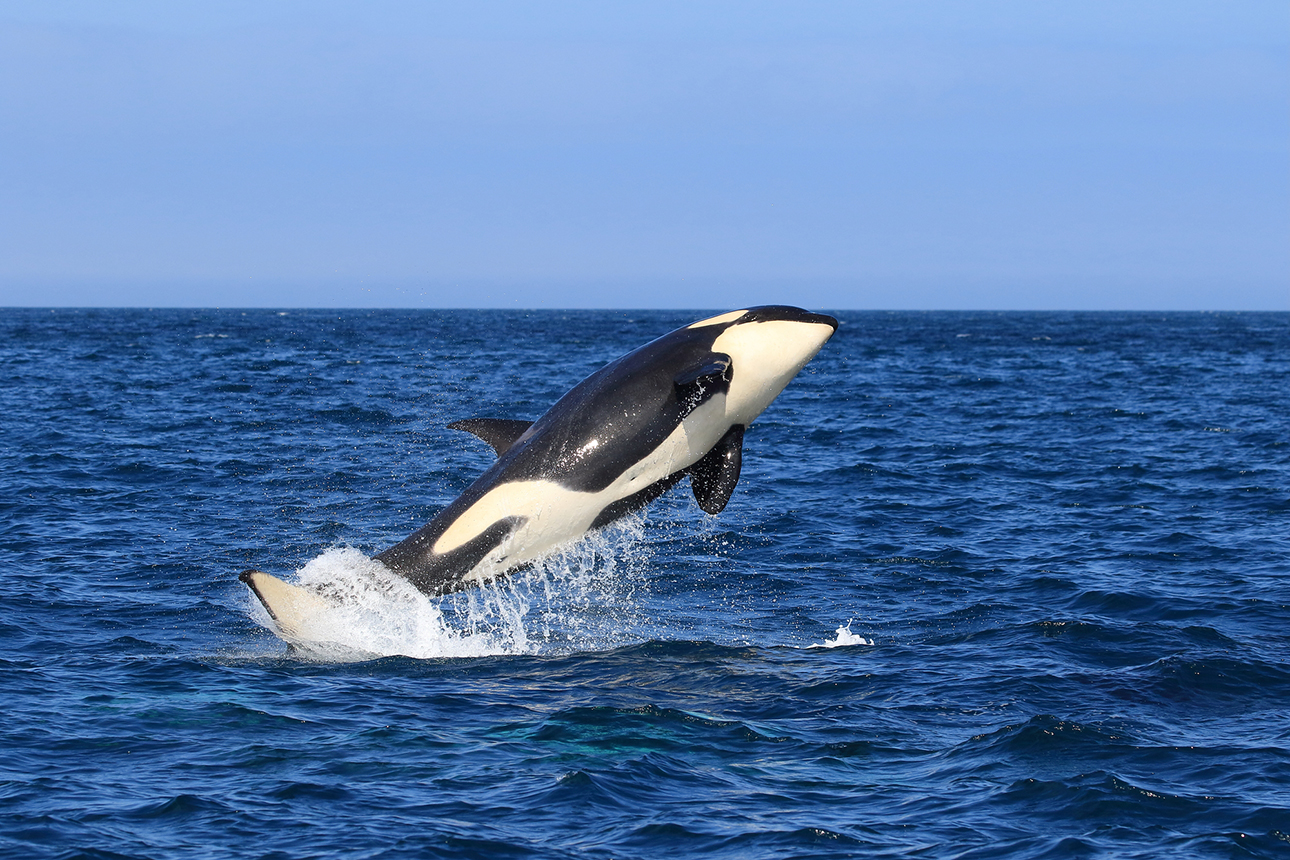
Visitors to Shiretoko can experience up close the way nature and people coexist, through its majestic mountains, forests, pristine rivers, and abundant seas. Especially in the waters off Rausu, encounters with ocean rulers like orcas and whales await you.
Through an experience that lets you feel the Earth as a whole, take the opportunity to reflect on what nature truly is, what coexistence really means, and what you yourself can do.
A journey to Shiretoko is not just sightseeing. It is a form of sustainable travel in which you take part as a “traveler who helps protect the future of our planet.”
Shiretoko as a World Heritage Site
World Heritage refers to buildings, ruins, landscapes, and natural features that possess “Outstanding Universal Value (OUV)”—something that anyone, regardless of country, region, era, faith, or values, can recognize as remarkable. In other words, it can be described as the “common heritage of humanity.” To be more specific, it refers to those sites that are inscribed on the “World Heritage List,” which was established based on the World Heritage Convention adopted by the UNESCO General Conference in 1972.
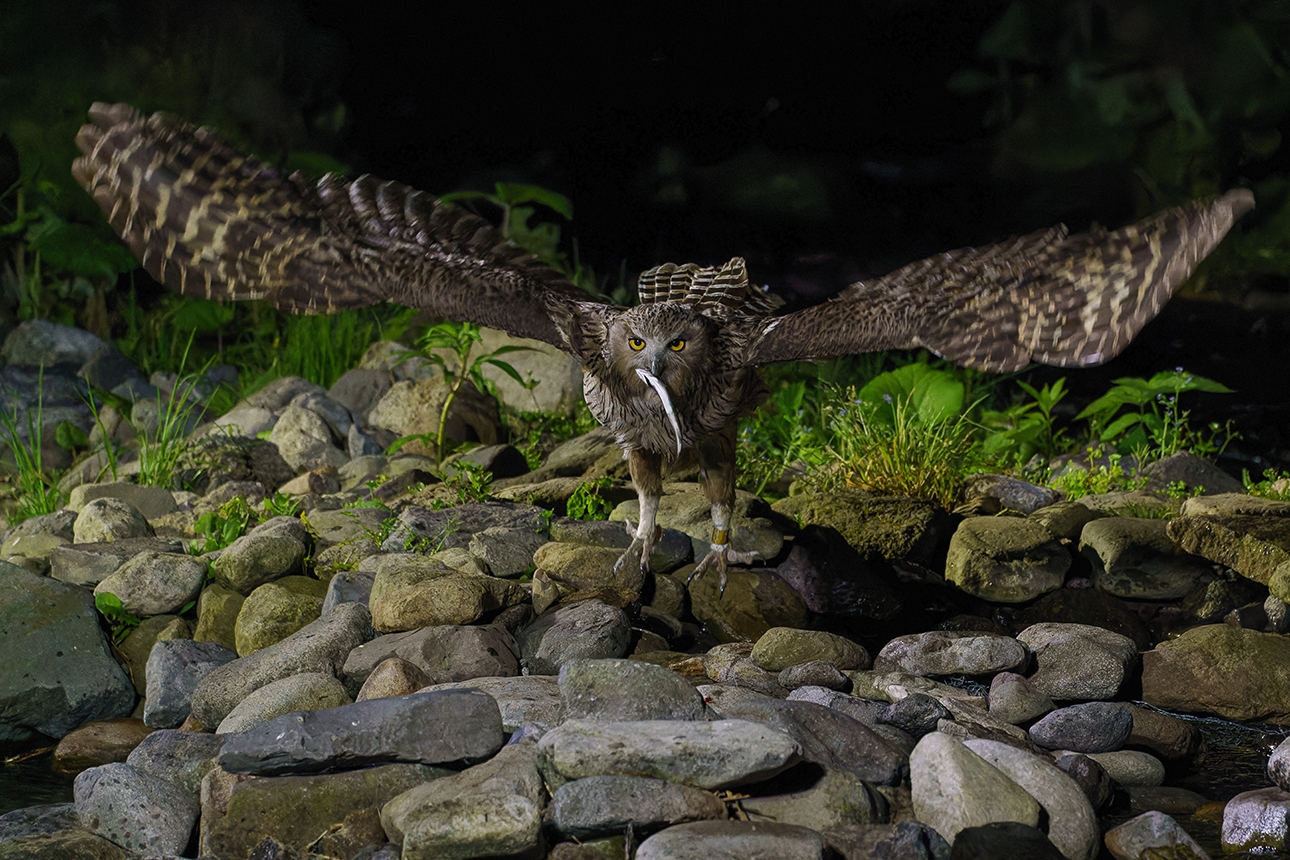
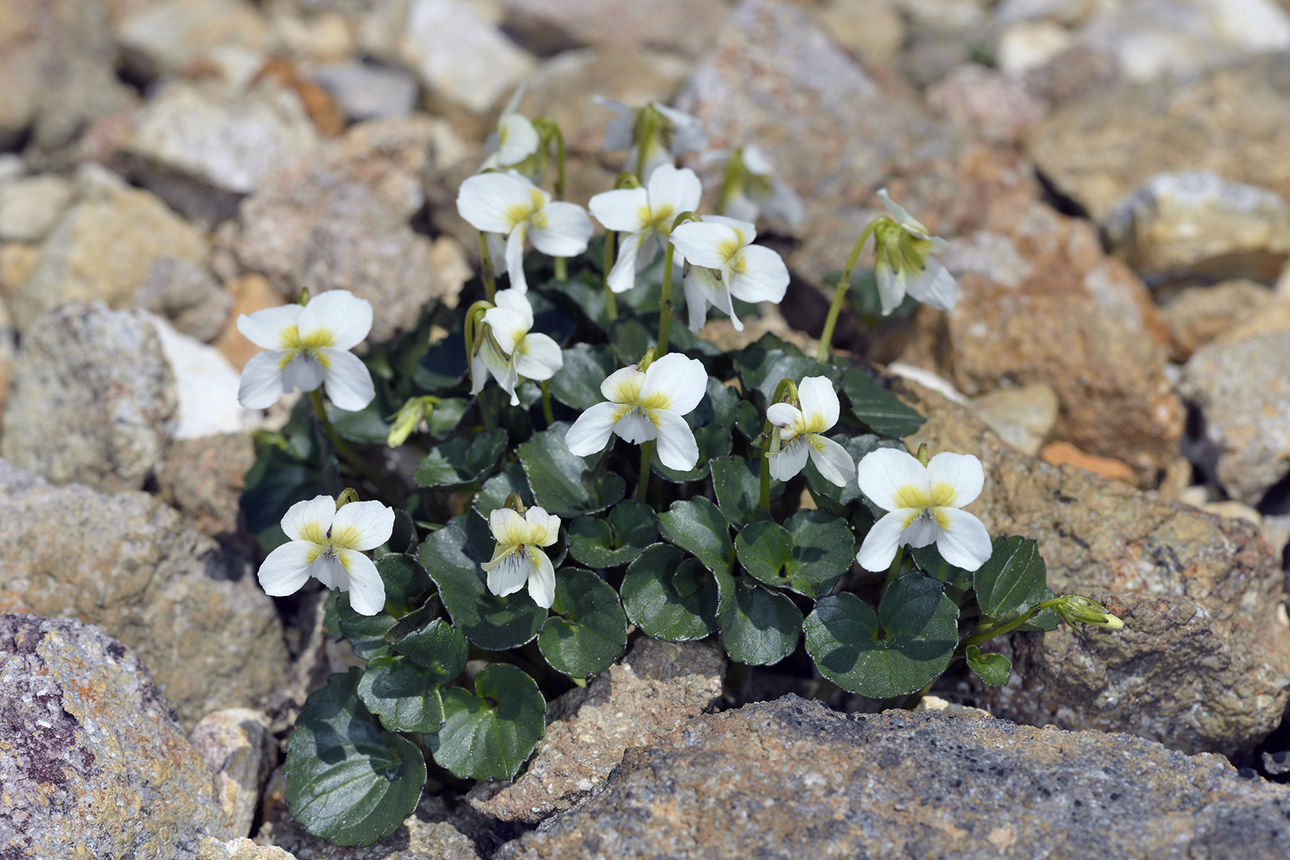
Shiretoko is classified as a “Natural World Heritage” site among World Heritage properties, and it was inscribed on the World Heritage List on July 17, 2005. It is the third such example in Japan. There are three key points that define Shiretoko as a World Heritage site.
1. It is home to endangered species such as the Blakiston’s fish owl and the Shiretoko violet.
2. It is an important habitat for rare wildlife, including salmon species, orcas, and whales.
3. It is characterized by the interrelationship between the rich marine ecosystem nurtured by drift ice and its highly pristine forests.
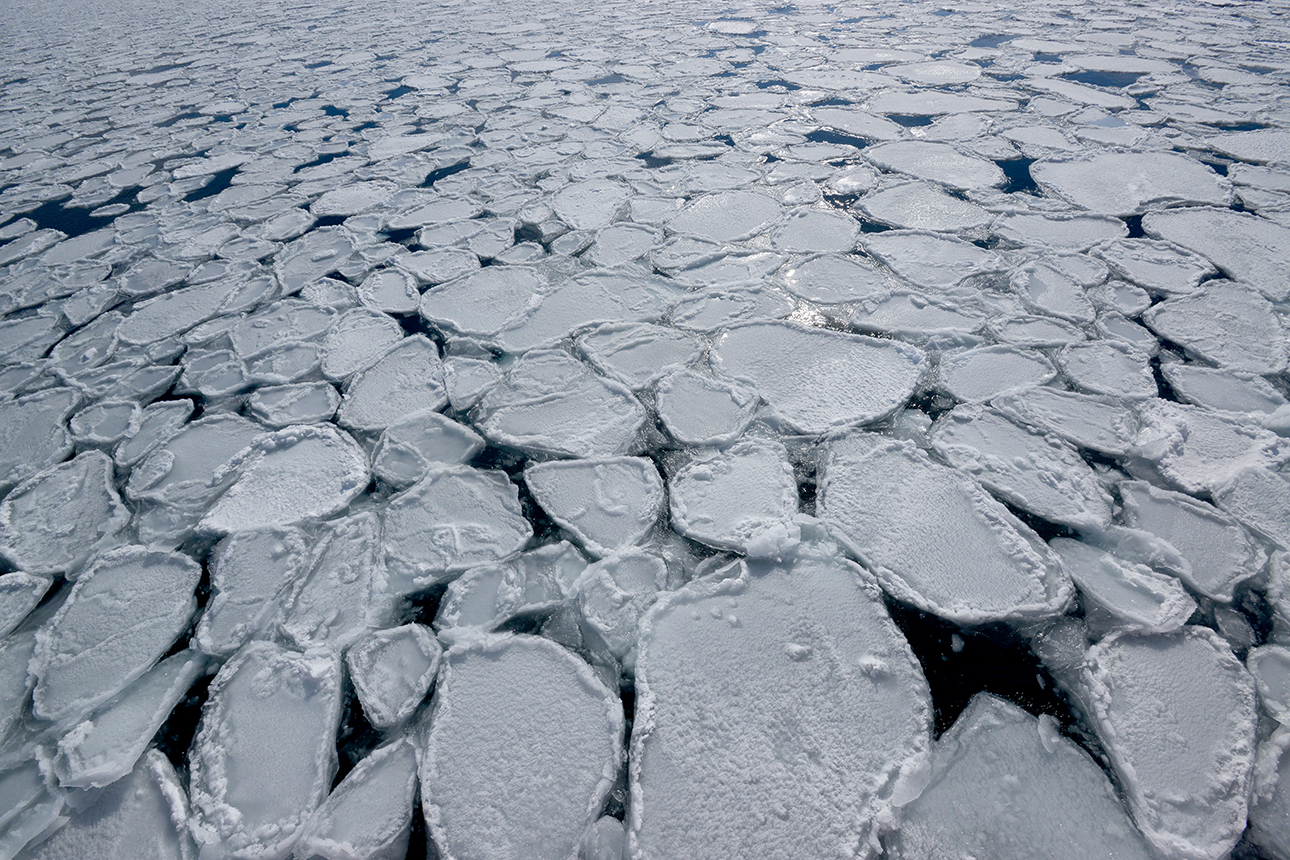
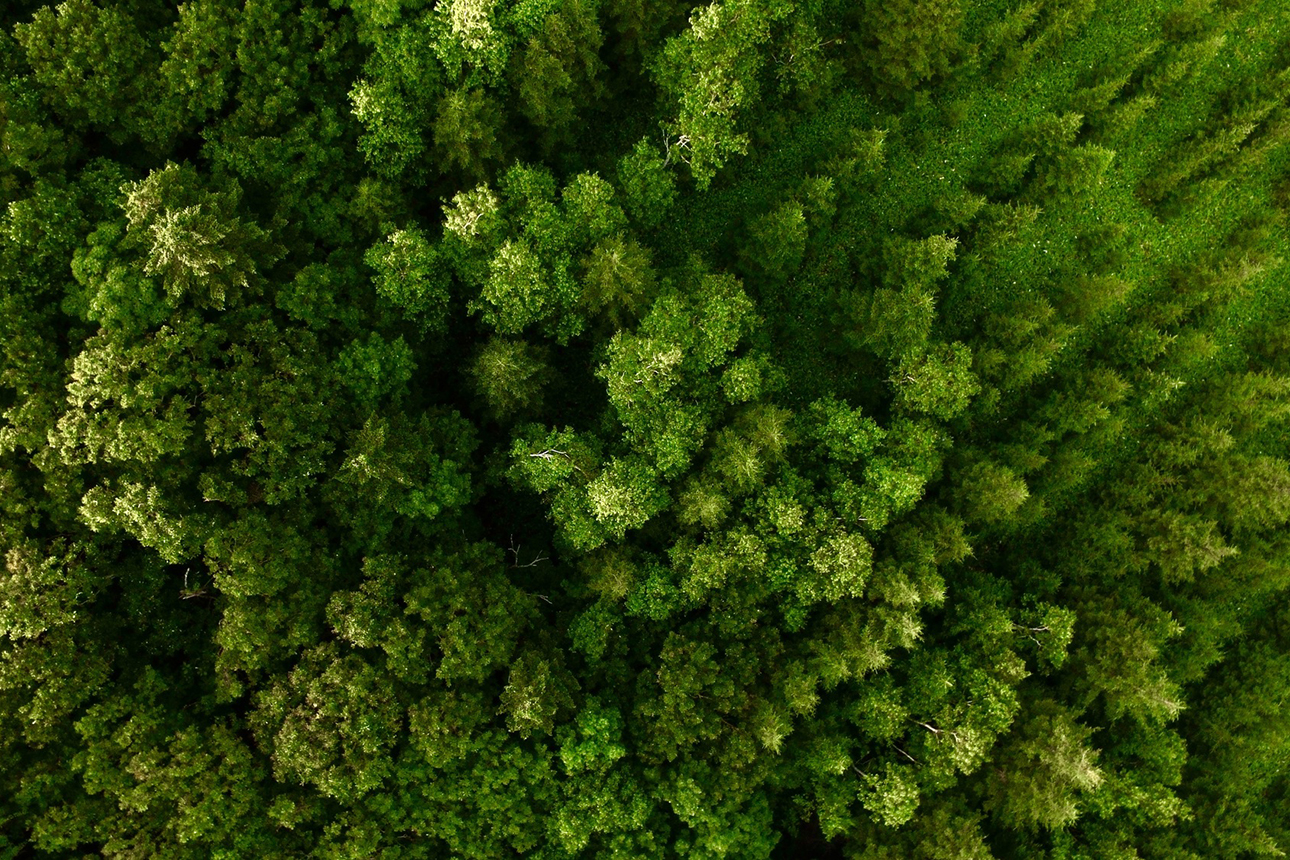
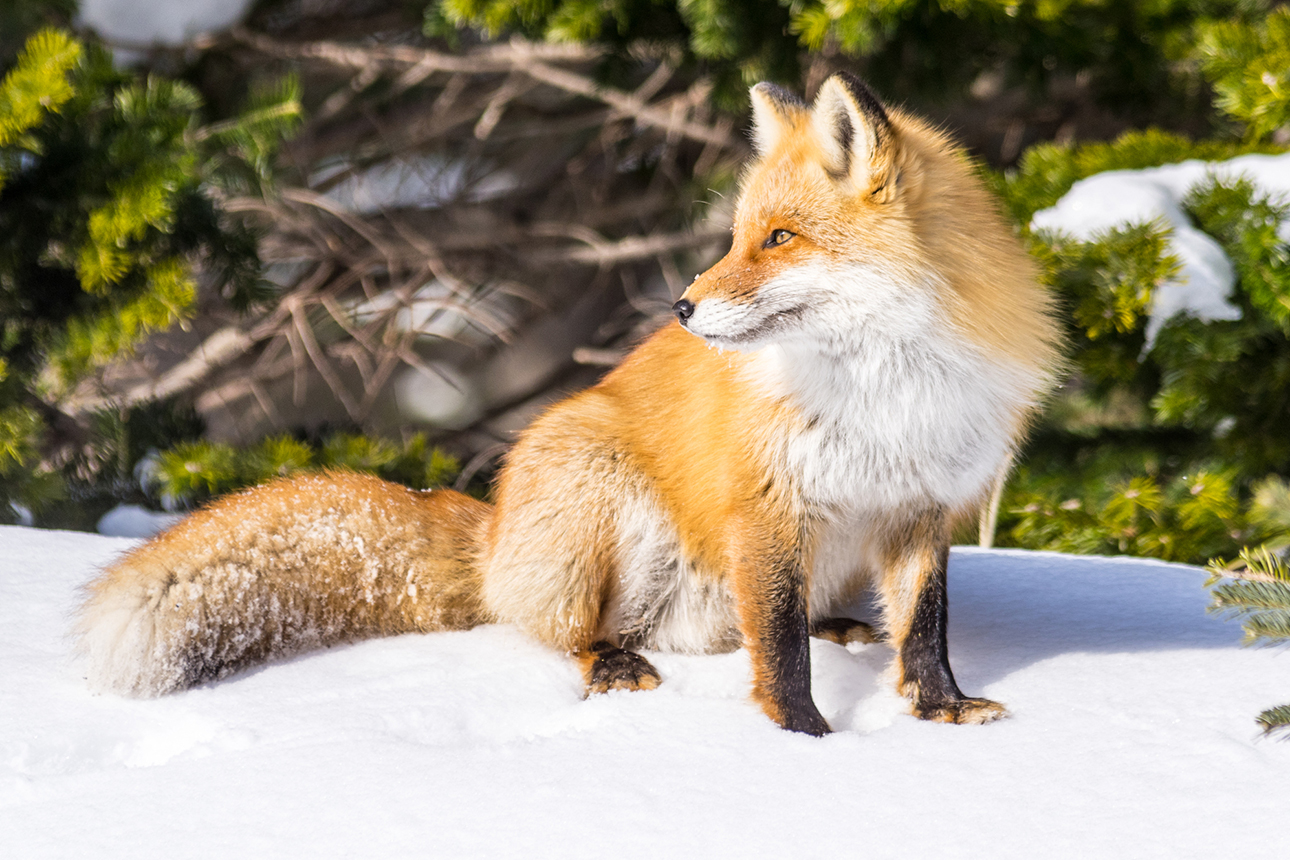
The Shiretoko Peninsula, where much untouched and pristine nature still remains, is home to a wide variety of wildlife, including brown bears, Ezo deer, Ezo red foxes, and Blakiston’s fish owls. Looking to the sea, rare marine life such as Steller sea lions, salmon, seals, orcas, and whales can also be found living there. In each of these environments, the way living creatures interact and influence one another makes it impossible not to feel the richness of life.
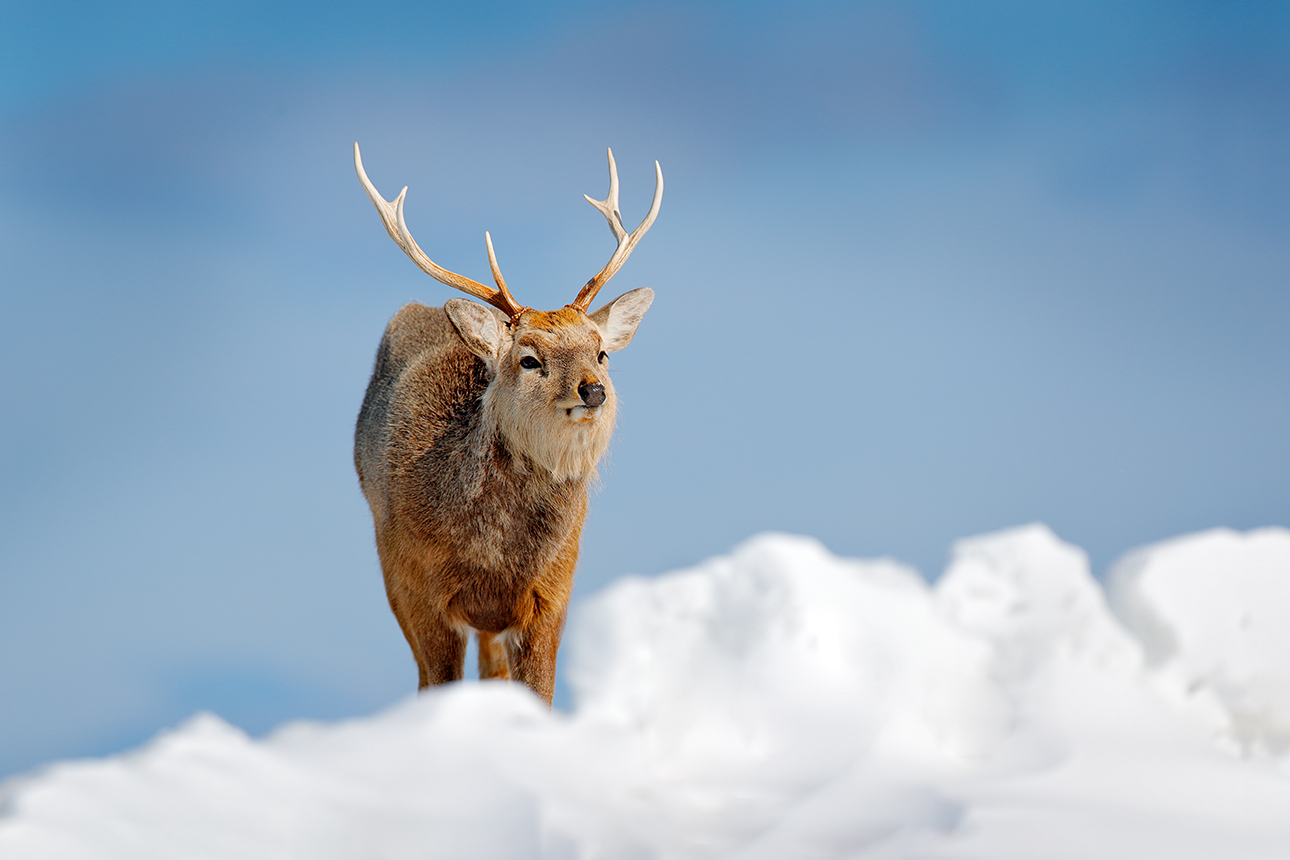
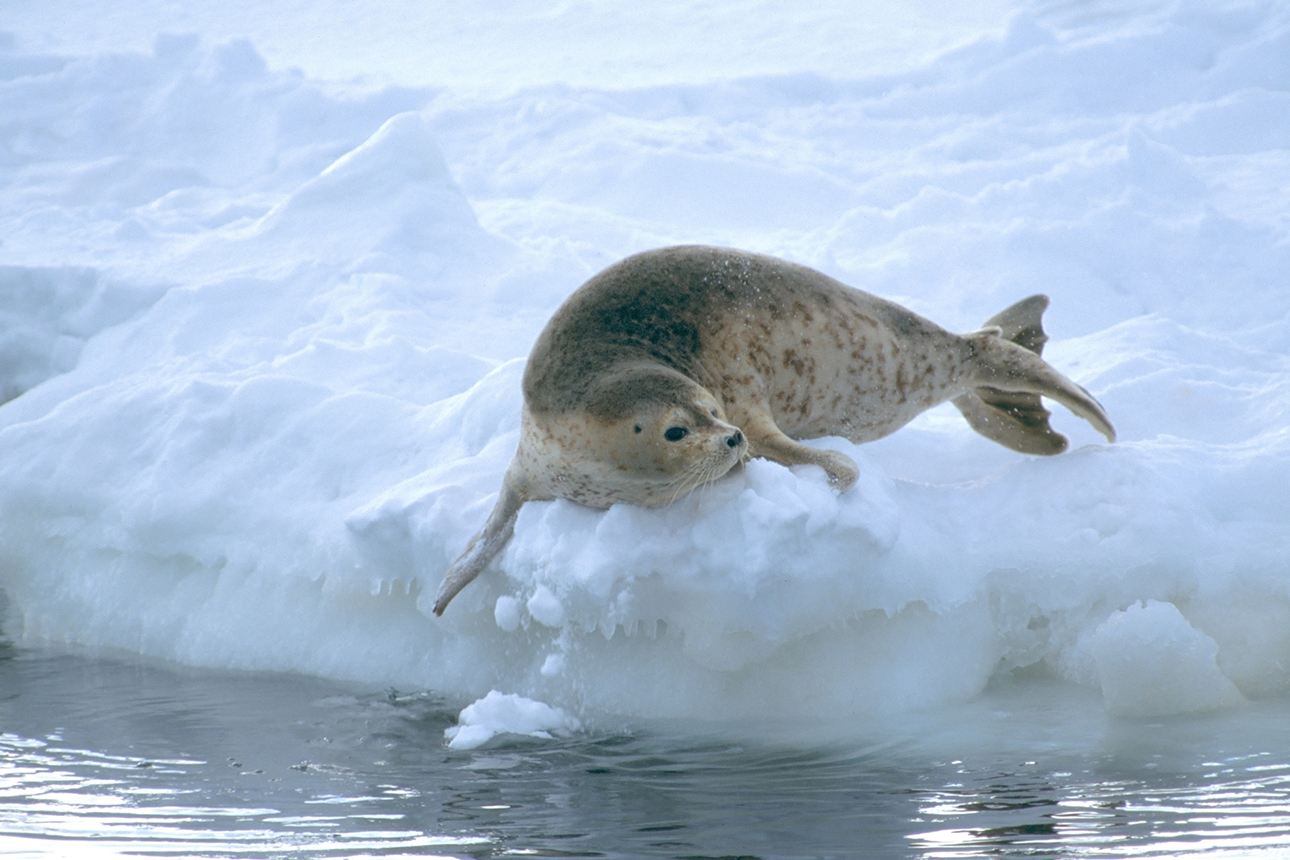
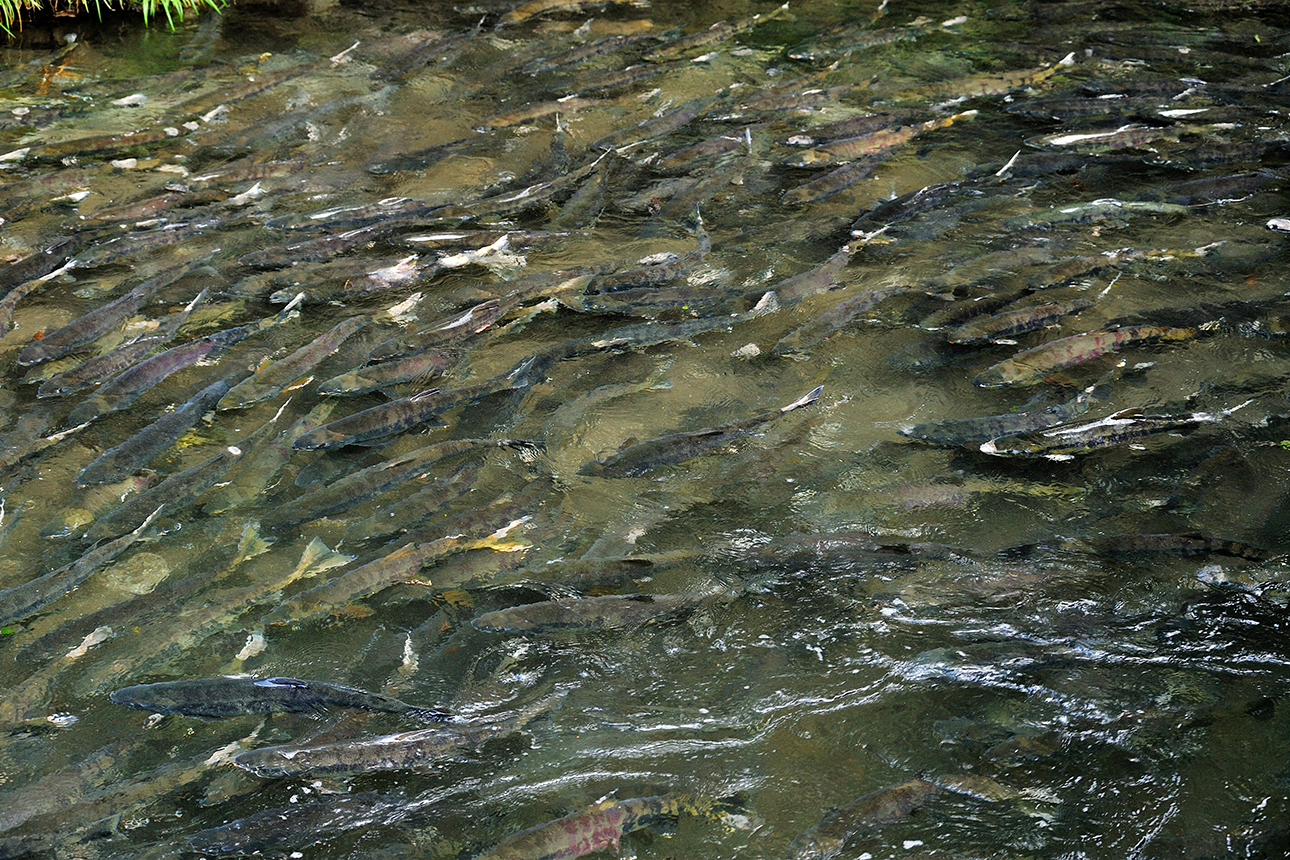
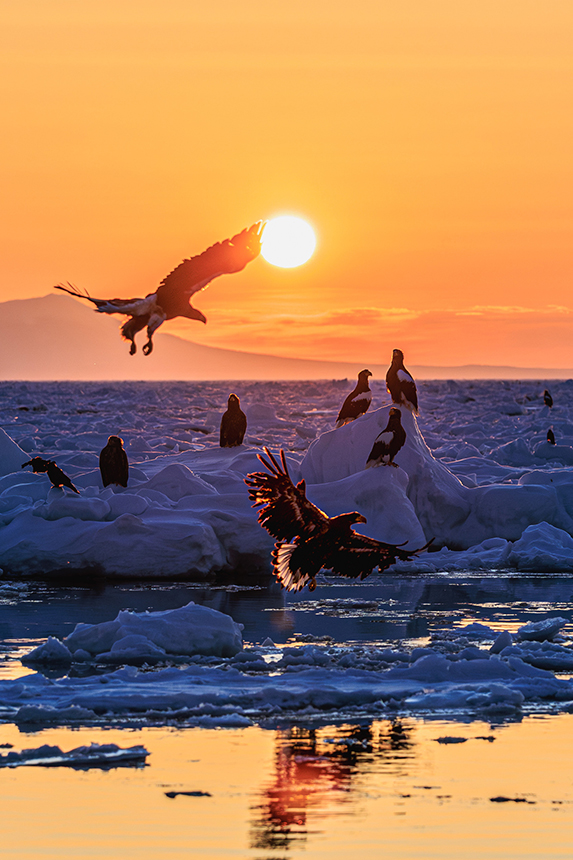
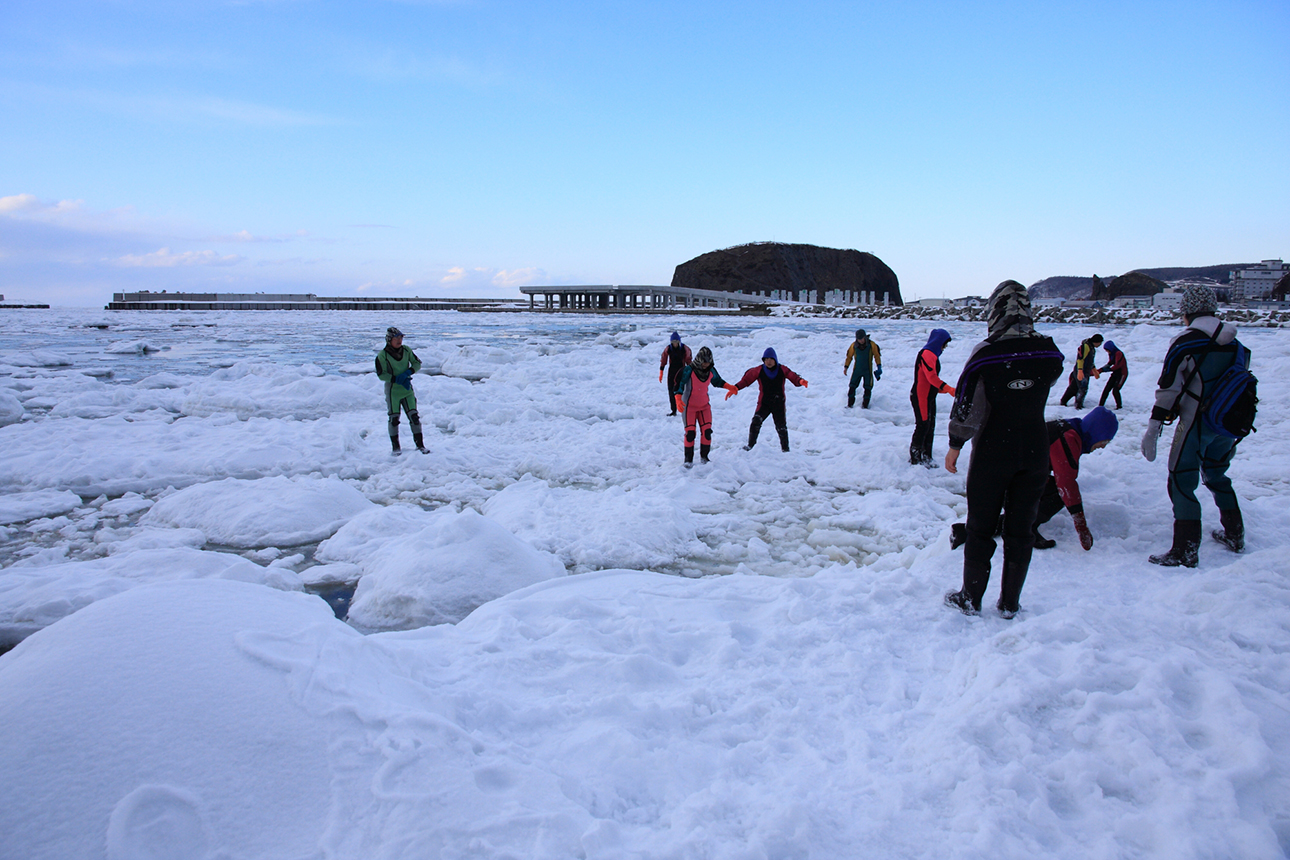
Another important feature of Shiretoko is the drift ice. As will be explained in more detail later, in winter the drift ice that covers the sea plays a vital role in creating Shiretoko’s rich natural environment.
At first glance, it may seem that life could not survive in a world sealed by snow and ice. However, drift ice actually plays an extremely important role in sustaining the richness of both the forests and the sea of Shiretoko. The continuous cycle of life that connects the forests and the sea, carried on unbroken from ancient times to the present, can truly be described as the “common heritage of humanity.”
Shiretoko as a Sustainable Tourism Destination
What exactly is sustainable tourism in the first place? According to the United Nations World Tourism Organization (UNWTO), it is defined as “tourism that takes full account of its current and future economic, social, cultural and environmental impacts, while addressing the needs of visitors, the industry, the environment and host communities.” It is defined as “(→ original text citation; see below).”
Overtourism has become a global issue today. In response to the strain on natural environments and the negative impacts on local residents, the need for sustainable tourism is increasing in many destinations around the world.
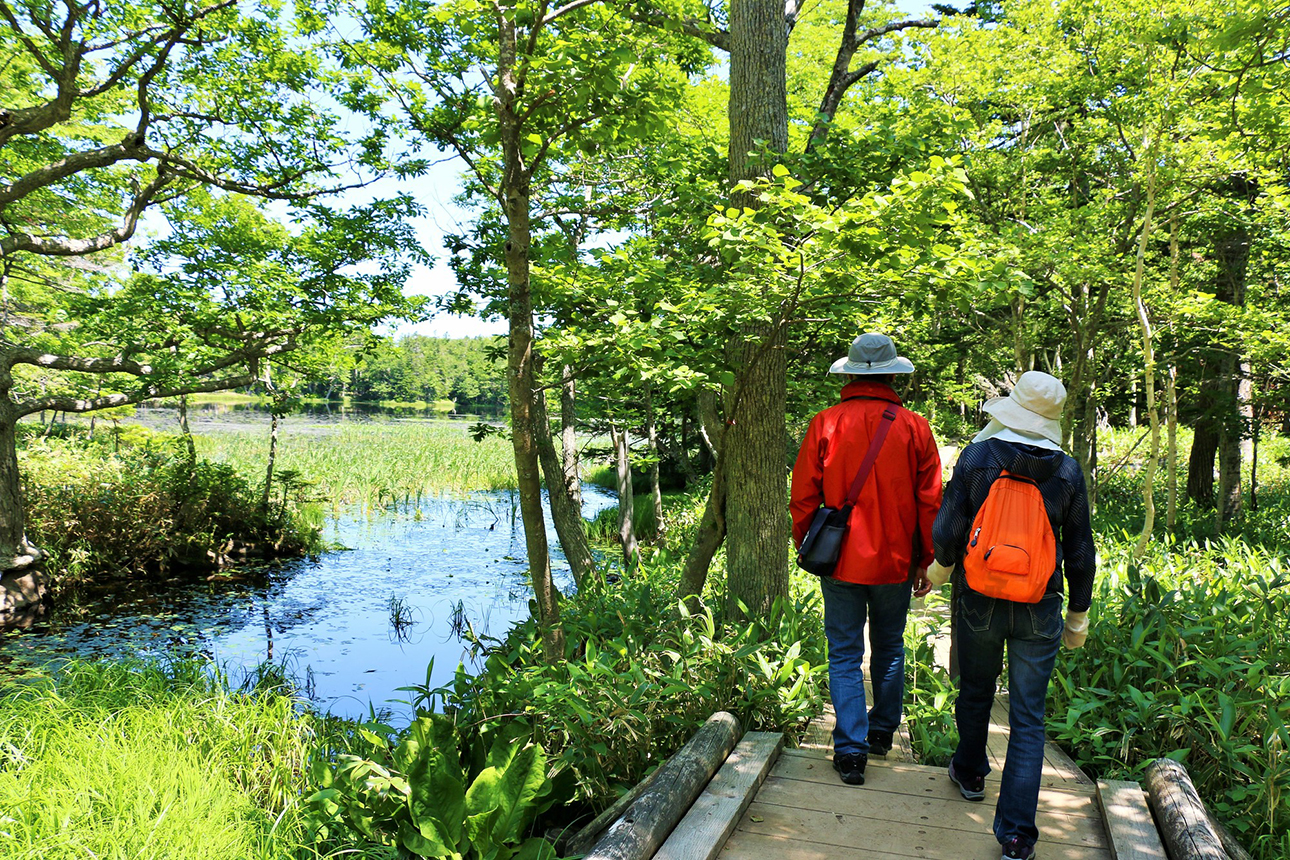
Shiretoko in Hokkaido is one of the regions in Japan that is actively promoting sustainable tourism, and it is particularly well known as a destination for adventure travel.
As a sustainable tourism destination, Shiretoko has implemented initiatives such as establishing the “Shiretoko Rules,” which visitors are asked to follow for the sake of local residents, the environment, and safety.
===Original text===
Sustainable tourism as “tourism that takes full account of its current and future economic, social and environmental impacts, addressing the needs of visitors, the industry, the environment and host communities”
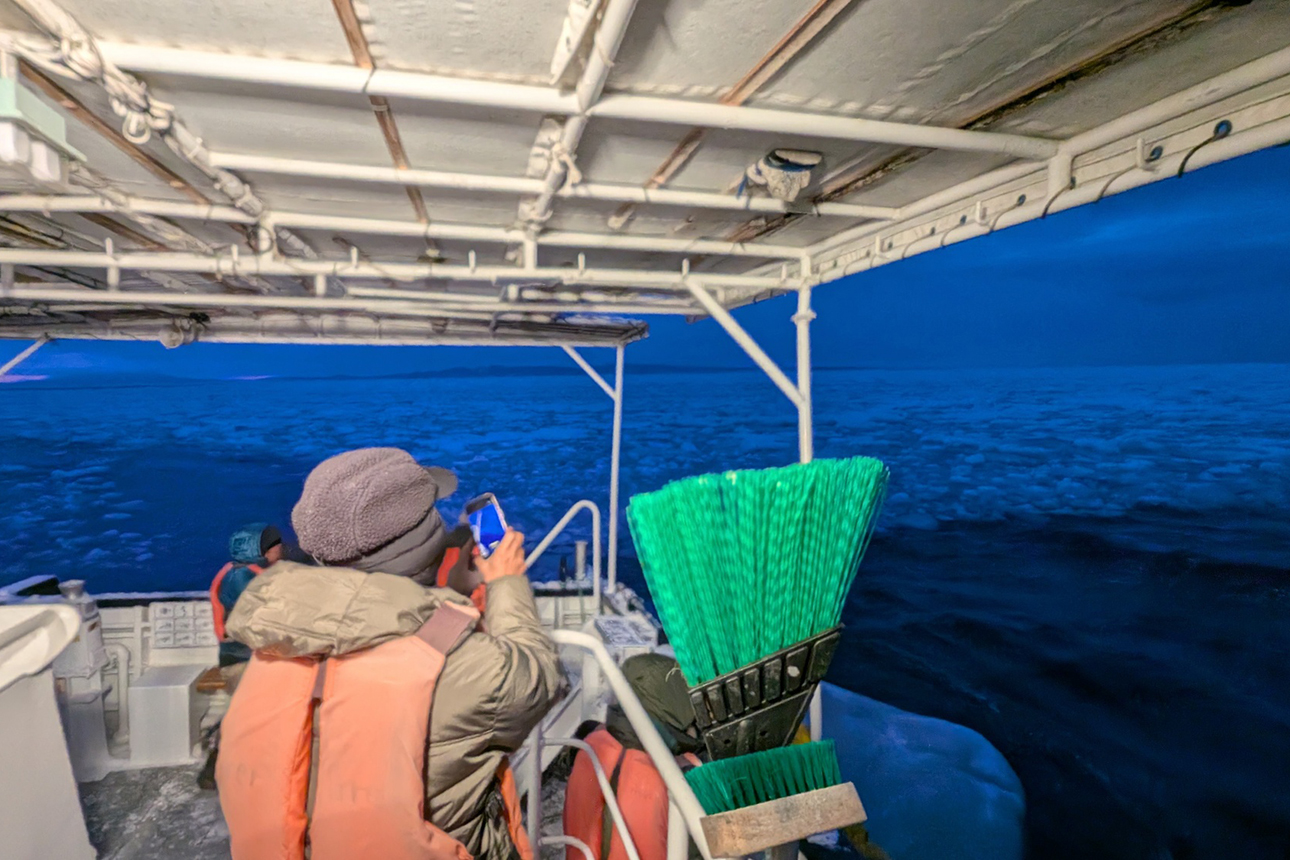
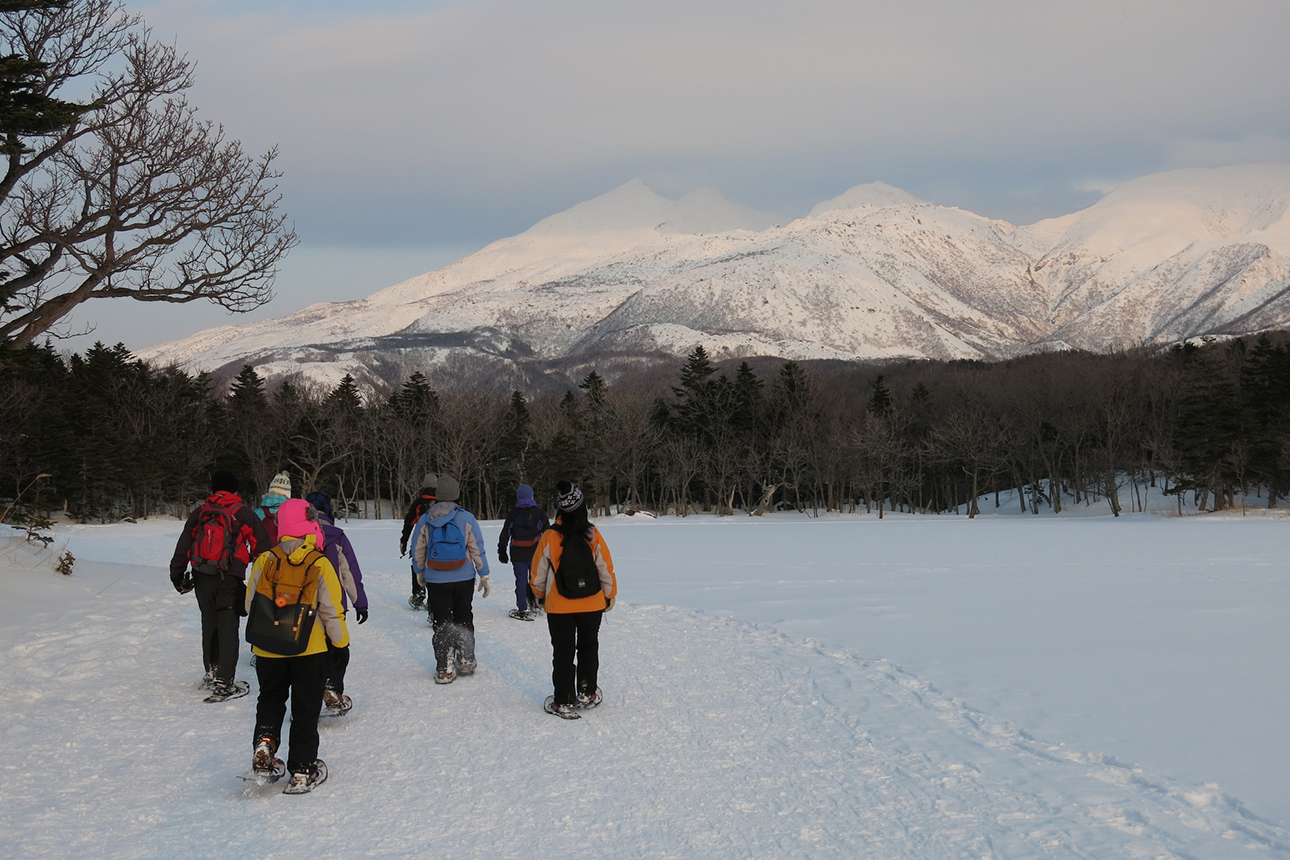
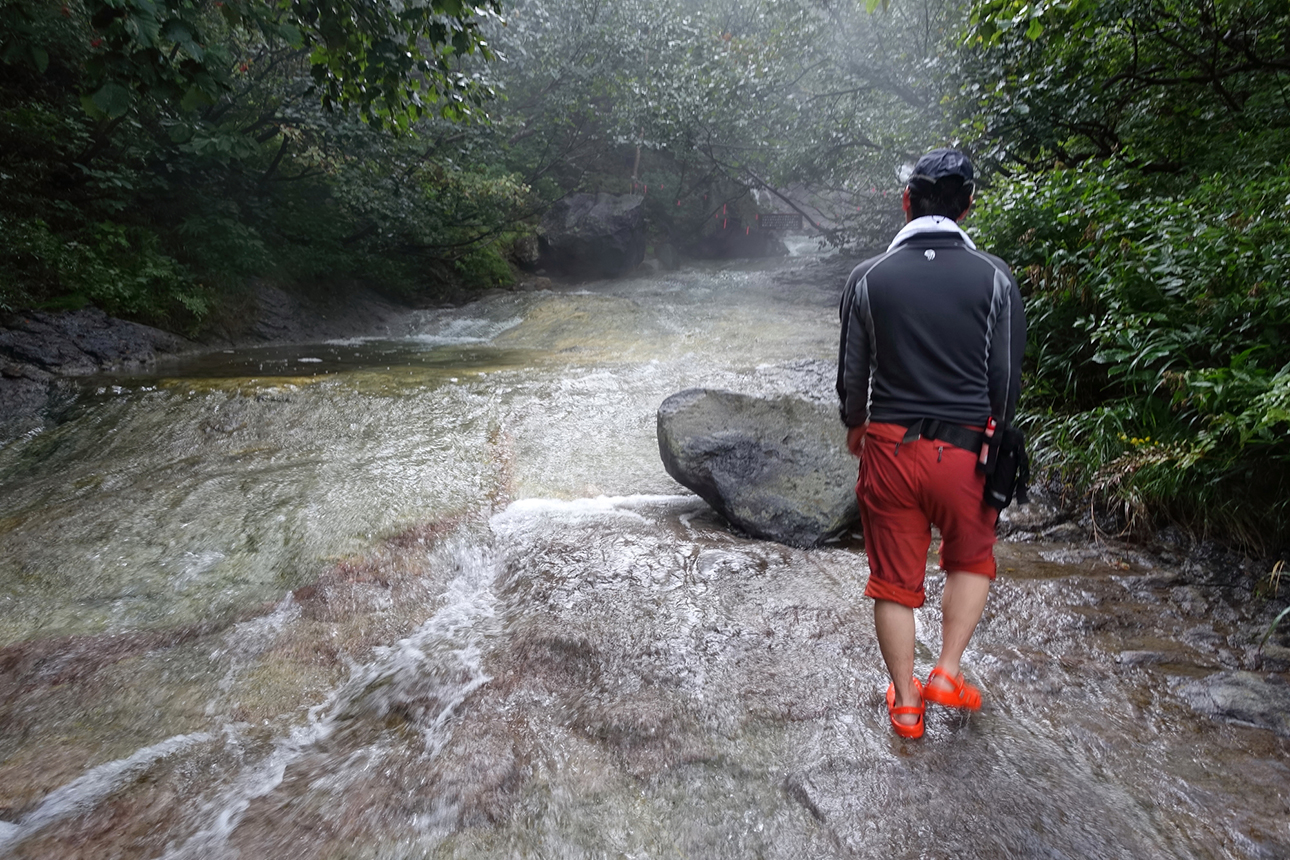
The ‘Cycle of Life’ in Shiretoko’s Natural Environment: Drift Ice
Shiretoko’s richness is created by a cycle in which the sea, rivers, and forests function as one interconnected system. This natural system is precisely why Shiretoko is attracting global attention as a “model of a sustainable ecosystem.” Here, we explore the blessings of drift ice that connect the sea, rivers, and forests, along with themes of Ainu culture and marine life.
“The Blessings of Drift Ice” that Nurture the Sea
The rich seas of Shiretoko and Rausu are fundamentally supported by the “drift ice” that arrives in winter. Drift ice is so vital to the seas of Shiretoko and Rausu that it is said that the years with abundant drift ice bring good catches, while the years with little drift ice result in poor catches.
Drift ice, to begin with, refers to large masses of ice formed when seawater freezes. During the harsh winter, it is carried by ocean currents from as far away as the Amur River in Russia, and by the time it reaches Japan, thick ice, sometimes several tens of centimeters thick, covers the Sea of Okhotsk.
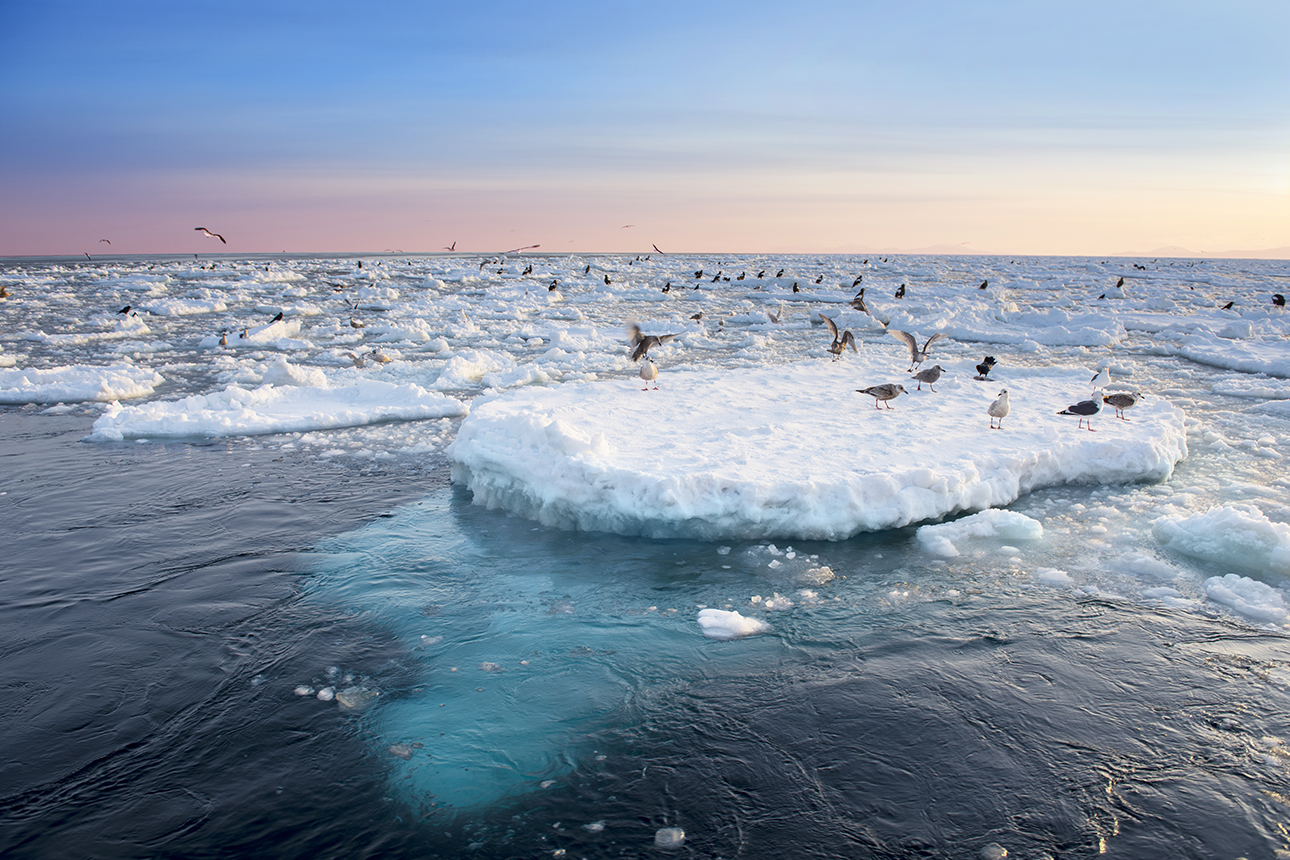
Recent studies have shown that drift ice contains abundant iron, which enables phytoplankton to grow by utilizing these nutrients. Phytoplankton form the beginning of the food chain and are essential organisms that support the entire marine ecosystem at its base.
Drift ice also plays a role in “plowing” the sea like a field. In fact, drift ice is not formed simply by seawater freezing as it is. During the freezing process, it expels the salt contained in the seawater, so what freezes is almost pure water. As a result, the saltier, denser water sinks to the ocean floor, while nutrient-rich upwelling currents rise from below.
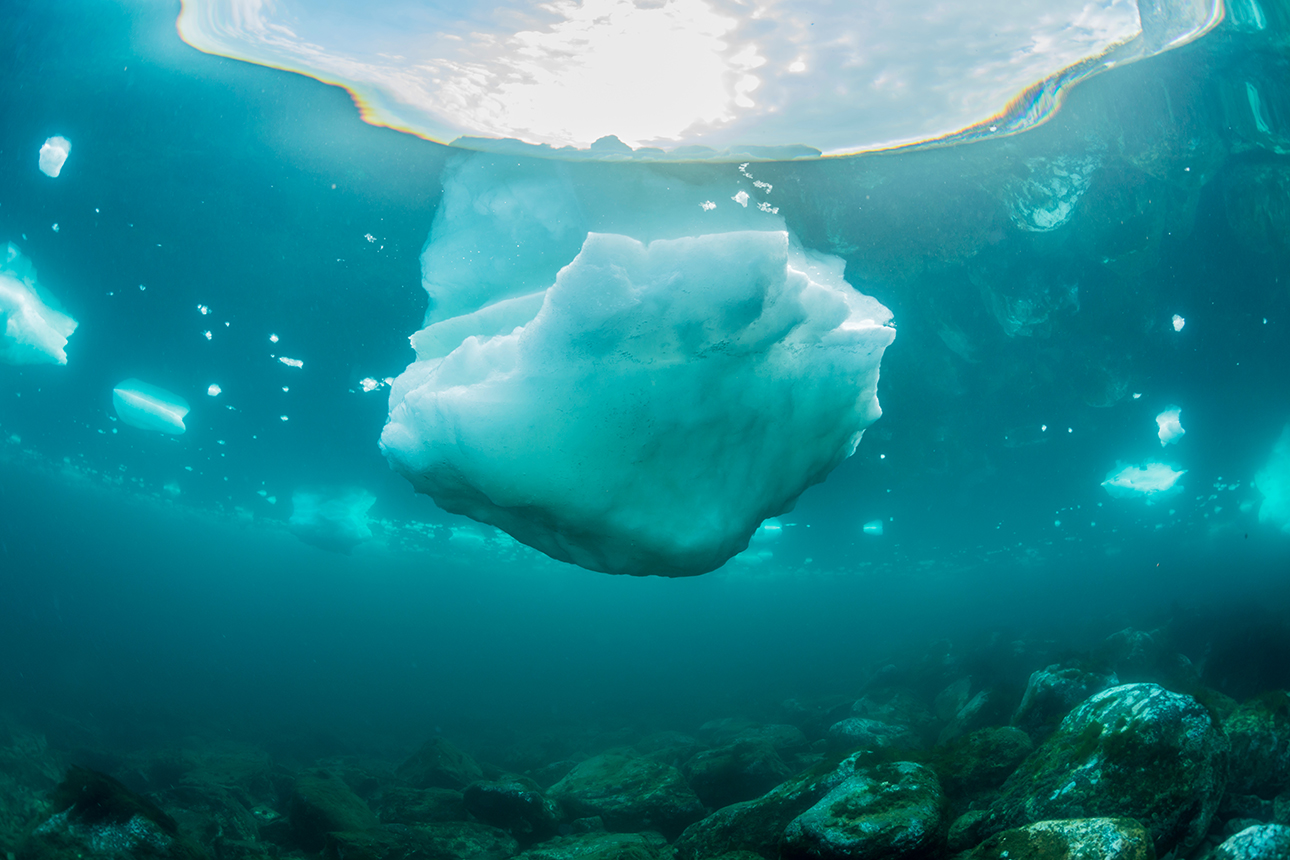
Rich nutrients increase phytoplankton, which in turn support krill and small fish. Salmon that grow by feeding on this abundant food eventually swim upstream, becoming a source of nourishment for forest animals such as brown bears and foxes. The waste and remains of these forest animals create nutrient-rich soil, some of which flows into the sea through rivers, where it becomes food for marine phytoplankton once again. And so, nutrients from the sea reach the forest, and the bounty nurtured in the forest returns once again to the sea. Drift ice is truly a gift of winter.
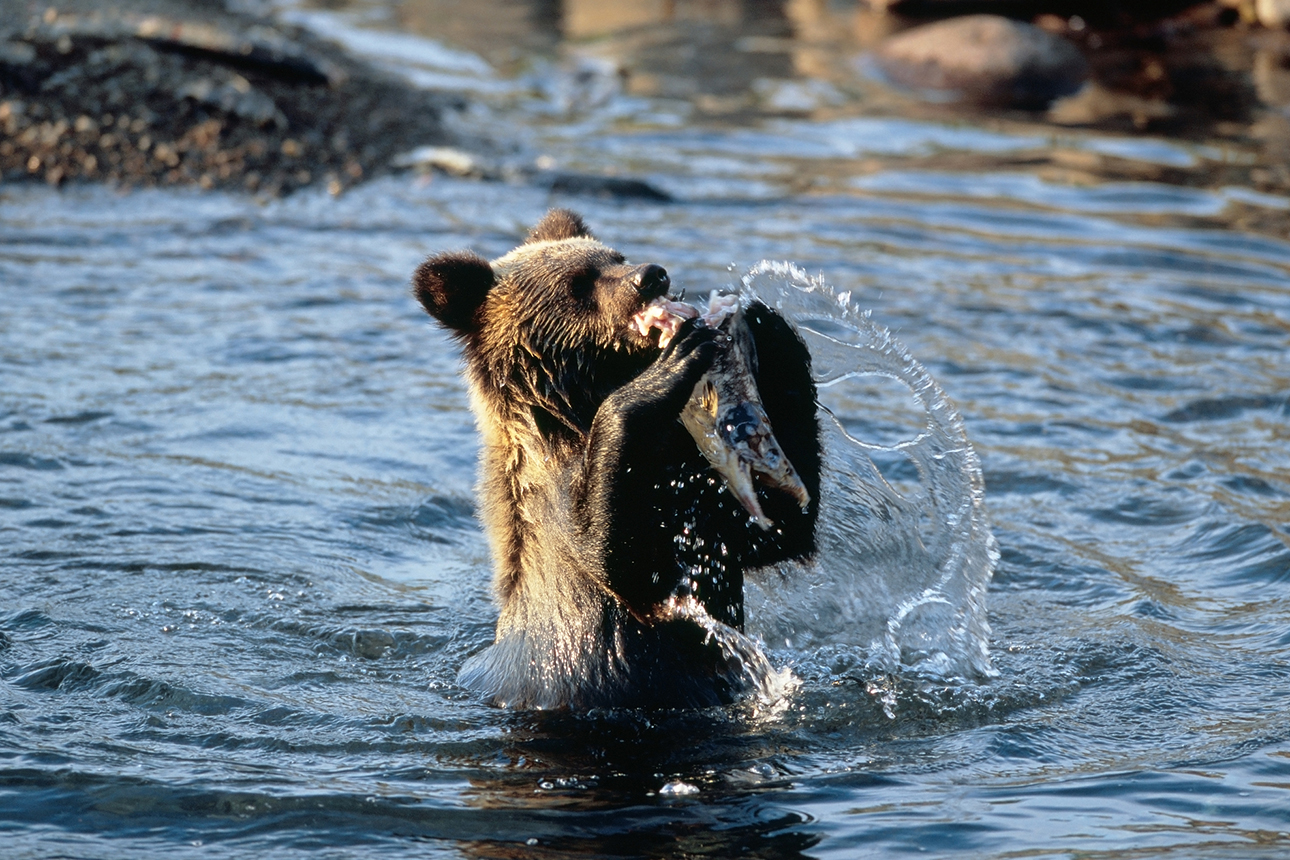
In Shiretoko, this “cycle of life” functions in perfect harmony, allowing visitors to experience a microcosm of the Earth where the sea and forests, and people and nature, are all interconnected.
For drift ice experiences in Shiretoko and Rausu, leave it to Hokkaido Treasure Island Travel Company. We offer tours tailored to your schedule and can introduce experienced professional guides, and propose the perfect plan to suit your needs.
The Ainu People, Orcas, and Whales
Here, we introduce the relationship between Hokkaido’s Indigenous people known as the Ainu, and nature.
In Ainu culture, there is a tradition of regarding wild animals as deities. Among them, the brown bear and the orca were especially revered as the god of the mountains and the god of the open sea, respectively. The orca, revered as the god of the open sea, was believed to present whales to the Ainu people as a source of food.
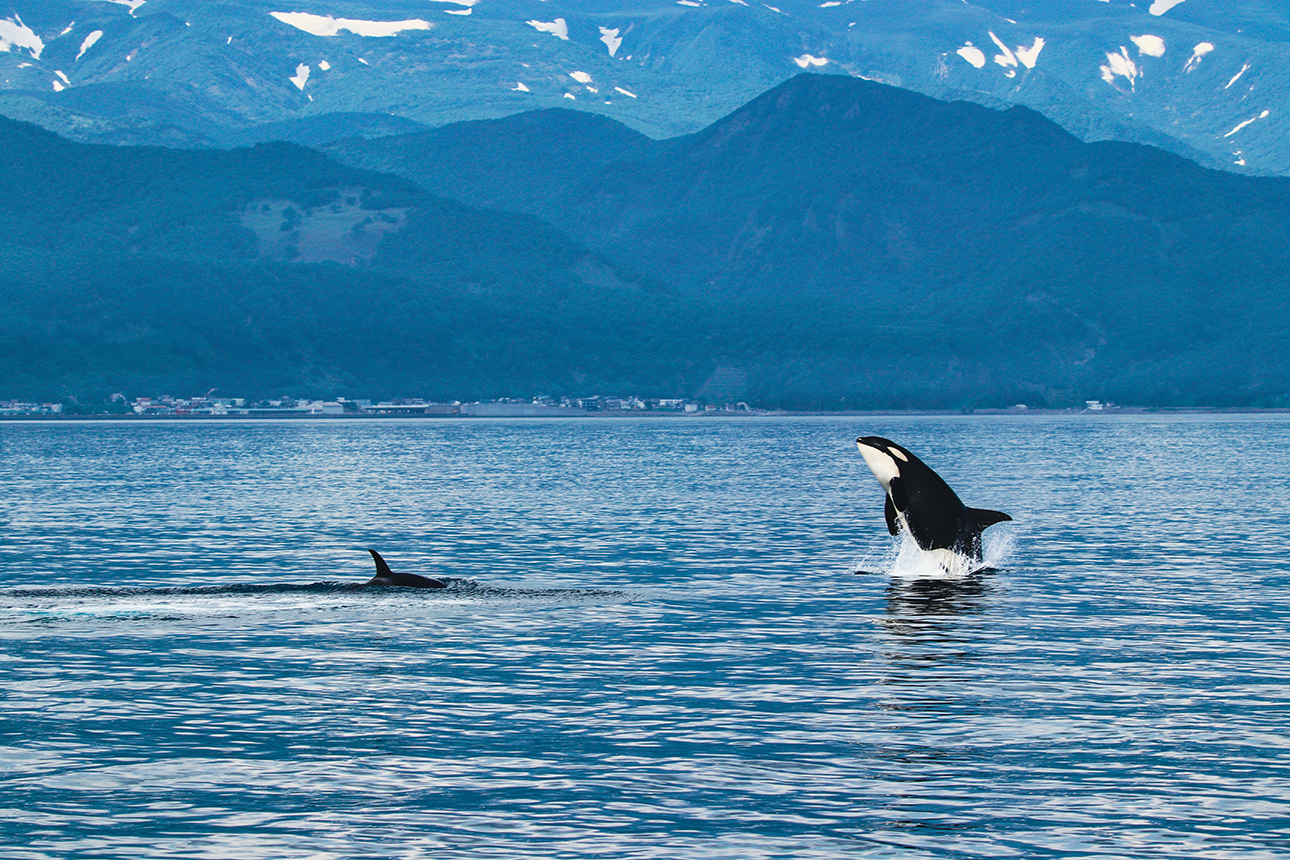
Along the coasts of Hokkaido, weakened or dead whales are occasionally washed ashore in shallow waters. These are called yori-kujira (stranded whales) and were utilized as valuable resources by the Ainu people.
The Ainu people’s hunting grounds were primarily in the forests rather than the sea, but it is known that they also made use of marine resources, such as stranded whales for their livelihoods.
Although Ainu culture reveres natural animals as deities, it is particularly interesting that whales were not regarded as gods in the same way as orcas.
Two Unforgettable Seasons you can Experience on a Rausu Cruise
The waters of Shiretoko have a unique topography, where the seafloor drops off steeply just a few hundred meters from the shore. As a result, whales and orcas can often be seen even close to the coastline, making it a rare observation spot on a global scale. Here, we take a closer look at the “Rausu Cruise,” where you can enjoy completely different experiences depending on the season.
Spring to Autumn: The Thrill of Whale Watching (Late April to Mid-October)
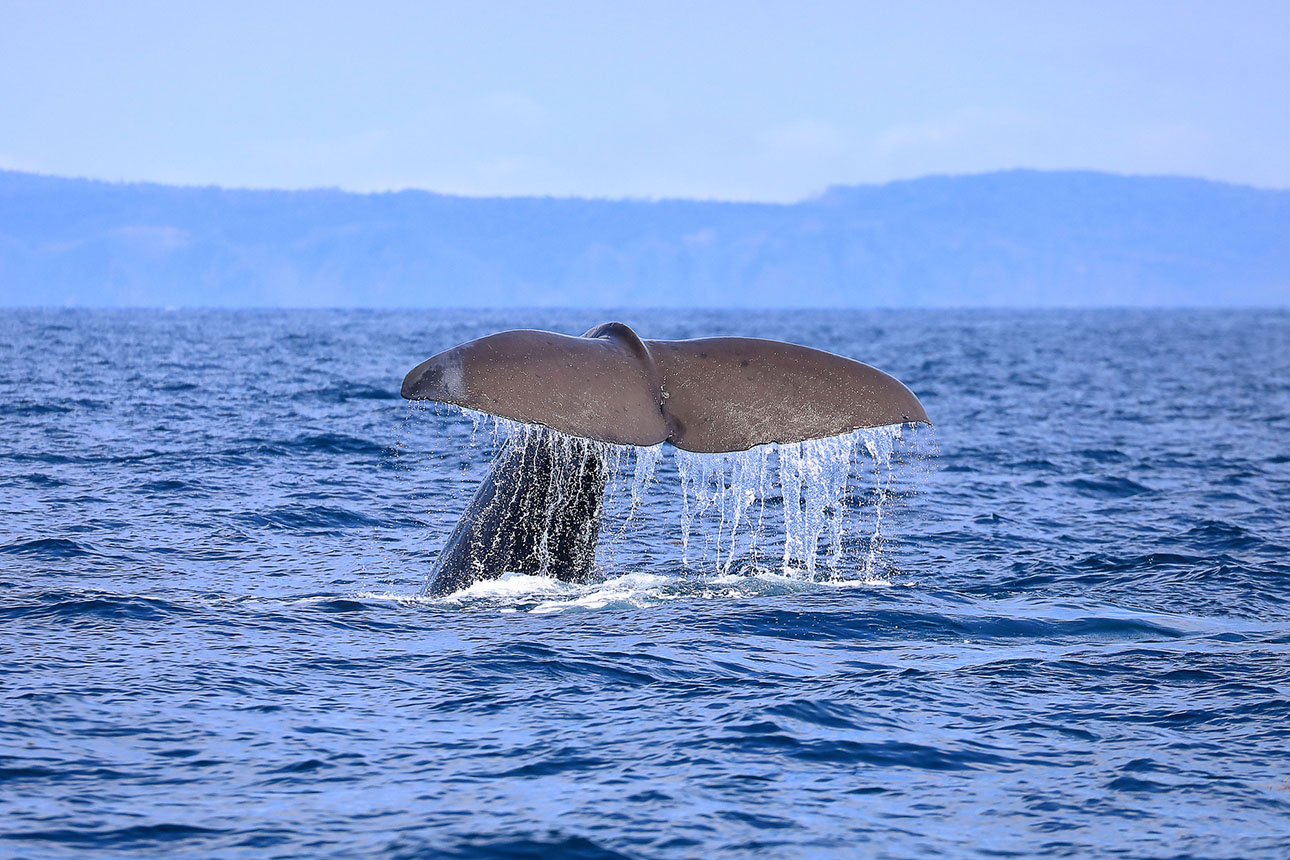
In spring, summer, and autumn, when there is no snow, you can head out for whale watching. The highlight, of course, is encountering orcas and whales. The best seasons to see them are April to July for orcas, and July to October for sperm whales. Cruises in Shiretoko and Rausu are well known for their high chances of spotting orcas and whales. This consistently high encounter rate can be seen as proof that the marine environment of Shiretoko and Rausu is healthy and supported by a well-balanced natural cycle.
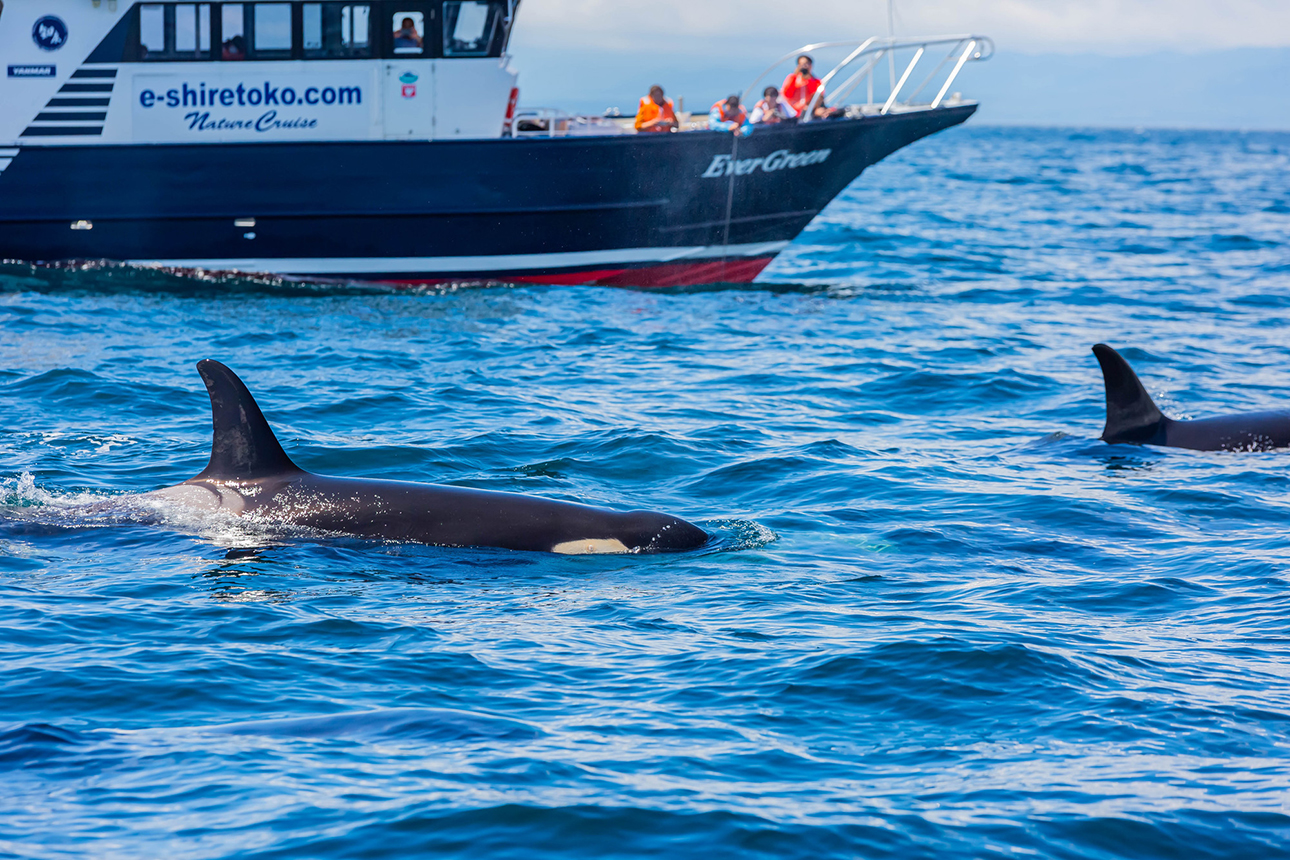
Orcas, often called the kings of the sea, live and travel in pods. Each individual varies in size and personality, and curious orcas may even approach very close to the boat. The powerful blow (spray) that bursts from their massive bodies is truly breathtaking. It’s definitely something you should experience at least once.
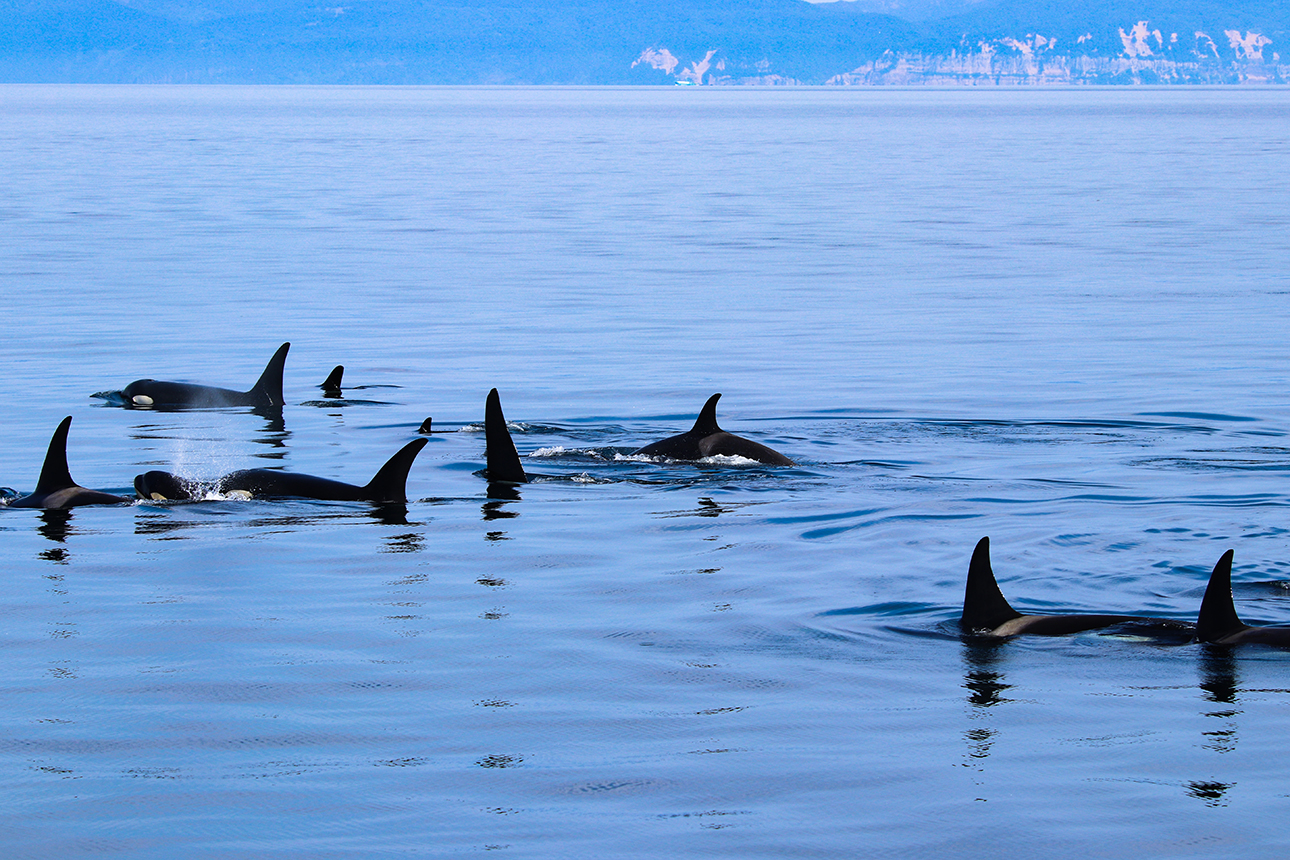
Can you tell the difference between the blows of whales and orcas? Once your eyes get used to it, you can use the shape and height of the spray as clues. For example, you might even notice that “a fin whale is mixed in among a group of orcas.” Be sure to see it for yourself.
In addition to these, you may also have the chance to encounter Dall’s porpoises, albatrosses, and various species of gulls.
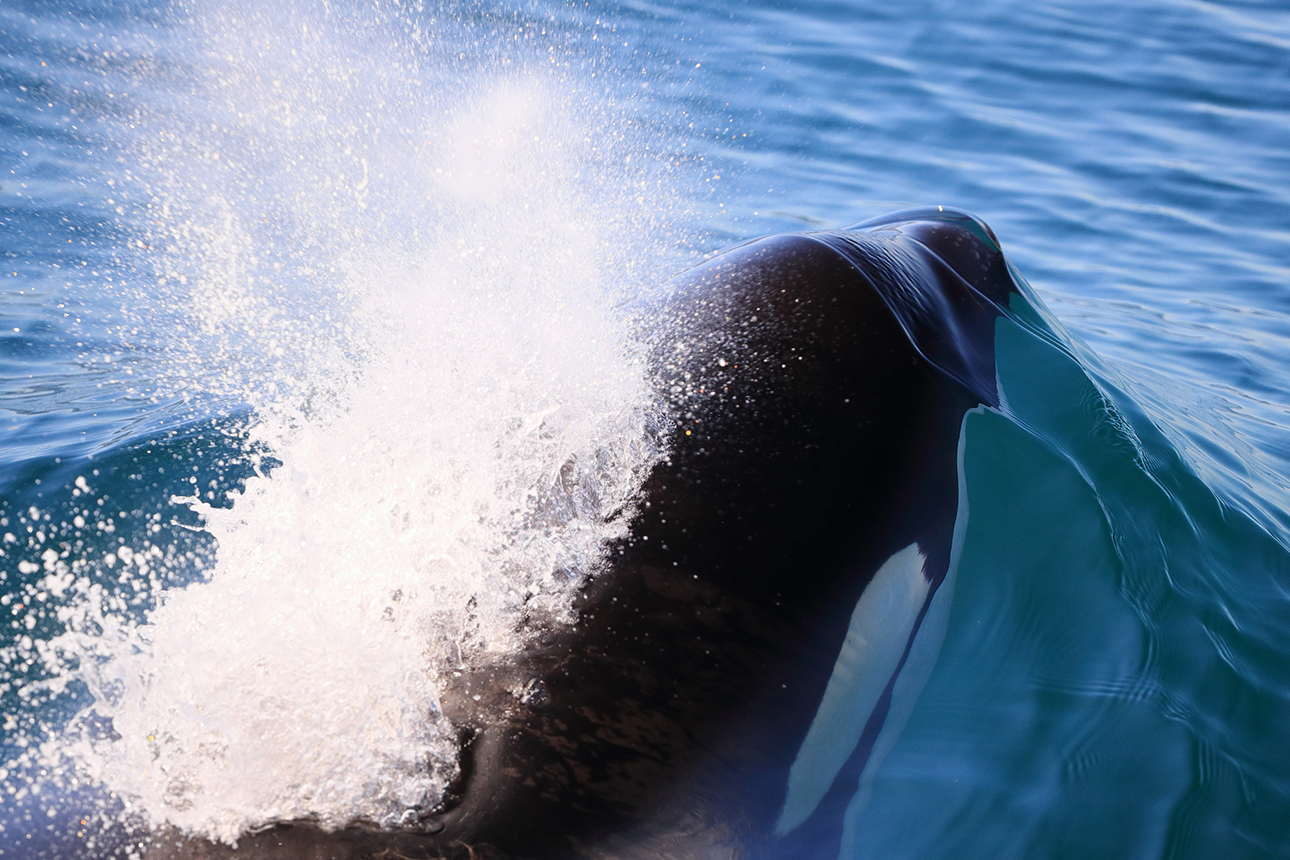
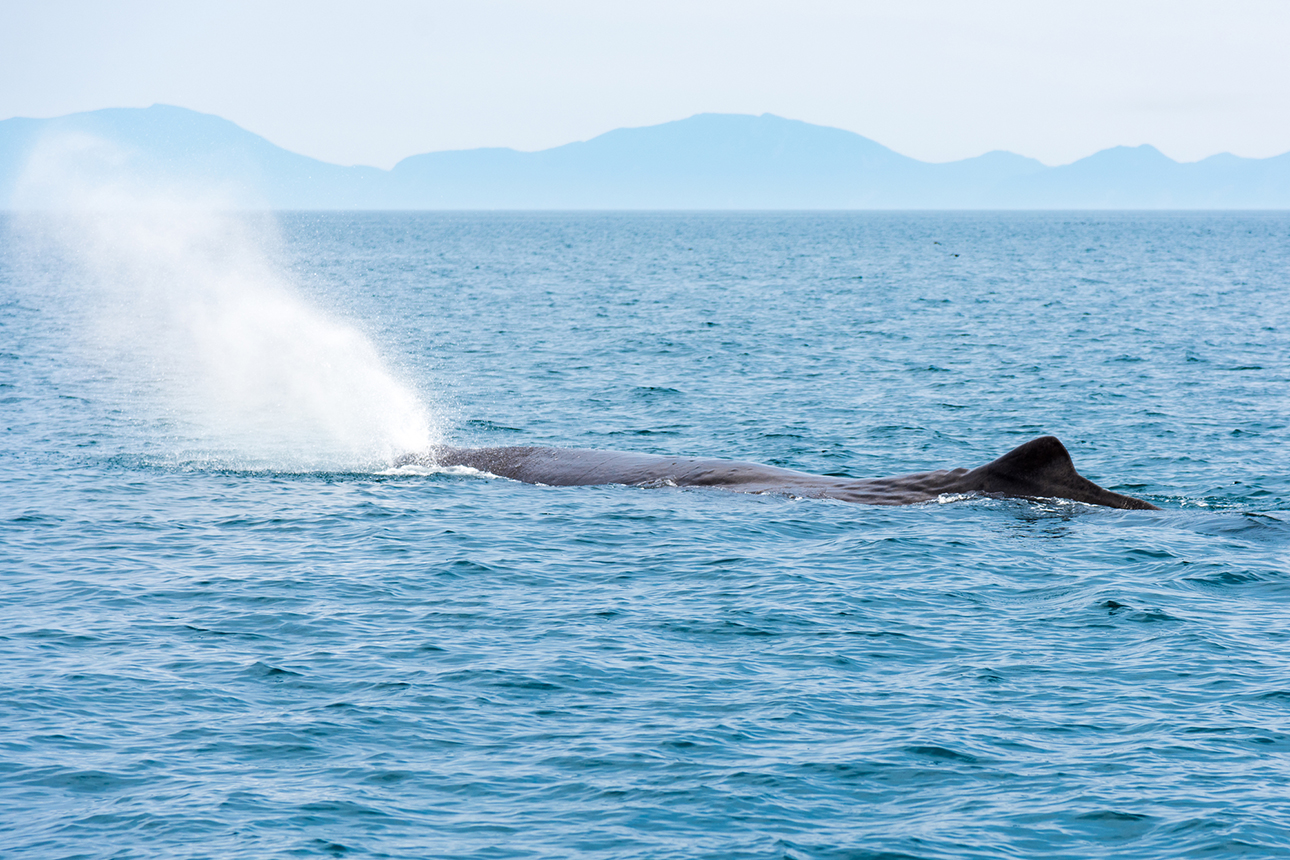
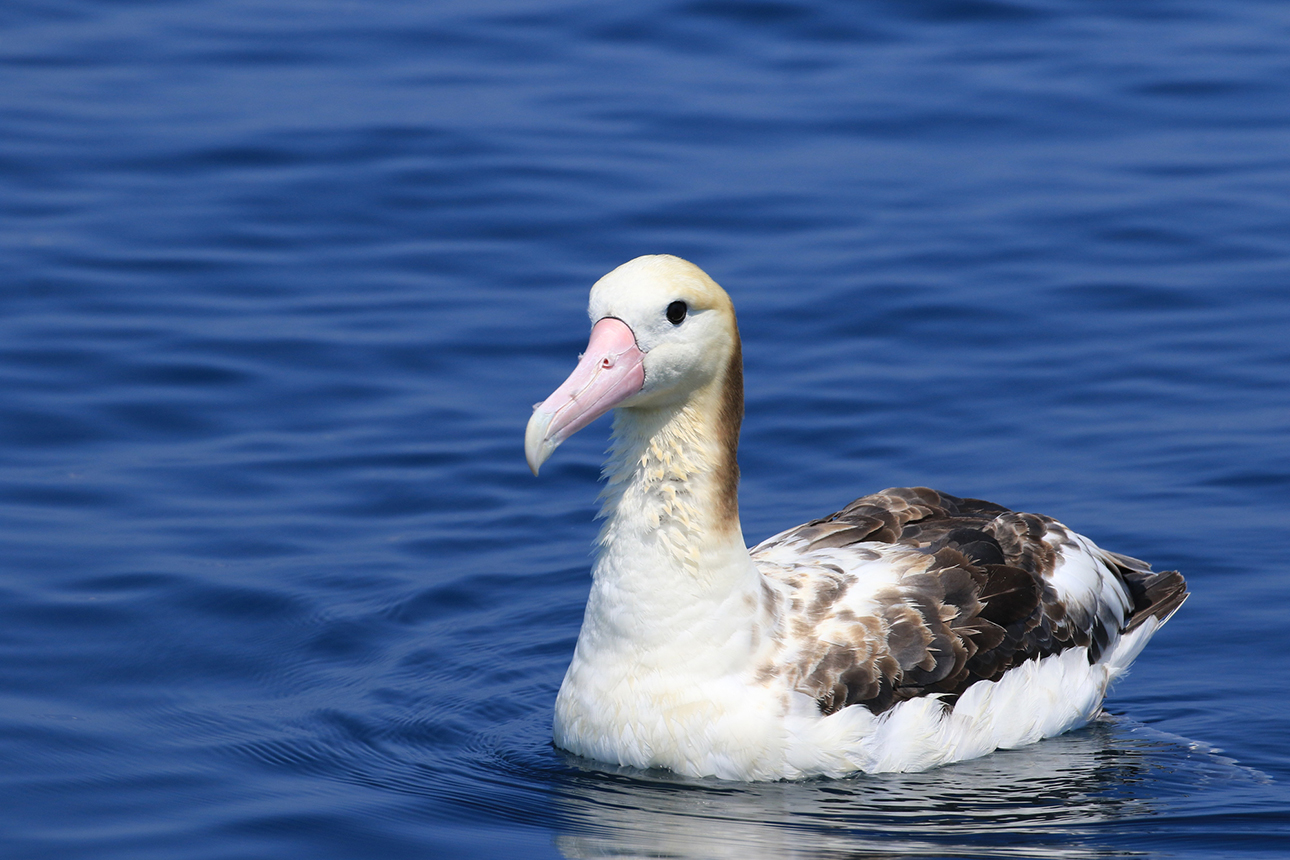
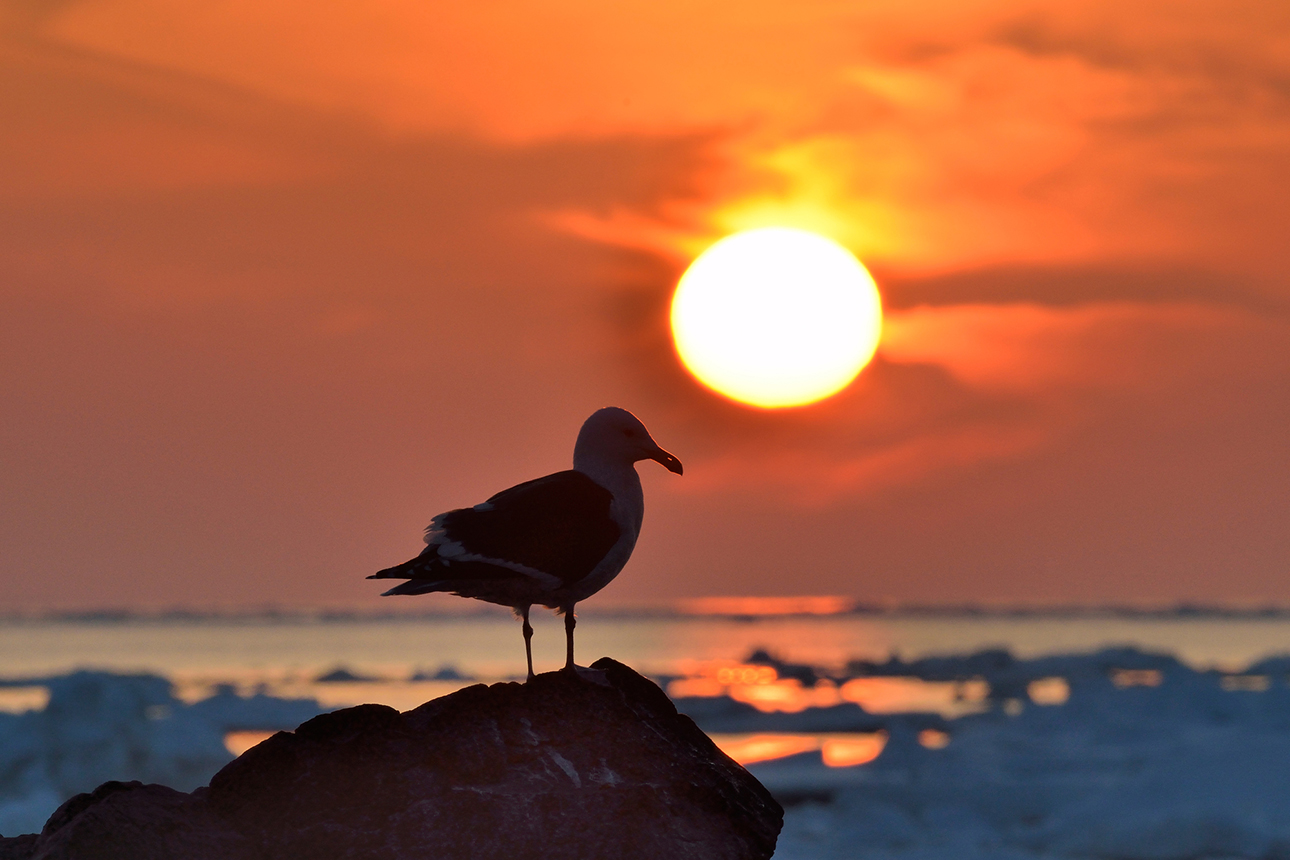
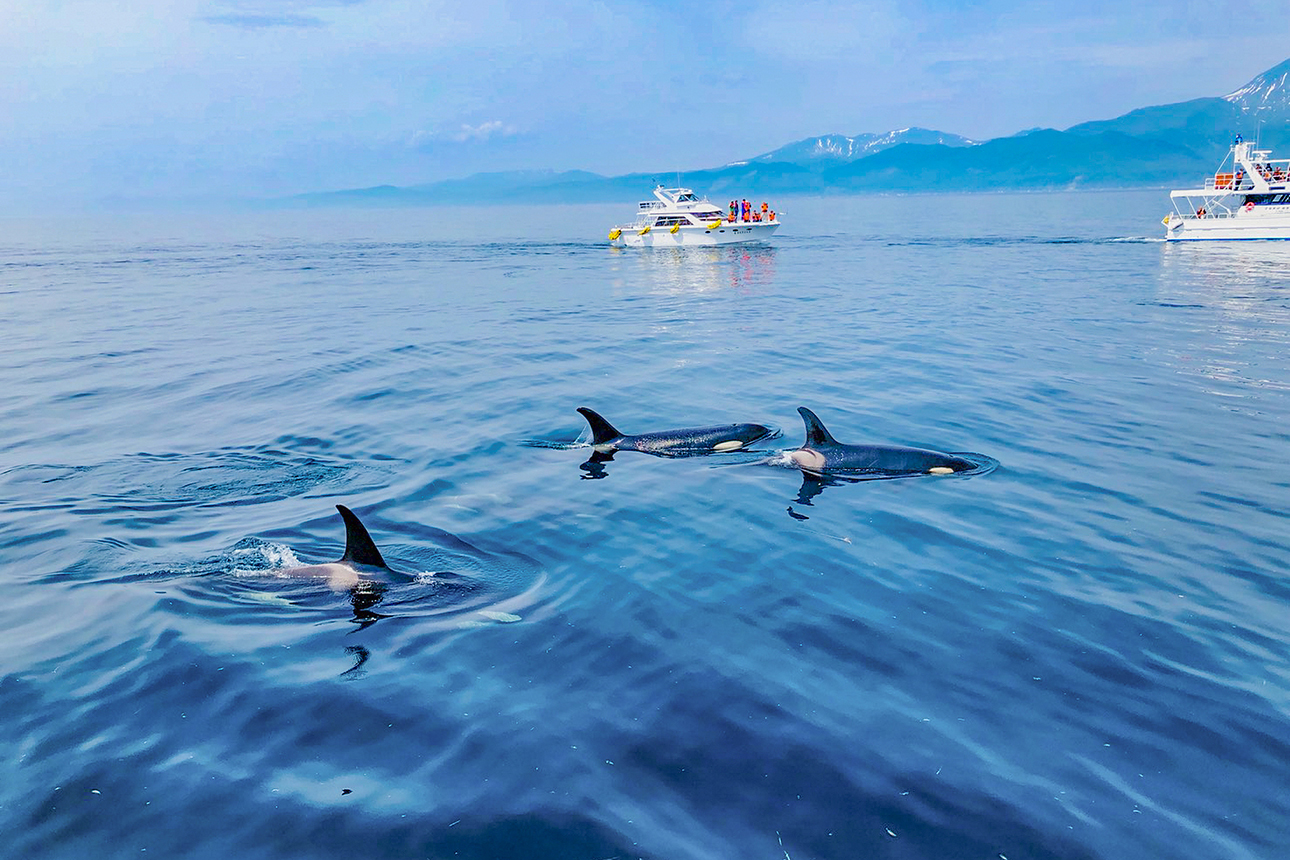
When you join the cruise, try not only to observe wild animals like whales and orcas, but also to reflect on the greatness of nature as once felt by the Ainu people, and their deep gratitude for the blessings of the sea. You should be able to feel how the richness and harshness of the seas of Shiretoko and Rausu, the vastness of the ecosystem, and all aspects of nature are deeply connected to us as human beings.
Winter | The Season of Drift Ice and Steller’s Sea Eagles (late January to late March)
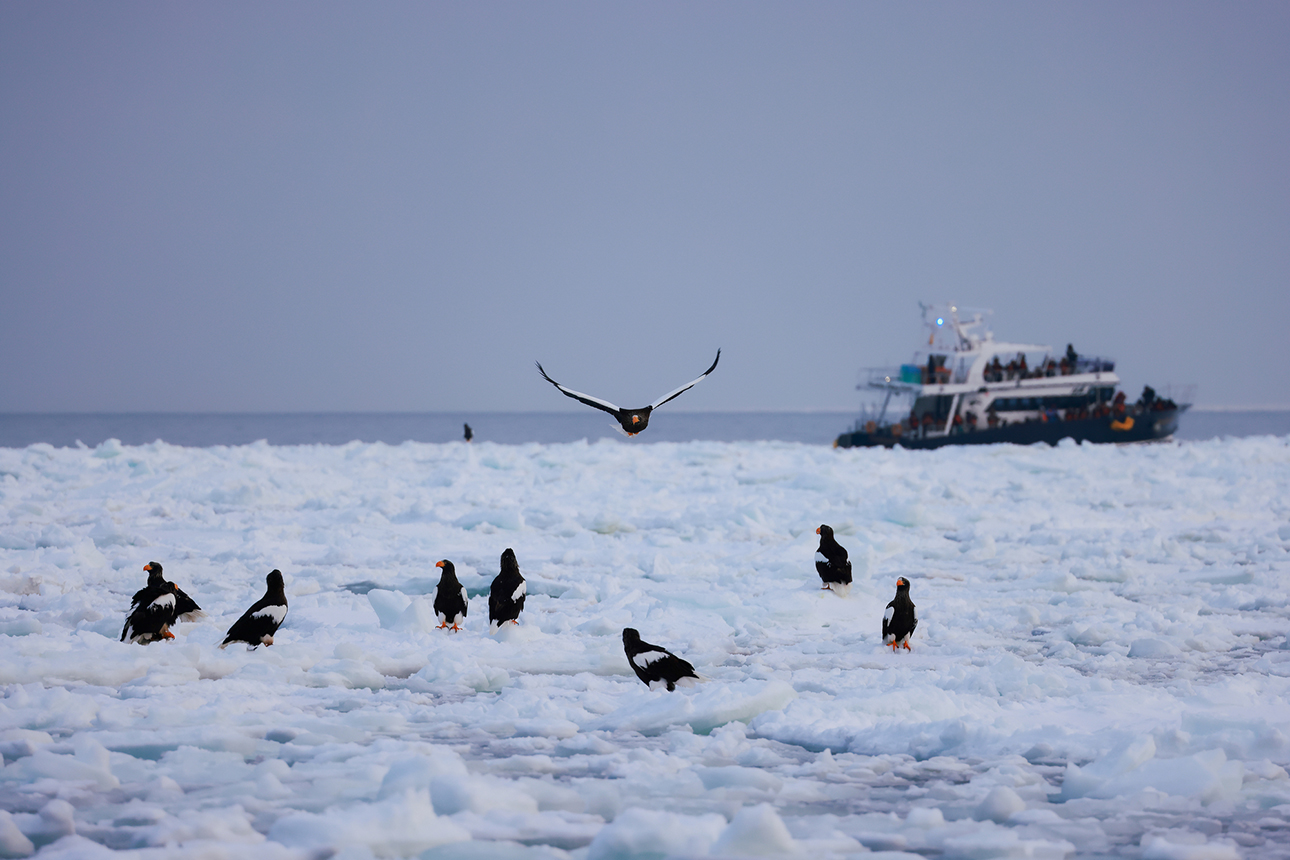
Winter is the season of drift ice and Steller’s sea eagles. It falls during the harshest part of winter, from late January to late March. It’s a harsh season locked in snow and ice, but it offers sights that can only be seen by those who brave the freezing air.
The Sea of Okhotsk in Hokkaido is known as the southernmost place in the world where drift ice reaches the shore, creating a truly ideal magical landscape. Born far away in Russia’s Amur River, small pieces of drift ice slowly freeze, collide, and merge with one another as they travel across some 1,000 kilometers of sea. By the time they arrive along the coast of Hokkaido, they have grown into massive ice floes that take everyone’s breath away.
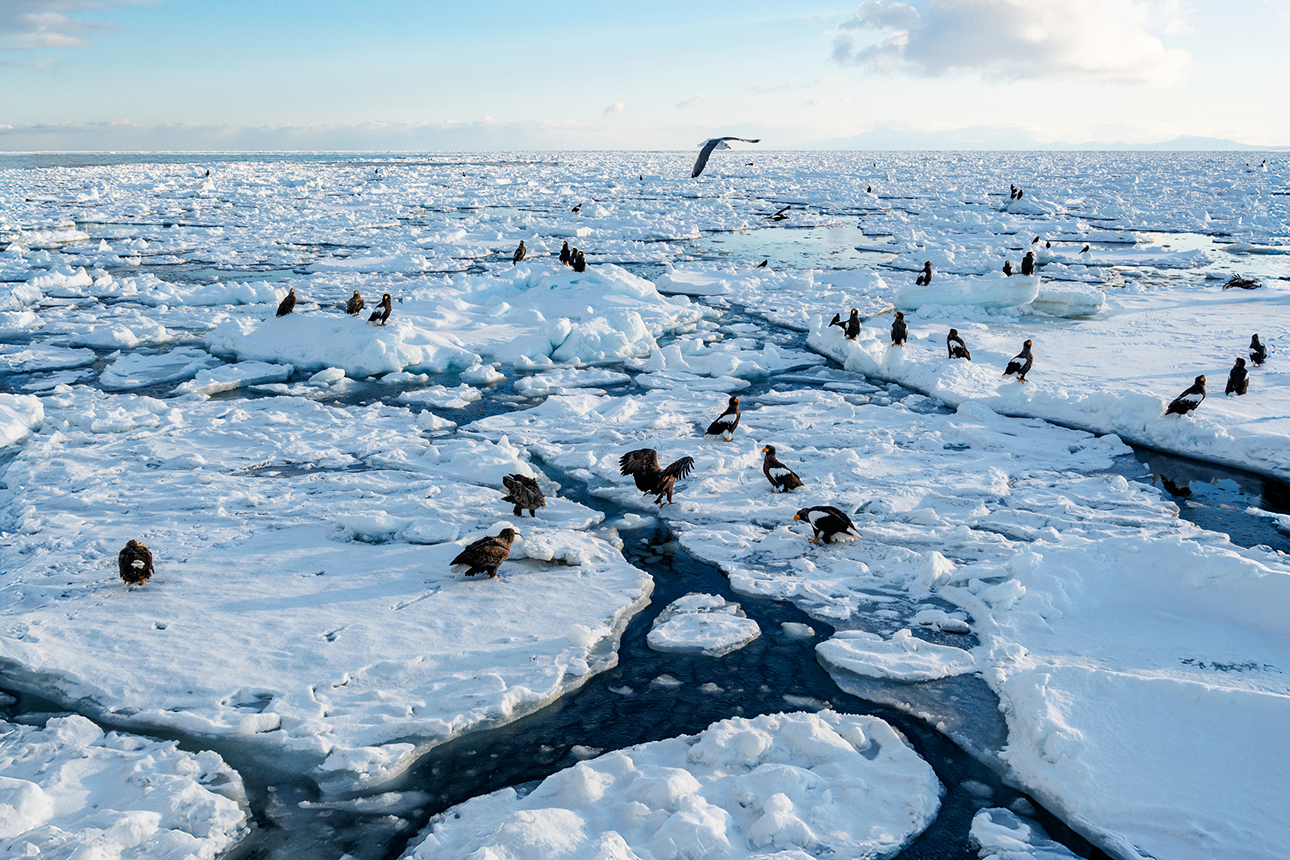
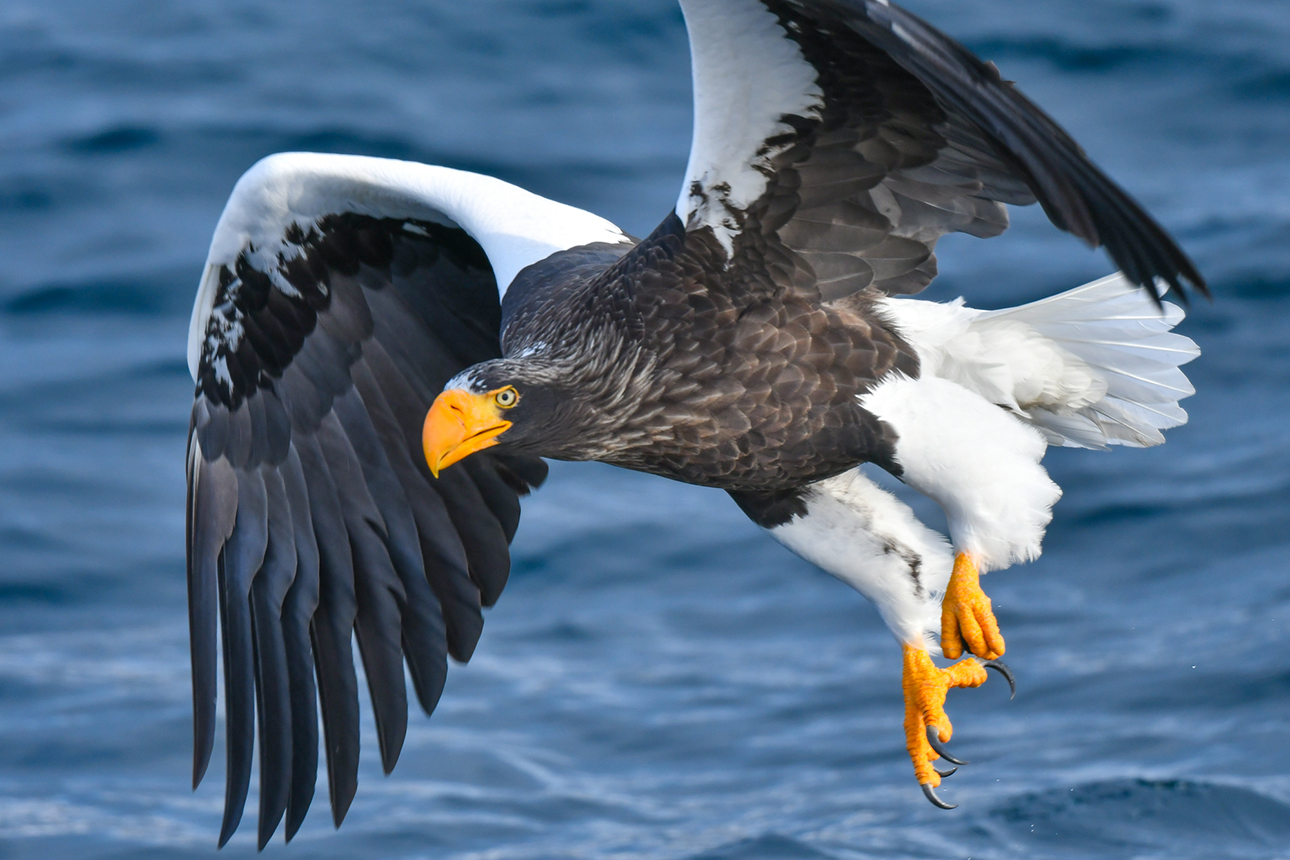
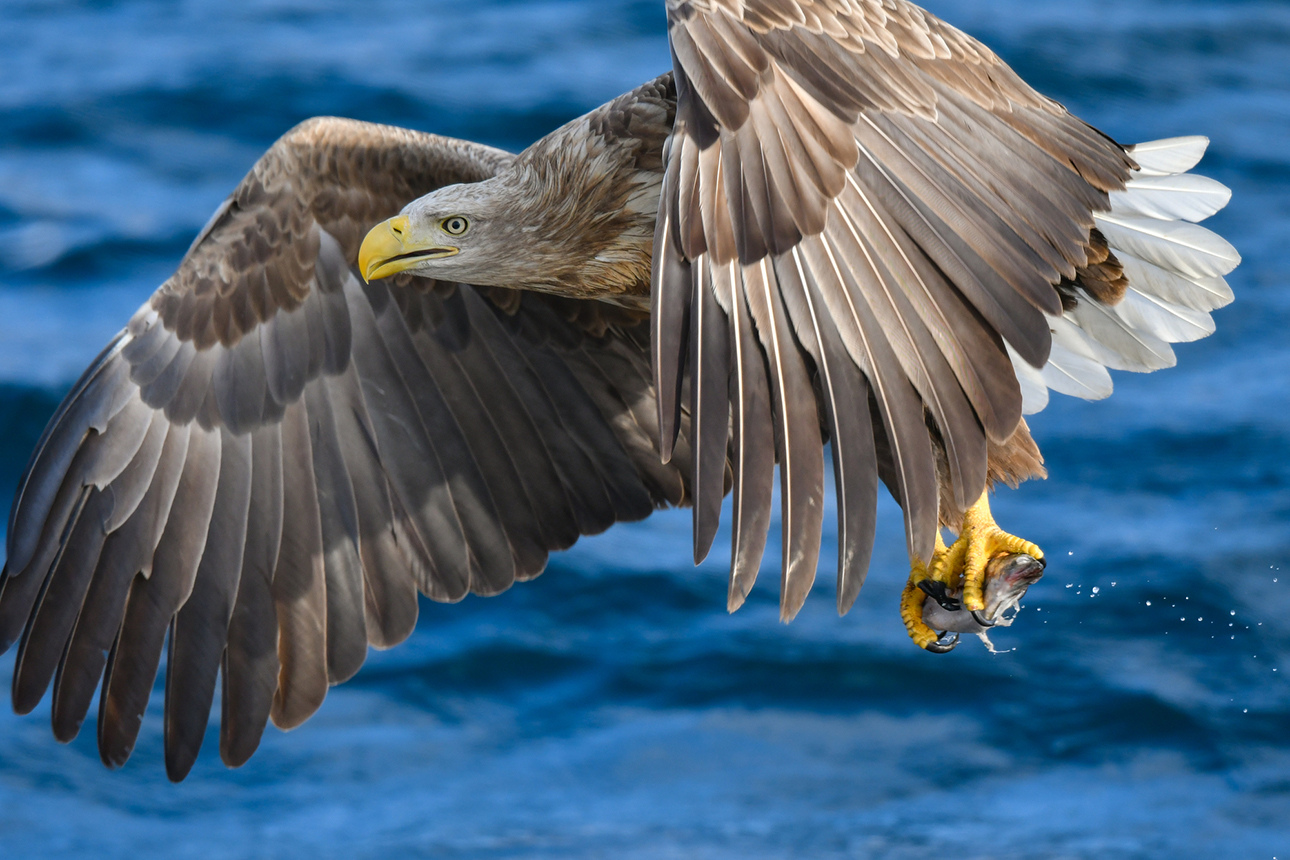
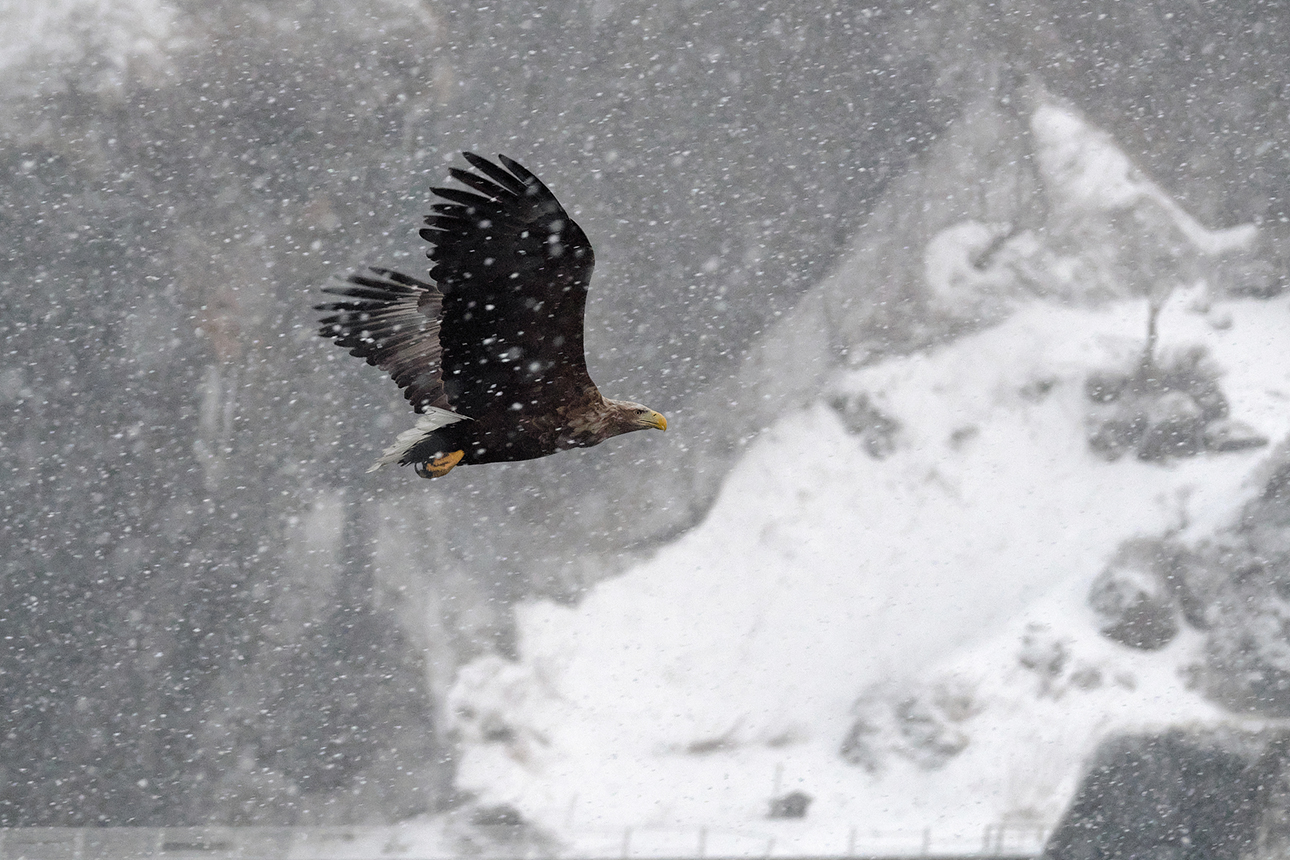
In addition, Steller’s sea eagles and white-tailed eagles, both designated as Natural Monuments of Japan, are a must-see. They migrate from as far away as Siberia and Sakhalin to spend the winter here, and return to Russia again when the snow melts and spring arrives. In particular, the white-tailed eagle is the largest bird of prey that can be observed in Japan, and seeing one up close is sure to leave you amazed by its size.
A winter cruise in Shiretoko and Rausu offers a true “far-north sustainable experience,” where you can feel the breath of life amid a sea of silver-white.
Drift ice is something you’ll want to see at least once in your lifetime, and in Japan, Hokkaido is the only place where you can experience it. That said, arranging overseas-style cruises and traveling around Hokkaido during the harsh winter season can come with many concerns.
With Hokkaido Treasure Island Travel Company, we provide full support, not only handling the often complicated tour arrangements, but also assisting you from airport pickup to your send-off.
Our English-speaking staff will guide you with care, so you can relax and leave everything to us with confidence.
Your Journey Helps Protect Shiretoko’s Future
A cruise in Shiretoko and Rausu, Hokkaido, is a true example of practicing responsible tourism. Responsible tourism is the idea of being aware of the impact your travel has on local communities and the environment, and taking responsibility for your actions as a traveler. In other words, your actions as a visitor can help protect the future of Shiretoko.
Here, we introduce sustainable tourism and responsible behavior from the perspectives of both the destination and the traveler.

Your Journey Helps Protect Shiretoko’s Future
A cruise in Shiretoko and Rausu, Hokkaido, is a true example of practicing responsible tourism. Responsible tourism is the idea of being aware of the impact your travel has on local communities and the environment, and taking responsibility for your actions as a traveler. In other words, your actions as a visitor can help protect the future of Shiretoko. Here, we introduce sustainable tourism and responsible behavior from the perspectives of both the destination and the traveler.
Sustainable Initiatives
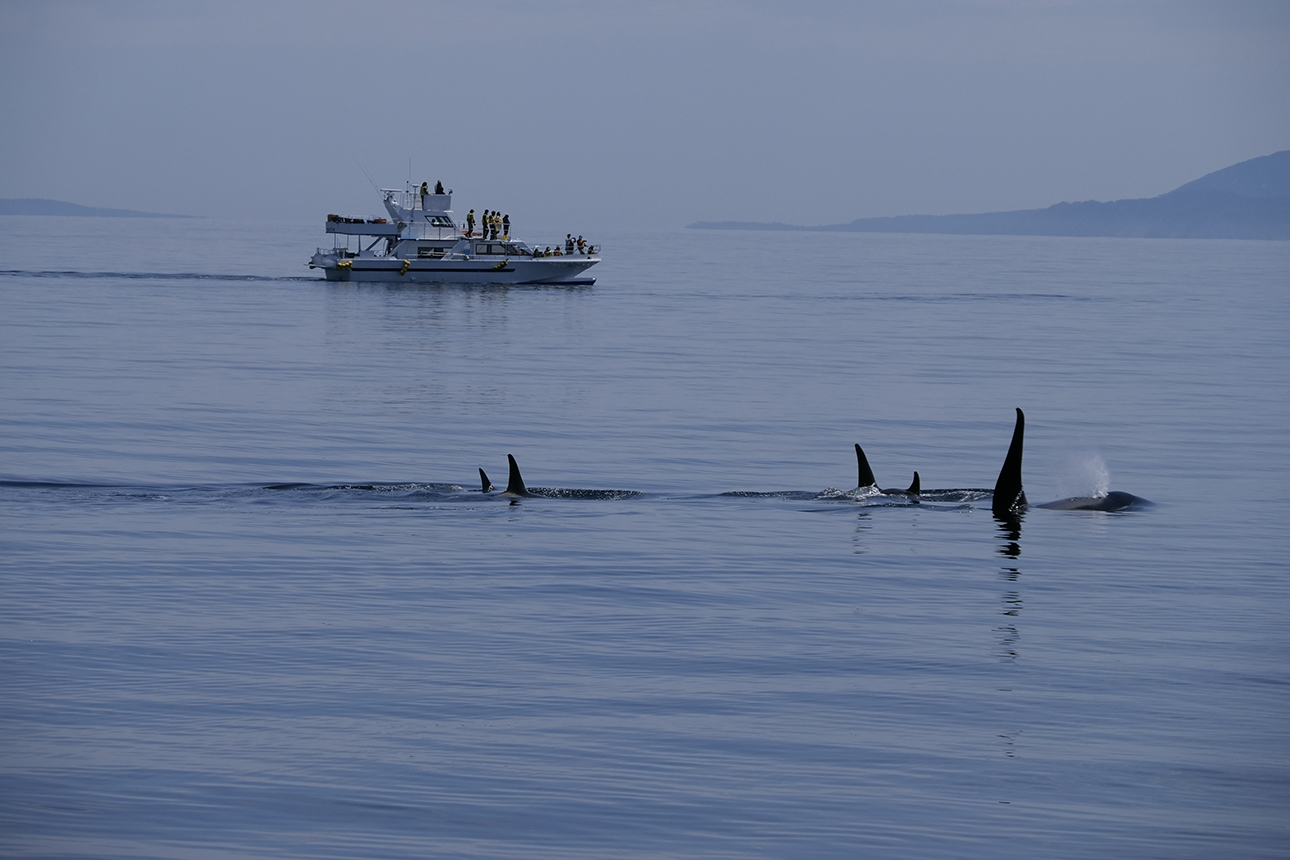
In Shiretoko and Rausu, the following sustainable, environmentally conscious initiatives are being implemented.
・Cruise boats strictly follow rules to minimize their impact on wildlife.
・A portion of tour revenues is used for marine research and local environmental
conservation.
・Rausu’s fisheries and way of life are sustained in harmony with the natural environment.
Cruise vessels in operation strictly adhere to rules designed to minimize their impact on wildlife. For example, whale watching is conducted under guidelines such as the following:
・Reduce speed and approach slowly from a distance of about 300 meters
・Do not obstruct the whale’s direction of travel
・Do not interfere with the whale’s natural behavior
・Do not approach closer than approximately 50 meters to the whale
By maintaining an appropriate distance, the safety of both people and whales can be ensured.
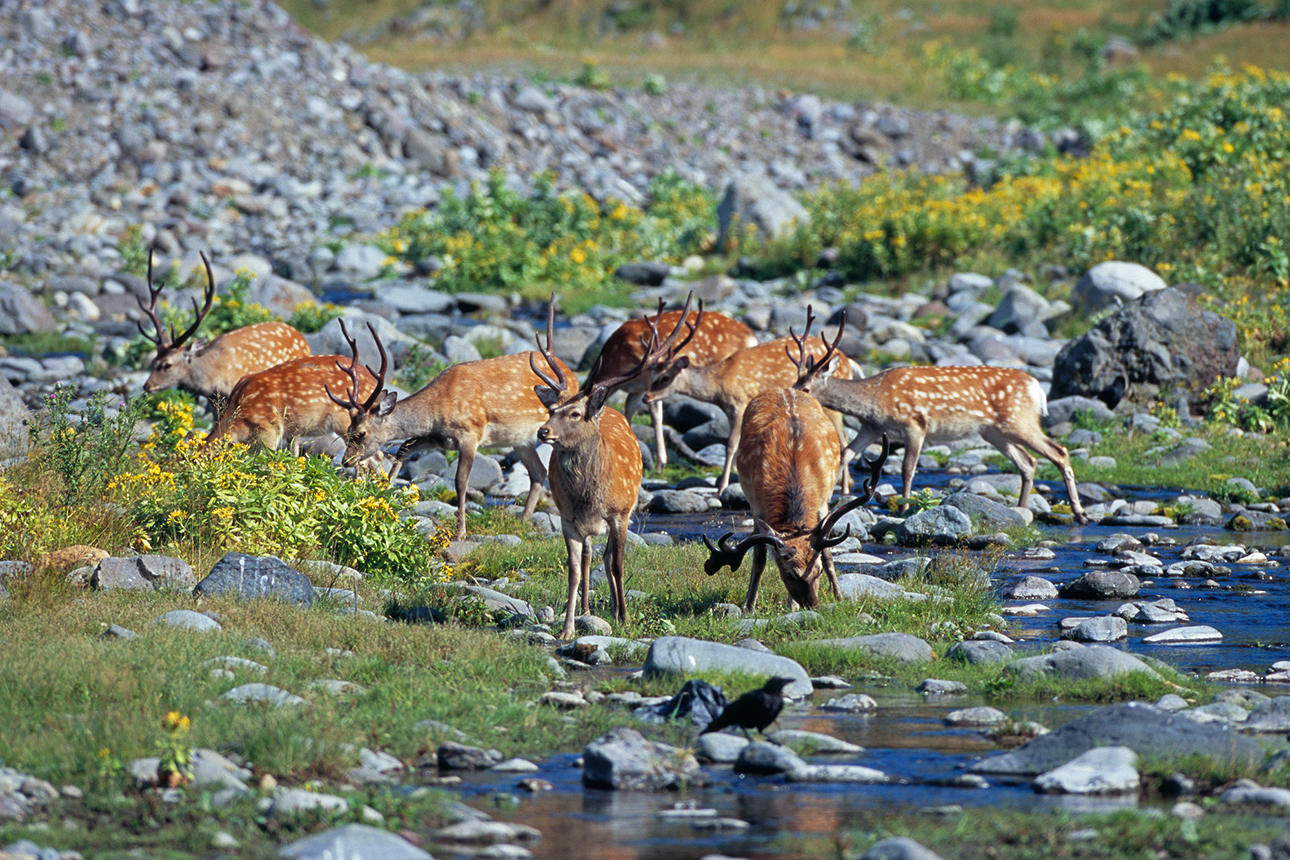
In addition, a portion of the revenue generated from the tours is donated to the Shiretoko Foundation, which works on local environmental conservation and marine research. Here are some examples of the Shiretoko Foundation’s activities:
・Ecological research on brown bears and Ezo deer
・Temporary care and of injured wildlife
・Surveys of aquatic life such as salmon
In addition, in Shiretoko and Rausu, people of all ages from children to adults, naturally engage in sustainability through education and their work as part of everyday life.
What Travelers Can Do
Here, we introduce what travelers can do when visiting Hokkaido.
・Prepare warm clothing
・Observe quietly and respectfully

Make sure to prepare warm clothing and cold-weather gear such as hand warmers. In fact, taking proper care of your own condition is also one aspect of sustainable consideration.
Hokkaido lies in the subarctic zone. In particular, the Shiretoko Peninsula is one of the coldest regions in Japan, and travelers who are not accustomed to the cold often end up feeling unwell.
If you become unwell while at a tourist destination, the following impacts on the environment can be expected:
・There is a risk of spreading illness to accompanying family members, friends, or local residents
・Reduced judgment and awareness may lead to behavior that lacks consideration for the environment
When you have a cold or are feeling unwell, things you can normally do without issue may become difficult, and you may be more likely to act in a self-centered way.
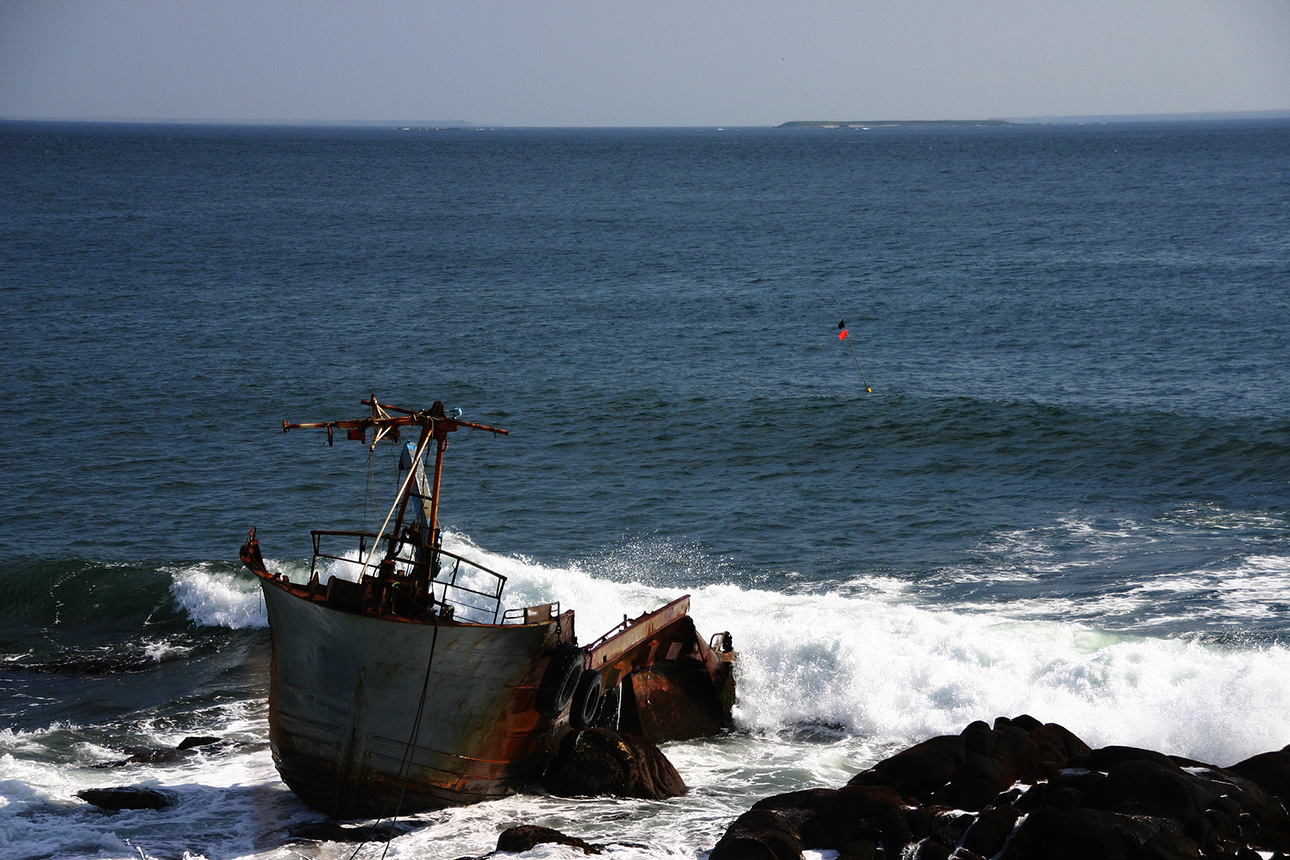
Especially out on the sea, temperatures are low, and when the wind blows, the perceived temperature drops sharply.
Rather than assuming you’ll be fine, it’s important to check the weather forecast and prepare properly with the awareness that you’ll be in an environment different from your usual one.
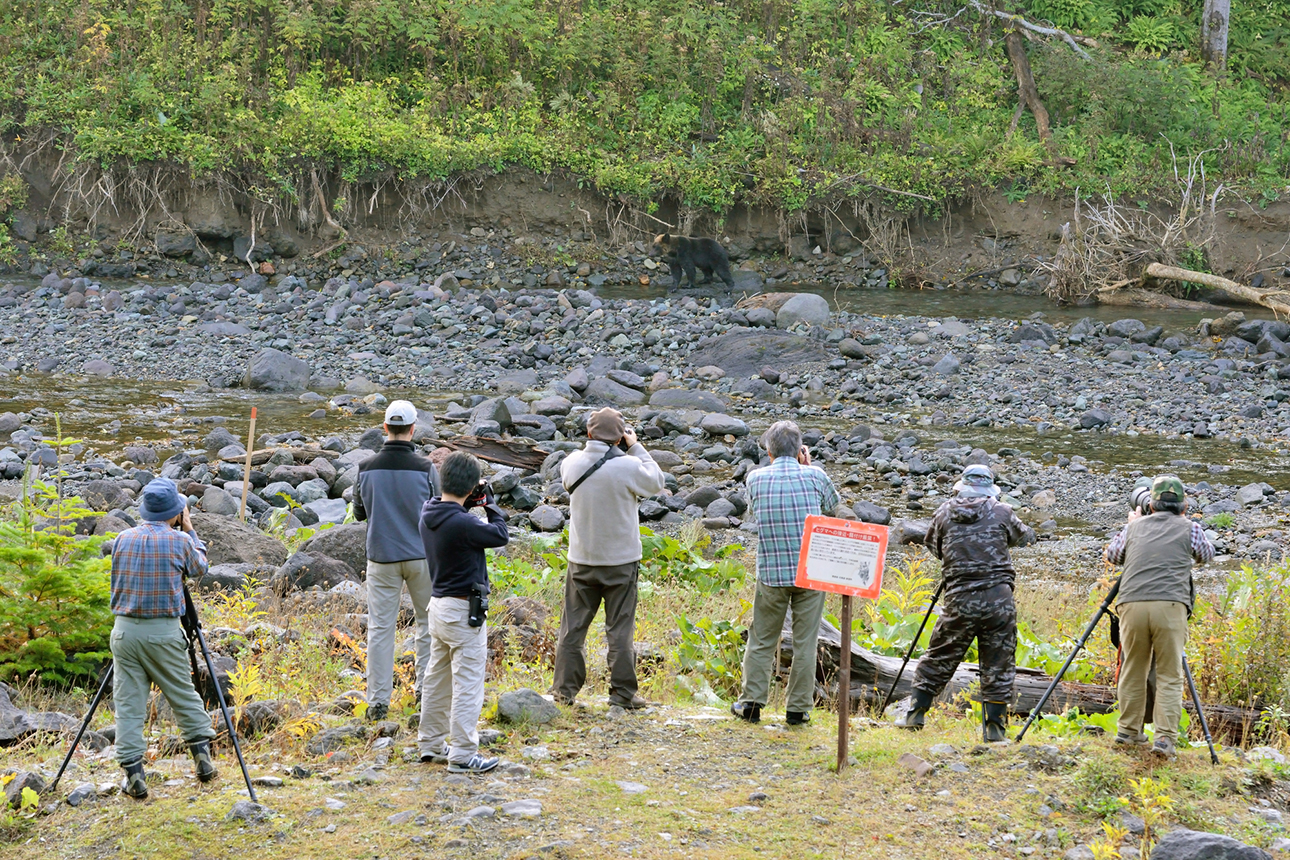
It is also important to maintain a “quiet and respectful approach” when observing wildlife, plants and nature.
For example, keep the following in mind:
・Keep a proper distance from wildlife
・Observe quietly
・Watch from designated areas
The best etiquette is to refrain from selfish behavior, follow your guide’s instructions, and show respect for nature.
What Travelers Should Not Do

Here, we outline what travelers should not do in order to support sustainable tourism in Rausu and Shiretoko, focusing specifically on proper behavior at sea. In particular, marine etiquette includes the following:
・Feeding wildlife
・Littering
Feeding wild animals is a major factor that disrupts the balance of coexistence between humans and wildlife.
In particular, feeding birds of prey such as Steller’s sea eagles can contribute to the spread of avian influenza and lead to collisions between birds. As a result, rare species may decline and face an even greater risk of extinction, so this should never be done.
Feeding animals such as orcas or whales is also extremely dangerous. In addition, trash that washes ashore can be eaten by animals in the forest.
Rather than thinking “just a little should be fine,” it’s important that an appropriate distance is maintained between people and wildlife.
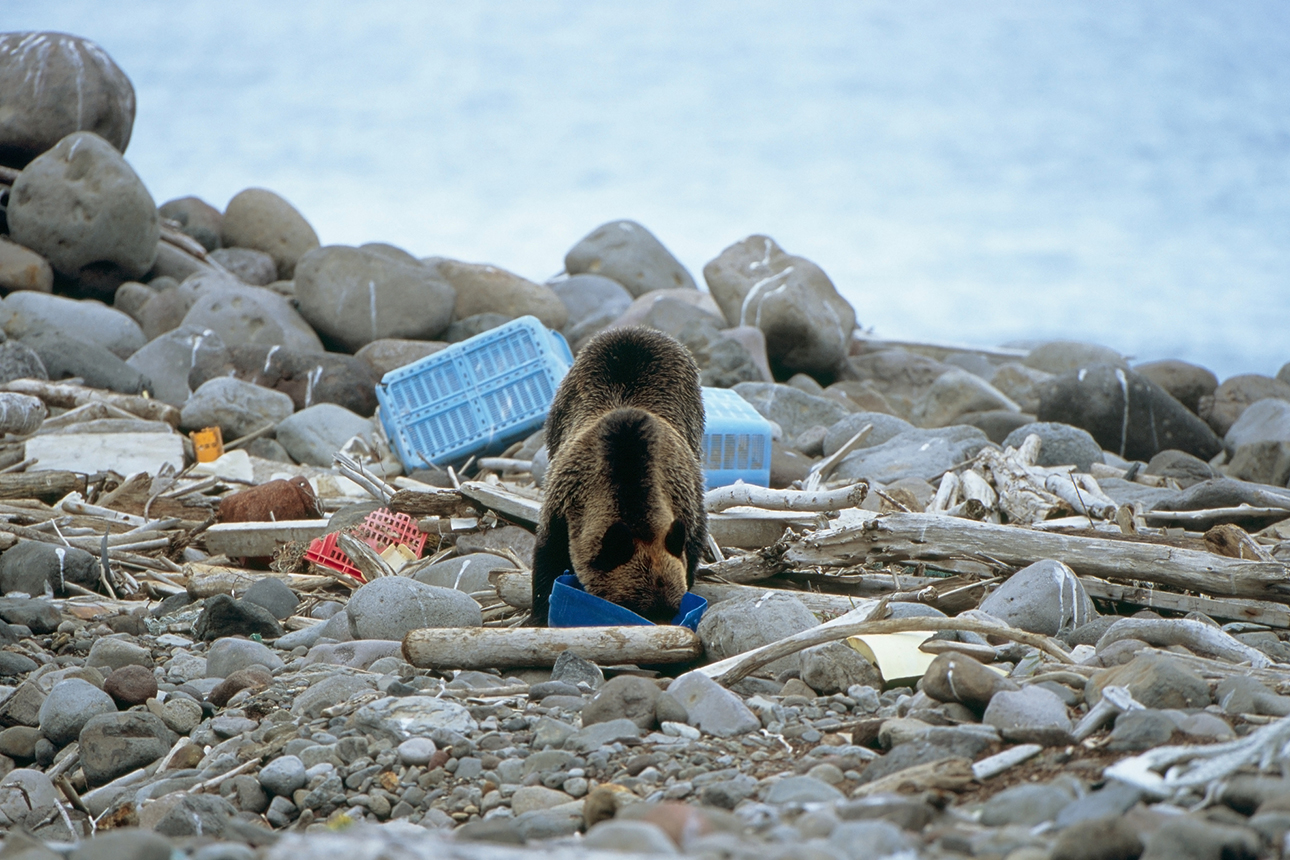
Littering not only pollutes the precious ocean but also takes the lives of marine creatures. Trash discarded by humans can be mistakenly ingested by sea life, causing choking, digestive problems, and in the worst cases, death. It goes without saying that you should never throw trash into the sea, but it’s also important to minimize the amount of waste you produce in the first place.
A Journey that Connects You with the Earth
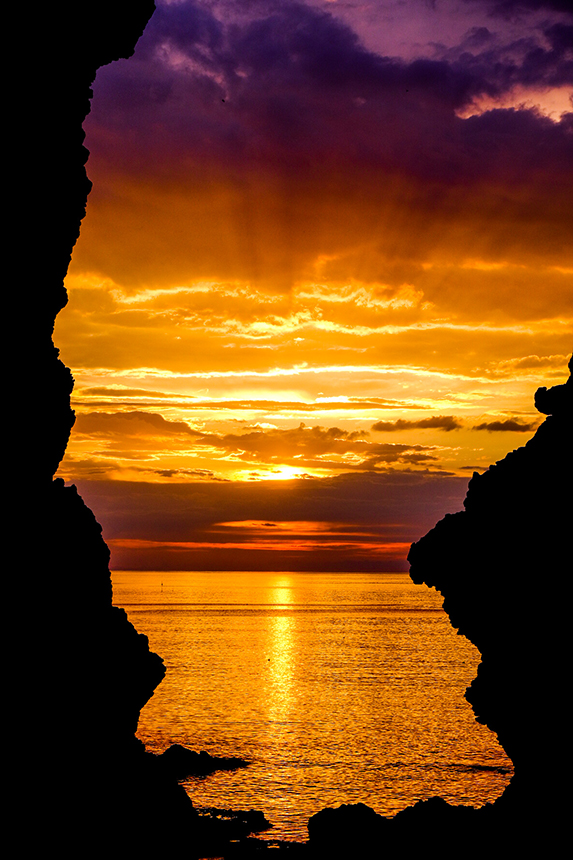
A journey in Shiretoko and Rausu is not just sightseeing or a moment of awe. It is a “life experience” where you can truly feel the breath of the Earth that has continued since ancient times.
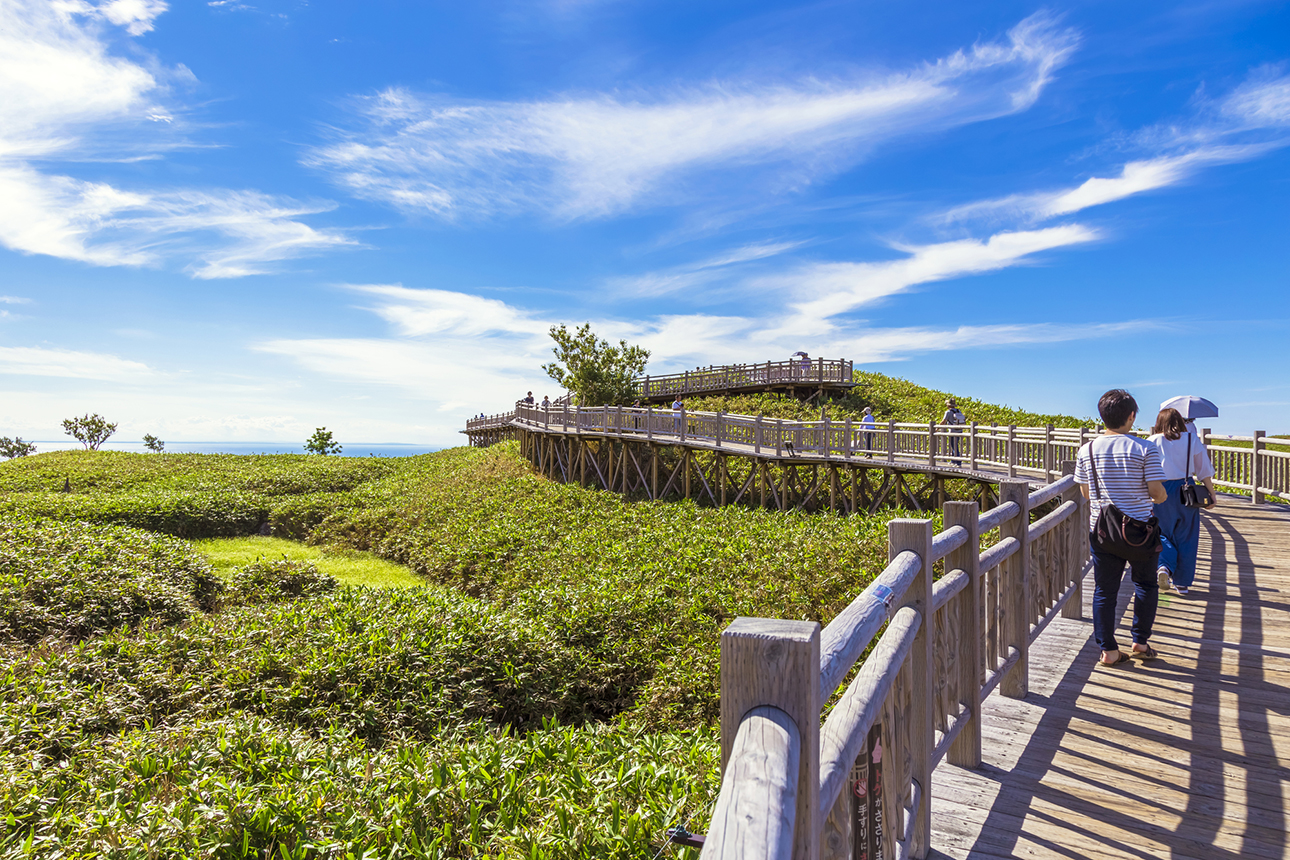
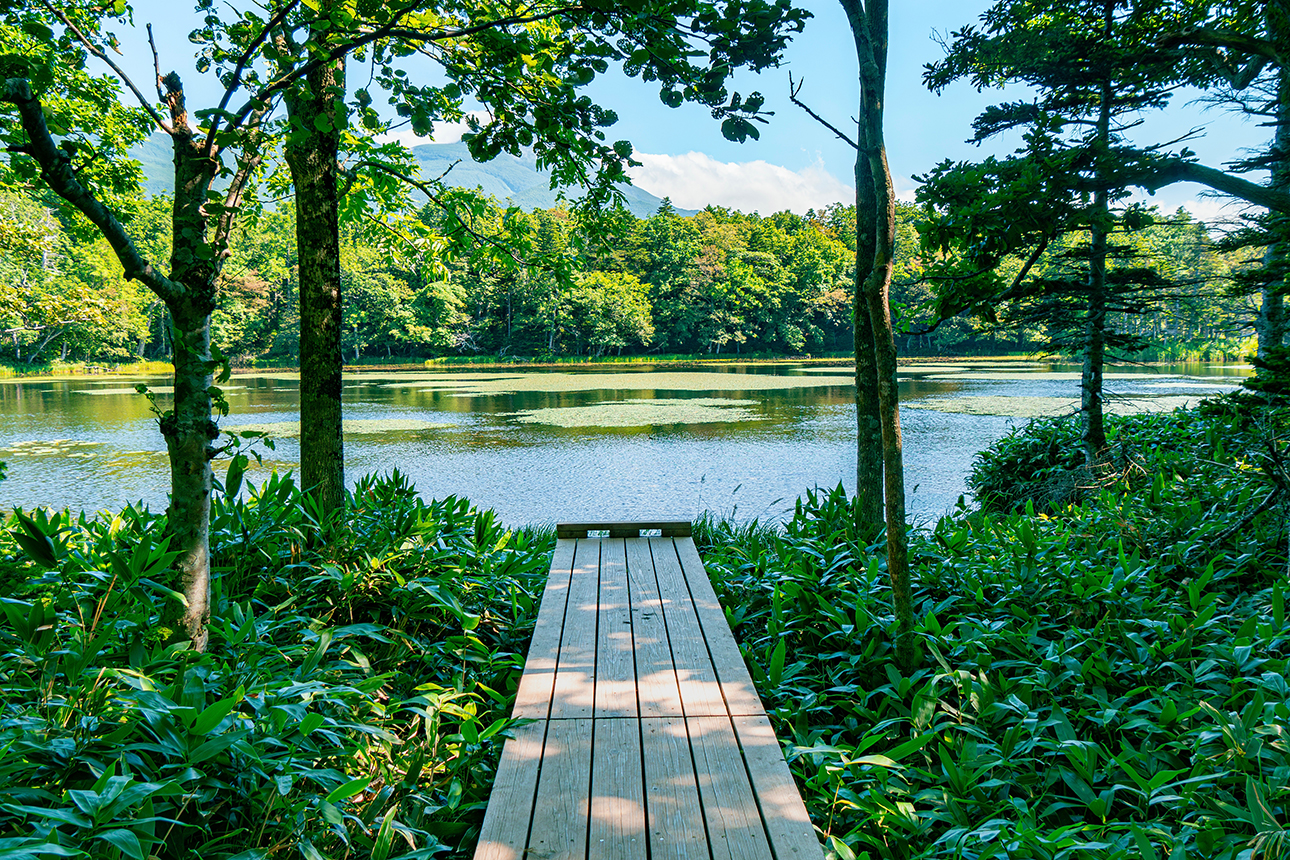
Shiretoko is registered as a UNESCO World Natural Heritage Site and is also managed as a national park in Japan. With its vast natural landscapes and the beautiful yet harsh cycle of life that continues there, Shiretoko is truly a place worthy of being called a shared heritage of humanity.
In this harsh natural environment, the Ainu people once lived by treating wild animals as deities and expressing gratitude for the blessings of nature. The cooperation of you as a traveler is essential when passing through the seas and forests of Shiretoko, which has been carefully protected by the Ainu for the next generations.
Through cruises such as whale watching, observing orcas, and experiencing drift ice, we encourage you to think about, and put into practice, sustainable and responsible tourism. A journey to the great wilderness of Shiretoko and Rausu, often described as a microcosm of the Earth, will become a treasure you cherish for a lifetime.
If you have any interest in Shiretoko’s orcas and whales, or in sustainable travel, please feel free to contact Hokkaido Treasure Island Travel Company. Our English-speaking staff are ready to assist you, offering full support throughout your stay, from airport arrival to departure, and accommodating your individual requests with flexibility.