Table of Contents:
1. Introduction: Discovering Untouched Hokkaido – The Okhotsk Region
2. Winter Highlights: A Journey to Enjoy Drifting Ice and the Cold
3. Summer Highlights: Scenic Drives and Culinary Delights
4. Spotlight on History: Abashiri Prison Museum
5. Experience the Culture: Northern Peoples’ Museum
6. Travel Advice: Navigating the Vast Area
7. Conclusion: Your Next Journey to Okhotsk
1. Introduction: Discovering Hokkaido’s Unknown Okhotsk Region
Have you ever been to Hokkaido? To see the Sapporo Snow Festival? Or seeking Niseko’s powder snow? Those are certainly beautiful areas Hokkaido can be proud of. But Hokkaido has many further charms. Beyond Sapporo, in the northeastern Hokkaido region known as the Okhotsk area, lies a “simple yet powerful Hokkaido” that many people still don’t know. On your second or third visit to Hokkaido, be sure to explore the Okhotsk area.
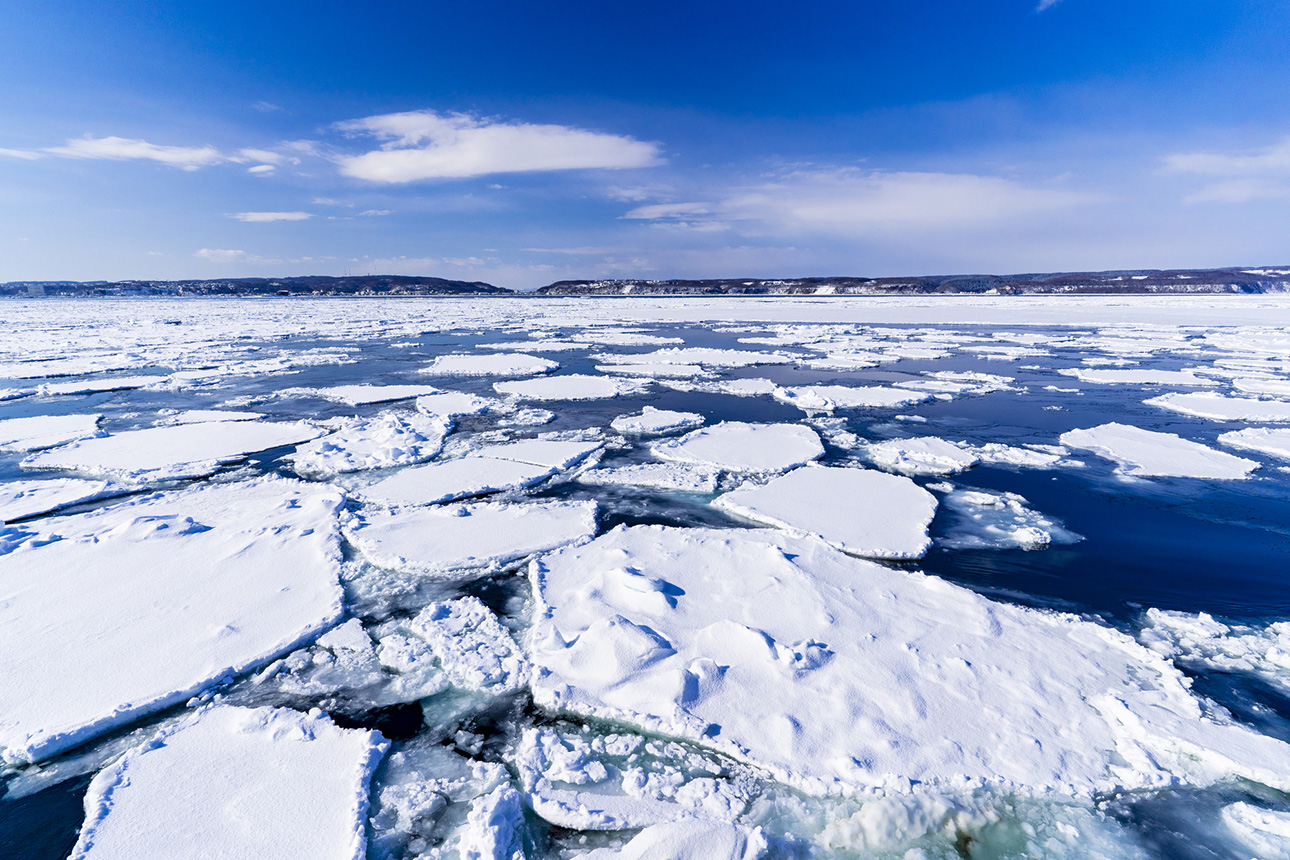
The highlight of the Okhotsk area is undoubtedly the drift ice that appears in the frigid Okhotsk Sea. Ice formed on Russia’s Amur River travels all the way across the Okhotsk Sea to reach Hokkaido’s coast. Due to ocean currents and geographical conditions, this region at 44 degrees north latitude is the southernmost point where drift ice can be seen. Many people from Japan and abroad visit Abashiri to witness this sight.
About the Okhotsk Area
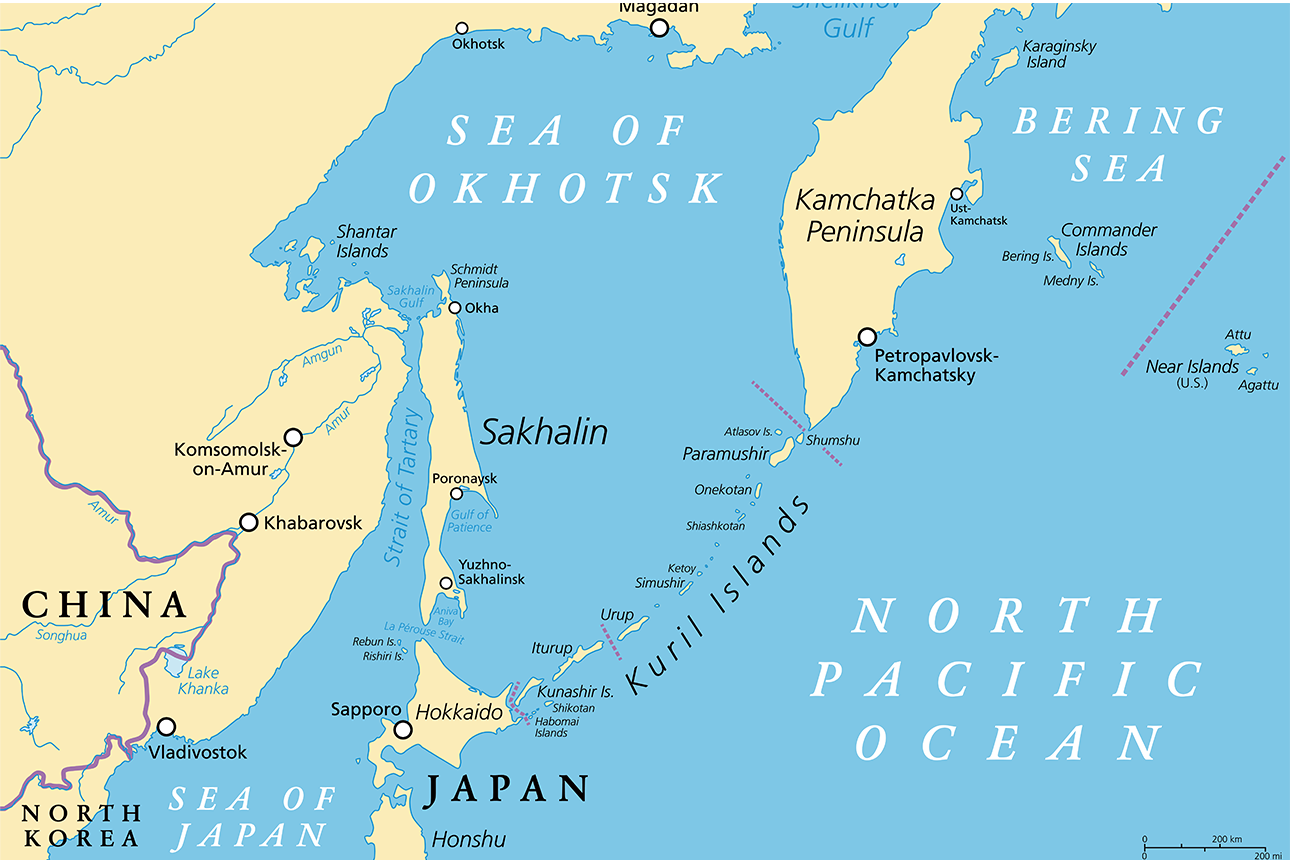
This area is the coastal region of northeastern Hokkaido facing the Sea of Okhotsk, a marginal sea of the North Pacific surrounded by Sakhalin, the Kuril Islands, and the Kamchatka Peninsula. In winter, drift ice from Russia brings rich nutrients and nurtures abundant marine resources like salmon, trout, crab, and red seabream, making it one of the world’s premier fishing grounds.
The Okhotsk area is vast, covering approximately 10,000 km², accounting for about 13% of Hokkaido’s total area. Its coastline stretches roughly 280 km from north to south.
The Winter-Summer Gap
While winter sees drift ice covering the entire sea surface, summer reveals a surprisingly blue sky and expansive vistas. This dramatic seasonal change is arguably the area’s greatest charm.
The Harsh History of Hokkaido Development, and the Northern Peoples’ Culture
This region offers more than just scenic tourist spots. It is home to Japan’s only prison museum, preserving and exhibiting the buildings of the former Abashiri Prison, once feared as “Japan’s harshest prison”. This prison, which provided labour for the major national project of Hokkaido’s development in the late 19th century, is not merely a tourist site. It is a valuable historical site conveying the harsh history of Hokkaido’s development to the present day, housing many Important Cultural Properties.
The region also houses one of the world’s few museums dedicated to northern peoples, gathering together materials from indigenous peoples across the world. Here, you can experience the culture and history not only of Hokkaido but also of the peoples who inhabit the lands surrounding the Sea of Okhotsk.
What We Support
Unlike in Sapporo, trains and buses are infrequent, making transportation in this area somewhat inconvenient. At Hokkaido Treasure Island Travel Agency, we assist in ensuring a safe and comfortable journey for our guests by facilitating dedicated private vehicles and guides proficient in foreign languages.
2. Winter Highlights: A Journey to Enjoy Drift Ice and the Cold
What you must see in Abashiri is drift ice, something that cannot easily be seen anywhere else. It crosses the sea from distant Russia and washes ashore. Witness the overwhelming scene as the sea transforms into a vast white plain. To see this drift ice up close, we recommend boarding one of the icebreakers departing from nearby ports.
From Abashiri Port, the icebreaker Aurora boldly ploughs through the icy sea, its large hull crushing the ice. You can feel the sound and vibration of the ice colliding with the ship, experiencing its sheer power at firsthand.
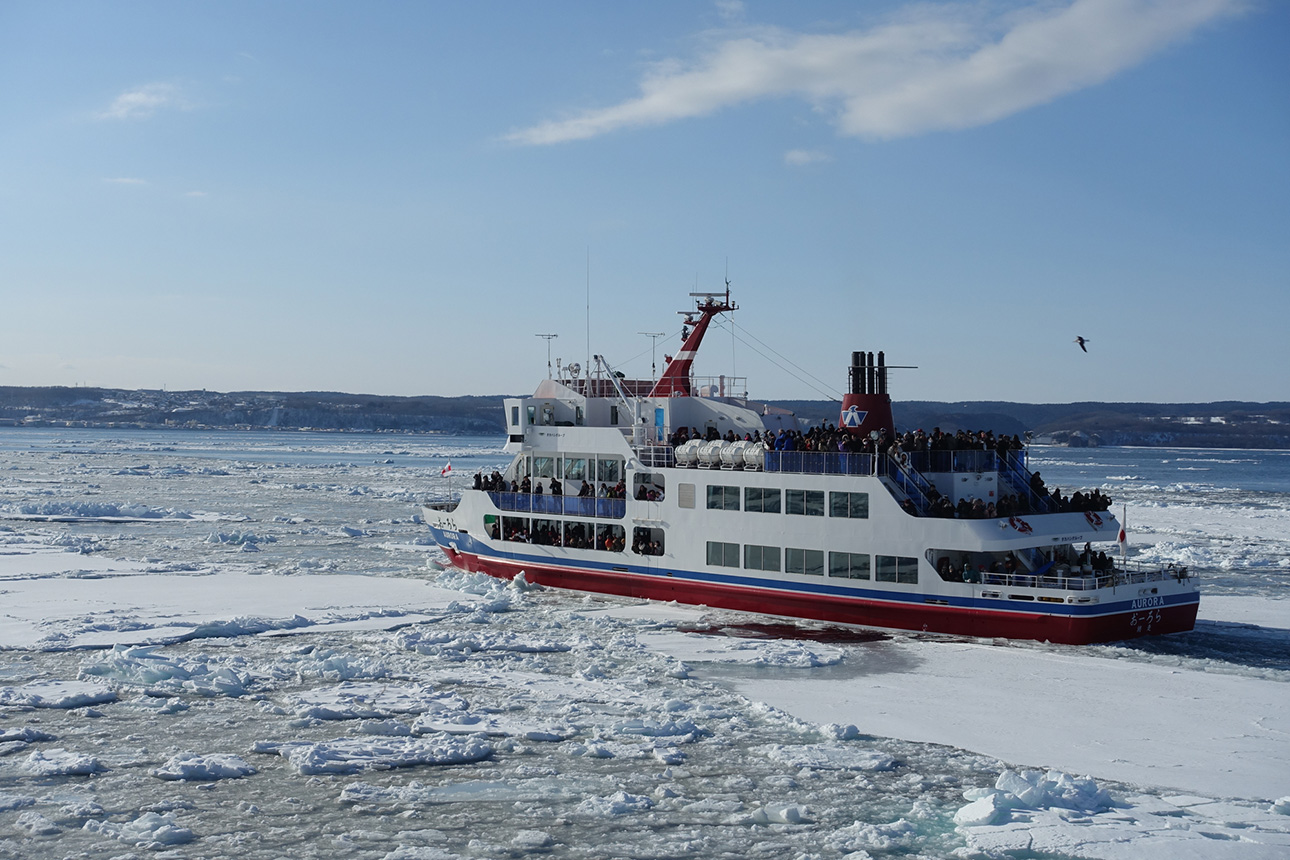
The Garinko, a different kind of icebreaker, sails from Monbetsu Port, located 100 km west of Abashiri. Two massive spiral drills mounted on the bow, called Archimedes screws, plough through the pure white drift ice with a bold, grinding sound. Standing on deck, the crisp, clear winter air will envelop you, while the deep, resonant sound of ice breaking and the powerful vibrations transmitted through the deck shake your entire body.
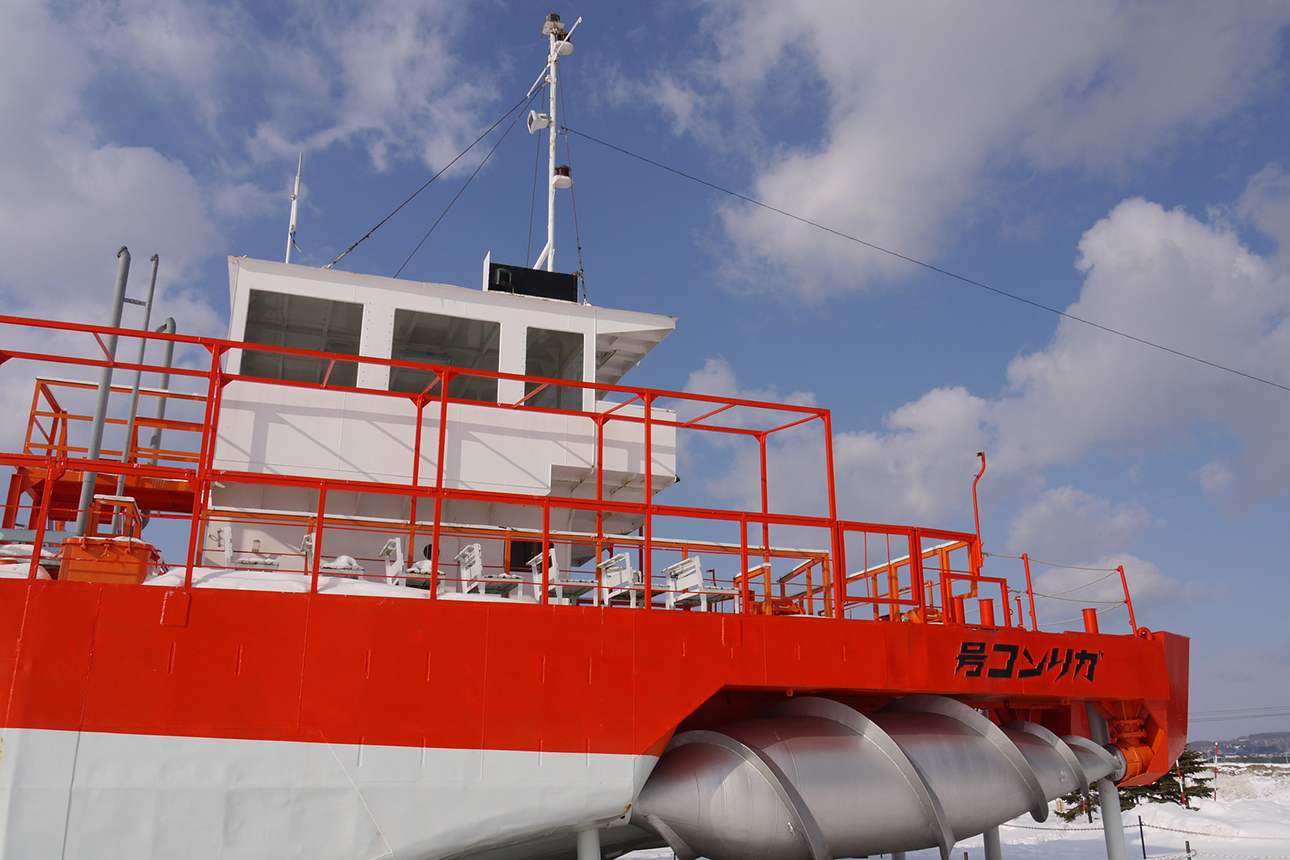
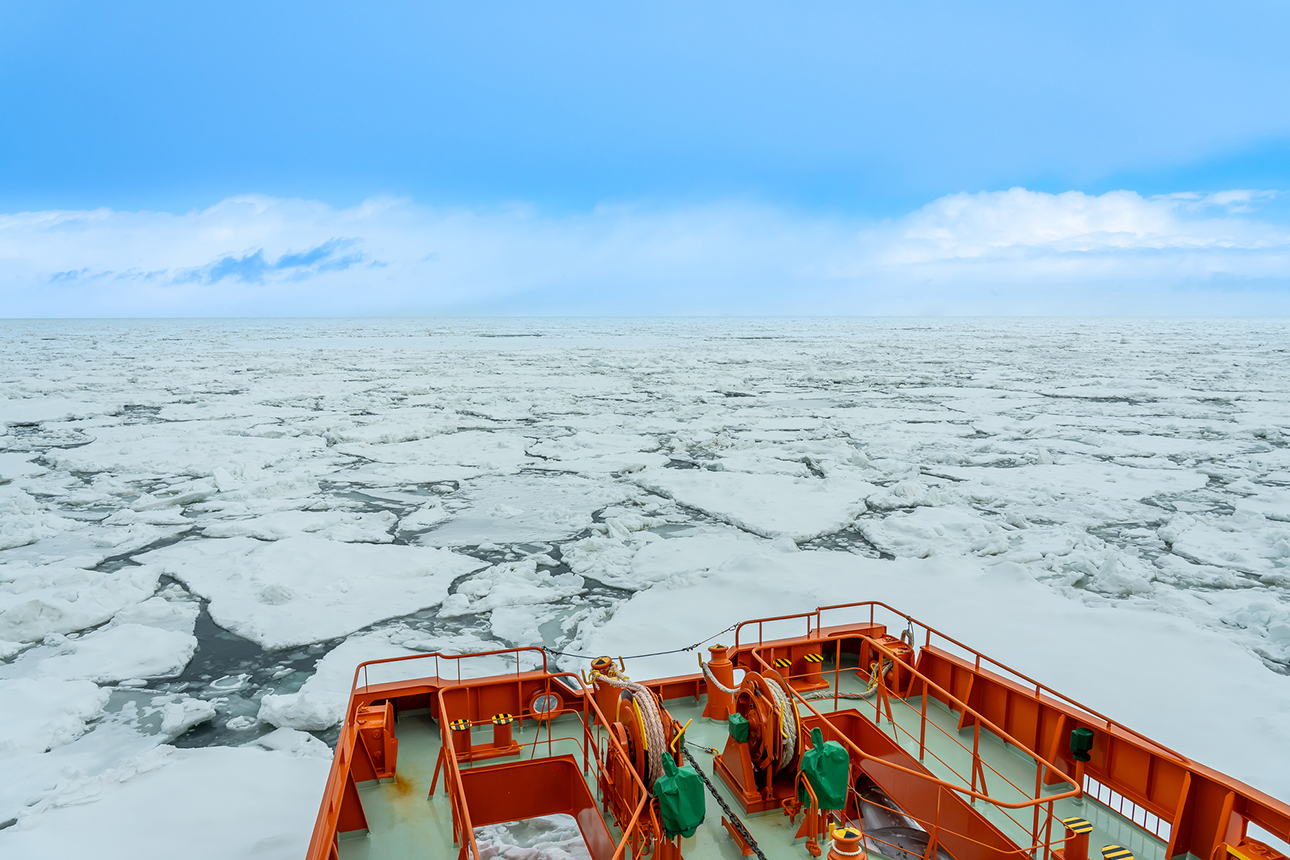
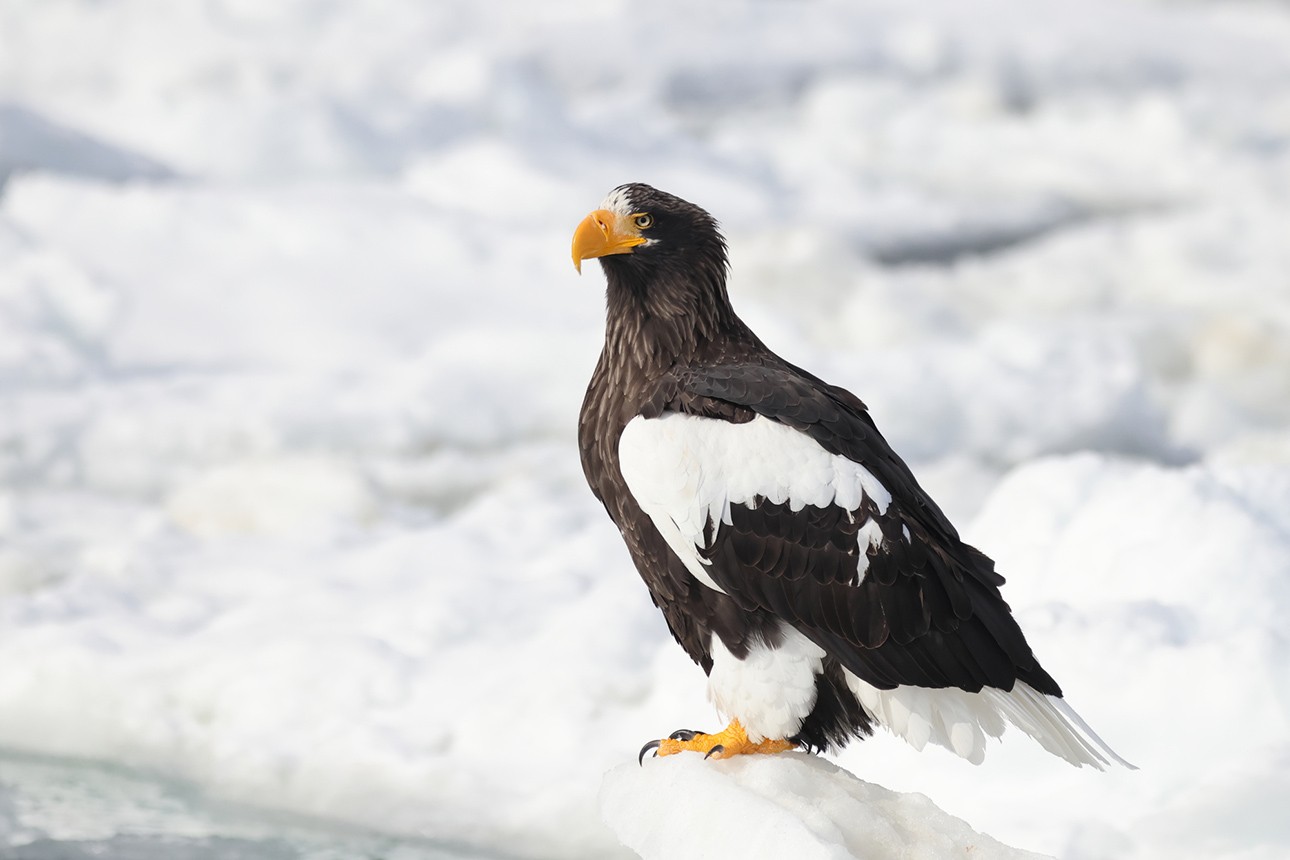
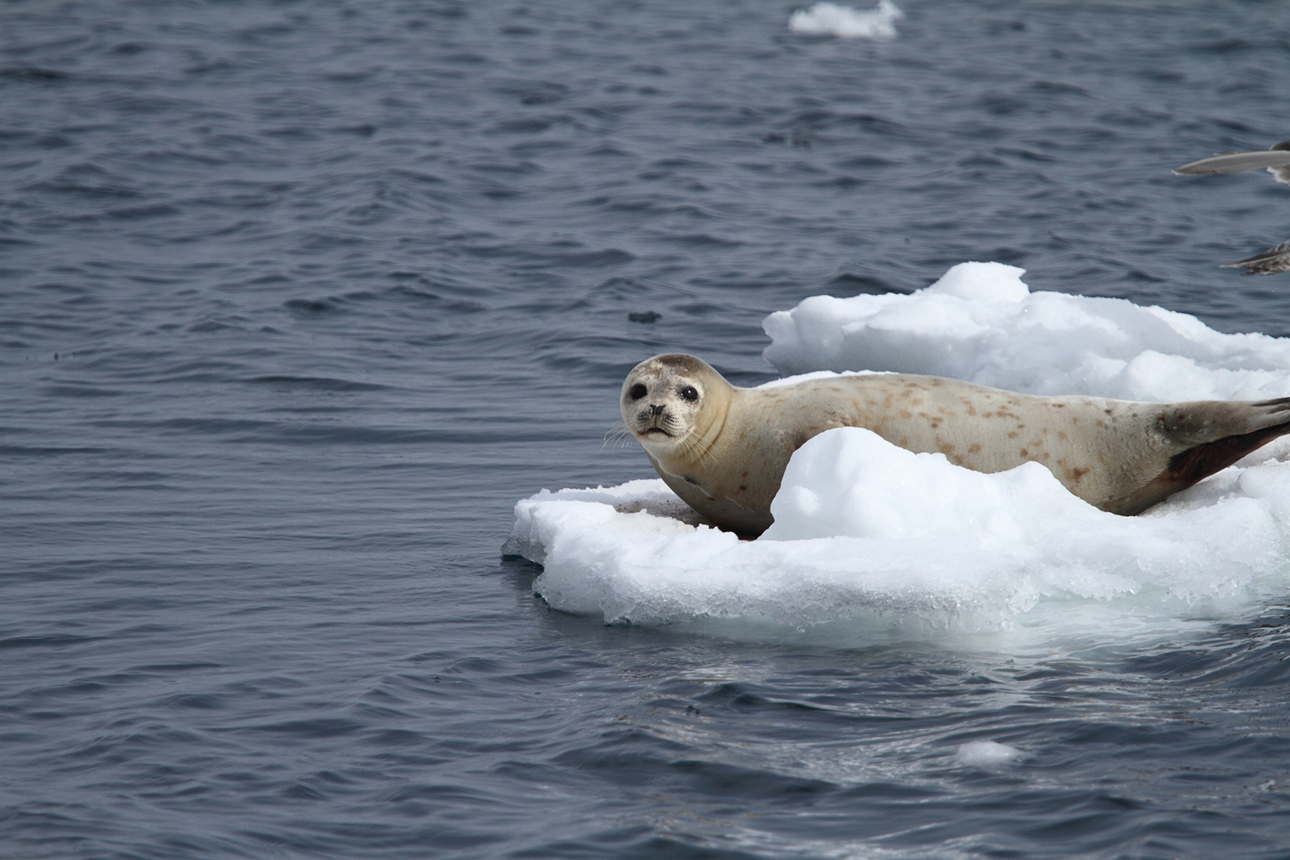
If you’re lucky, you might encounter a Steller’s sea eagle resting its wings on the ice, or the adorable seals. Watch the ship’s wake powerfully cutting through the white sea ice and savour the sheer scale of nature to your heart’s content.
How Does Drift Ice Form?
Drift ice is frozen seawater carried by wind and waves. Ice formed at the mouth of the Amur River in Siberia, Russia, is carried by ocean currents to Hokkaido.
Freshwater from the Amur River flows into the cold Sea of Okhotsk. This freshwater dilutes the salinity at the sea surface, creating conditions conducive to freezing. Furthermore, extremely cold winds blowing from Siberia below freezing point chill the sea surface. When the surface temperature drops to around −1.8°C, the water surface begins to freeze, forming small ice crystals.
These formed ice crystals then mix with the surrounding cold water, growing into pancake ice. In Japan we call this “lotus leaf ice”. Carried by wind and ocean currents, they flow southward toward Hokkaido while continuing to grow. The convergence of three conditions—cold freshwater from rivers + freezing winds + ocean currents—gives birth to drift ice in the Sea of Okhotsk, which then drifts southward to Hokkaido.
Due to recent global warming, the period when drift ice can be observed has become later and shorter. Some experts suggest that drift ice may no longer be visible in Hokkaido in the near future. Visiting Abashiri while this natural phenomenon can still be seen might be a good idea.
Encountering Seals Intended for Release Back into the Wild
Abashiri is home to the Tokkari Center, a unique facility in Japan that cares for rescued seals. “Tokkari” means seal in the language of the Ainu, the indigenous people of Hokkaido. Beginning with the rescue of four seals in 1987, the centre now cares for over 20 seals.
Here, activities focus on returning seals to the wild. Once they regain their strength, they are released back into the Sea of Okhotsk. This cycle of protection and reintroduction is a valuable initiative. Adjacent to the icebreaker’s dock and the Okhotsk Tower, the world’s first underwater observation tower in an icy sea, the centre serves as a core facility within the Monbetsu Marine Park. This park offers a comprehensive learning experience about the nature and wildlife of the Sea of Okhotsk, conveying the importance of seal ecology and conservation efforts.
Unique Experiences – Drift Ice Walk
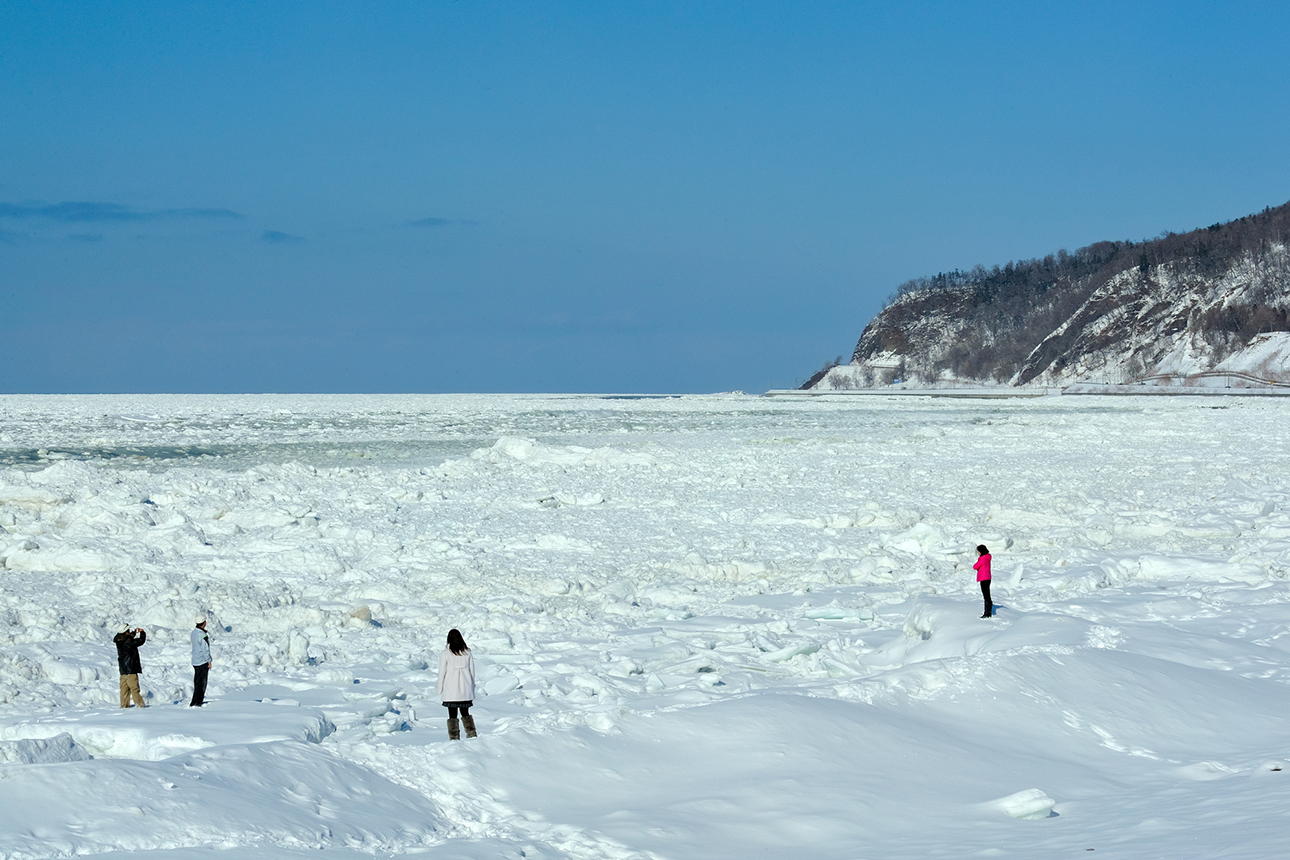
Walking on drift ice is usually strictly prohibited because it’s extremely dangerous. The ice is fragile, unstable, and sometimes drifts away from the shore. Local children are taught never to walk on the ice when it arrives. However, with a proper guided tour with a trained guide, participants can safely walk on the ice or even float in the sea wearing a dry suit. At peak season, the sea surface looks like a vast, pure white plain stretching as far as the eye can see.
While the drift ice plain may appear flat at first glance, it is actually highly three-dimensional, with layers overlapping and sections rising high. And if the light conditions are right, you might encounter the true colour of the drift ice: ice blue. The beauty of drift ice can only truly be understood by those who come and see it. Please come to see its beauty for yourself.
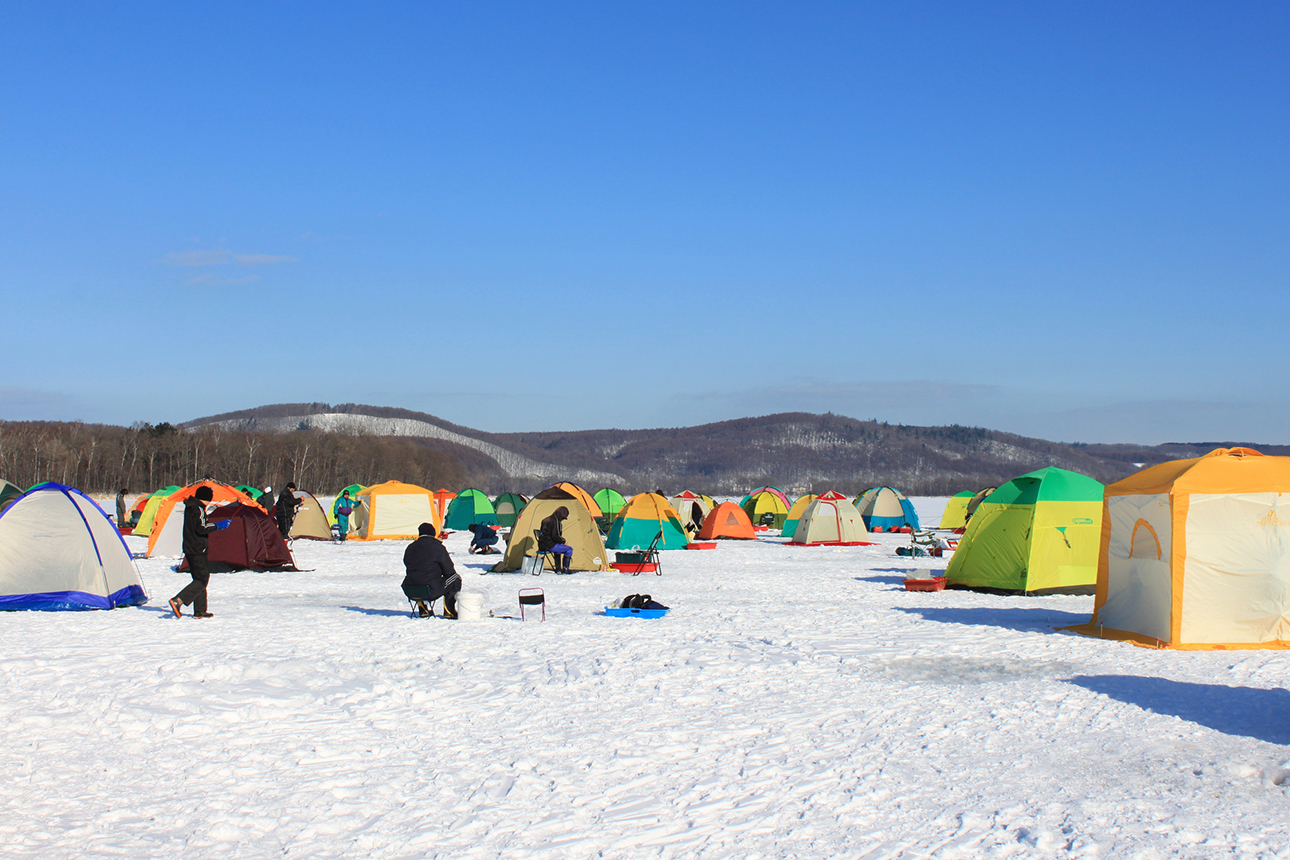
Wakasagi (Smelt) Fishing
Enjoy wakasagi fishing on frozen Lake Abashiri, then savour your catch fried as tempura right there on the spot. It’s a luxurious experience that offers unbeatable freshness. Even though you’re on an icy lake, you’ll be well protected from the cold inside a small tent, allowing you to relax and enjoy the fishing.
Okhotsk Drift Ice Museum and Observatory
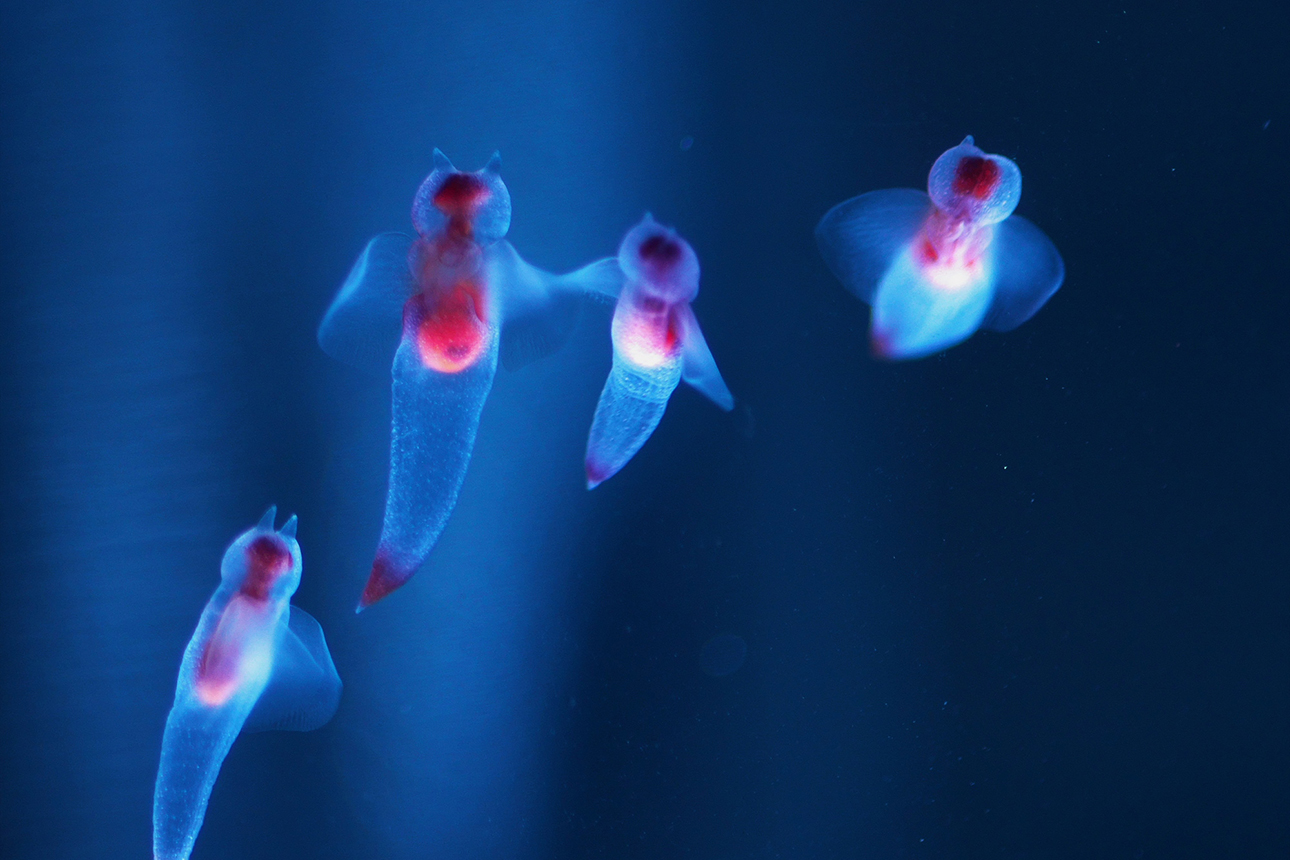
A facility where even those who dislike the cold or who visit outside the winter months can enjoy drift ice. It features drift ice and creatures of the Okhotsk Sea as its themes. The Drift Ice Underwater Live show lets you enjoy the colourful beauty of ice through 360-degree camera footage, and you can see close-up images of clione, small sea creatures that are often called “angels of the drift ice”. The -15°C Drift Ice Experience Terrace displays 100 tons of real drift ice.
The rooftop observatory offers breathtaking views of the vast Okhotsk Sea, Lake Abashiri, Lake Mokoto, and the majestic Shiretoko mountain range. Located atop Mount Tento at an elevation of 207 metres, the view from the summit is praised as so beautiful it feels like you’re in Shangi-La.
3. Summer Highlights: Scenic Drives and Culinary Delights
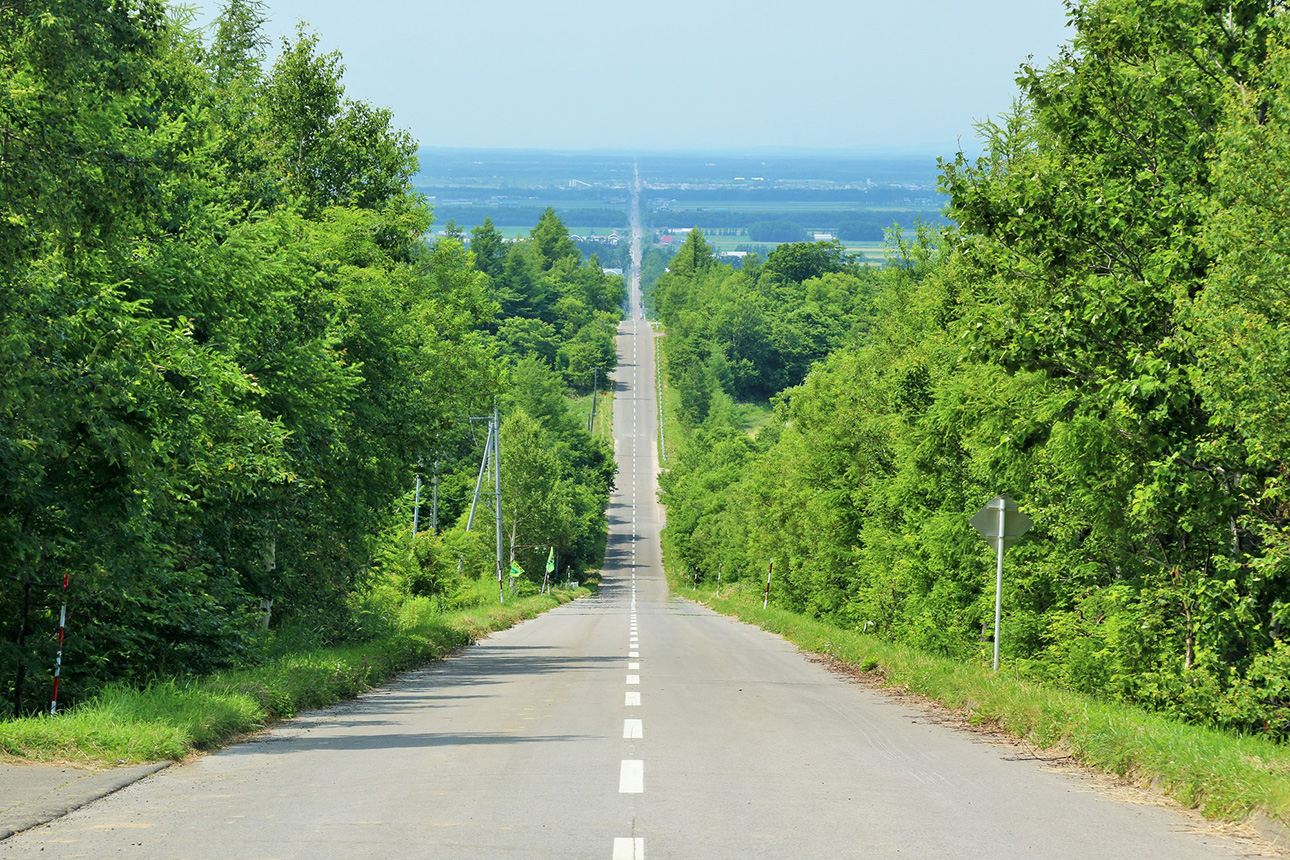
The Okhotsk region in summer offers breathtaking vistas on a grand scale. Centered around the gateway city of Abashiri, this vast coastal area—including neighboring towns such as Shari—showcases Hokkaido’s expansive natural beauty at its finest. Among the most iconic scenic drives in the region is the Road to the Sky (known in Japanese as “Ten ni Tsuzuku Michi”). Located in Shari Town, just about an hour’s drive from Abashiri, this straight road—as its name suggests—seems to stretch all the way to the distant horizon and into the sky itself.
This seemingly endless straight road embodies quintessential Hokkaido scenery. As you drive, sweeping panoramic views unfold on both sides: the sparkling Okhotsk Sea to the north, the majestic Shiretoko mountains rising in the distance, and lush green farmland stretching endlessly. It is a perfect summer highlight for those exploring the Abashiri area, easily combined with nearby attractions like Notoro Cape or Koshimizu Primeval Flower Garden.
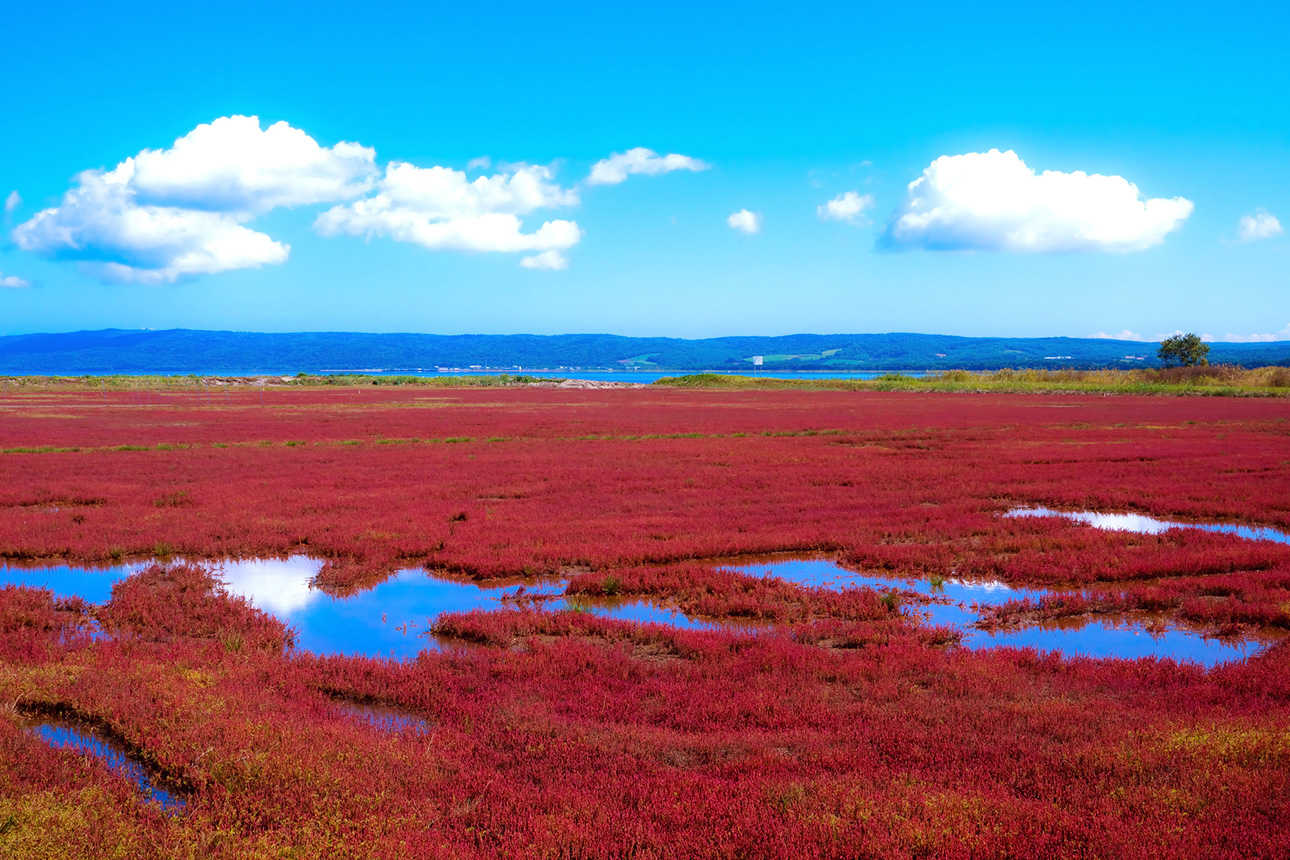
Lake Notoro Dyed Crimson
In autumn, the shores of Lake Notoro are blanketed by Japan’s largest colony of sea asparagus (Akkeshi-sou). Around September, the lake surface is turned into a crimson carpet, showing a beautiful contrast with the blue sky.
Lake Notoro is a seawater lake, and sea asparagus is a halophyte that grows wild in the lake’s marshy wetlands. While green from spring to summer, it transforms into a vivid crimson in autumn, dyeing the lakeshore in a fiery red.
A wooden boardwalk is provided, allowing visitors to walk through the vegetation spread out like a red carpet and observe its beauty up close. When the wind blows, the small plants sway like waves, and the red hues reflected on the lake’s surface are captivating. As Japan’s largest colony of this plant, it showcases a natural work of art that epitomizes autumn in Hokkaido.
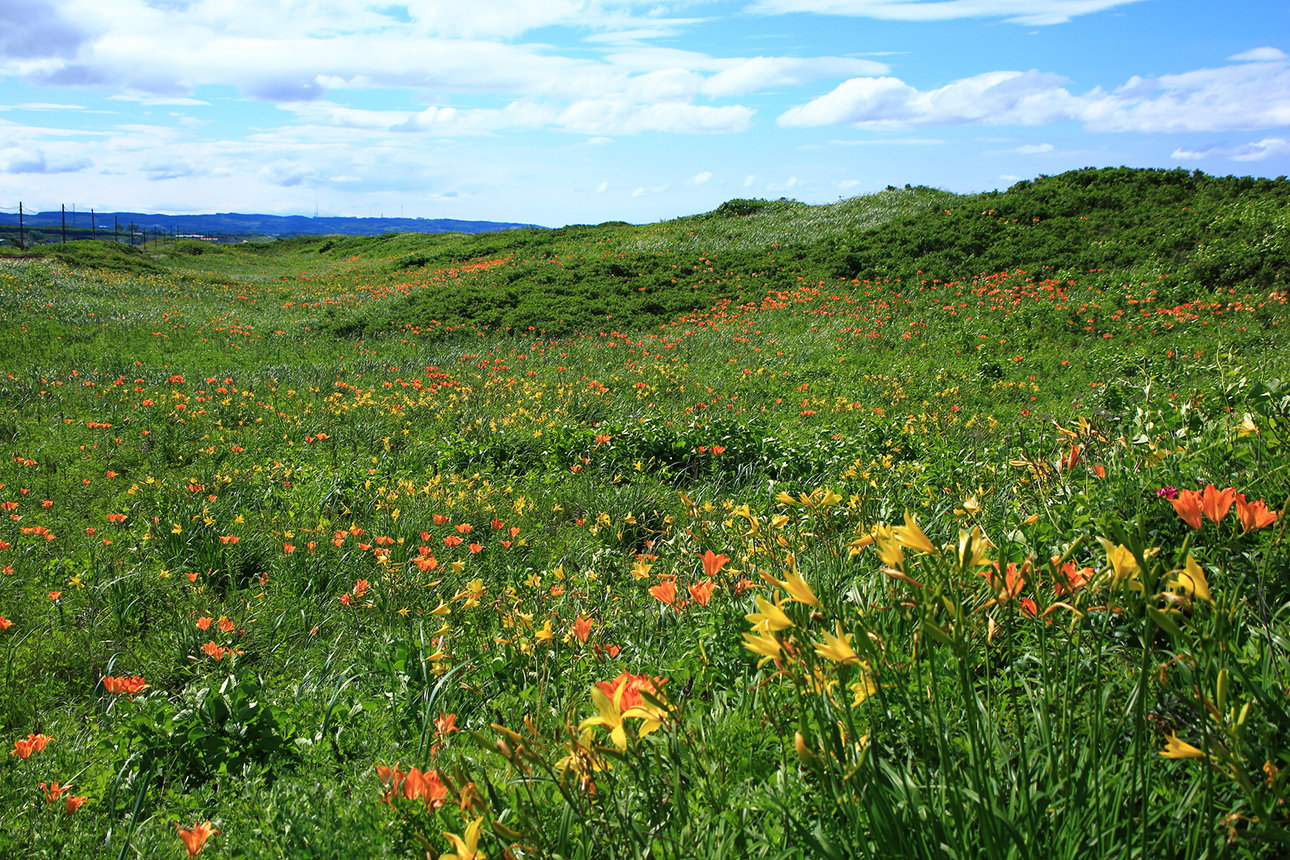
Koshimizu Wildflower Garden in Bloom
Enjoy leisurely strolls amidst a riot of natural flowers blooming on coastal sand dunes, feeling the winds of the Sea of Okhotsk.
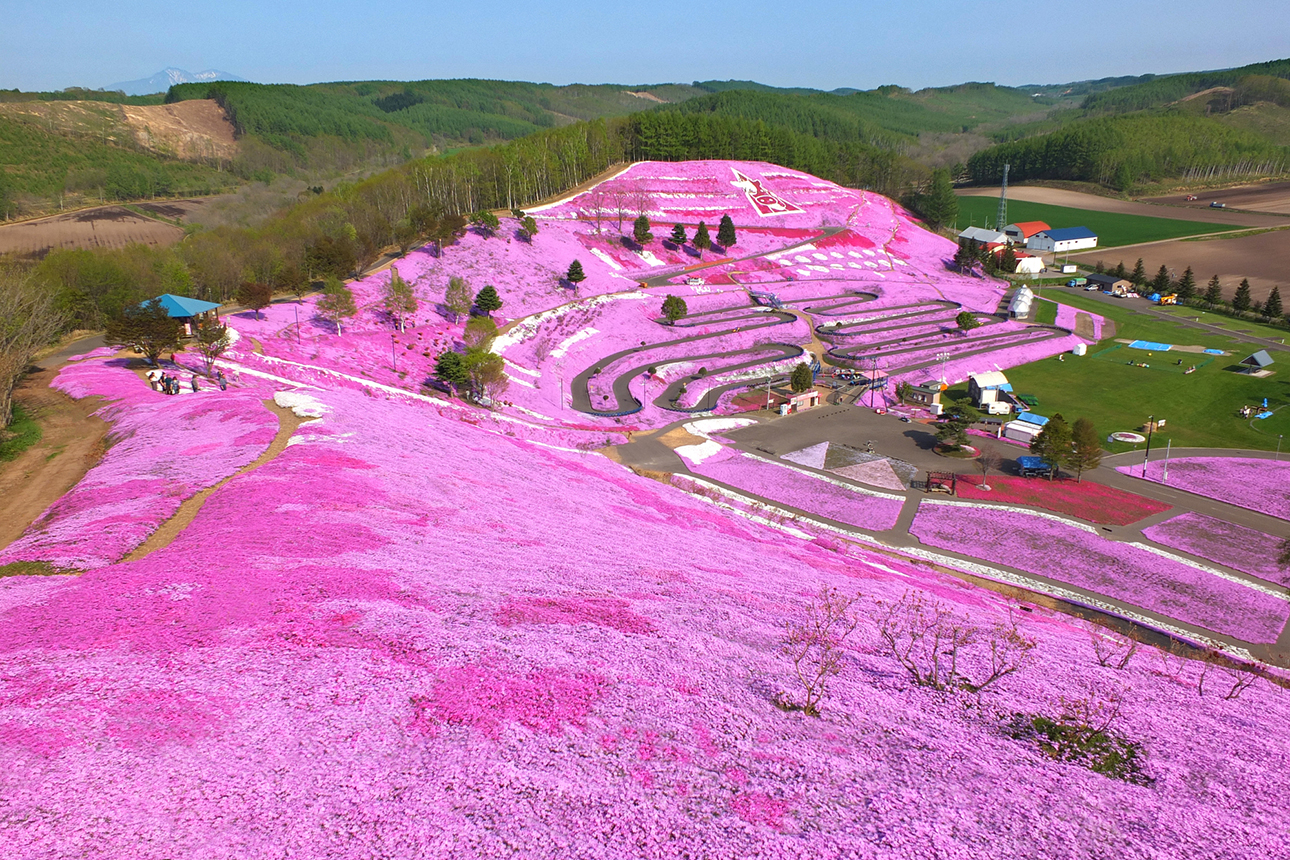
Take a Trip to Oozora’s Moss Phlox (Shibazakura)
A beautiful landscape of hills blanketed in pink spreads out before you.
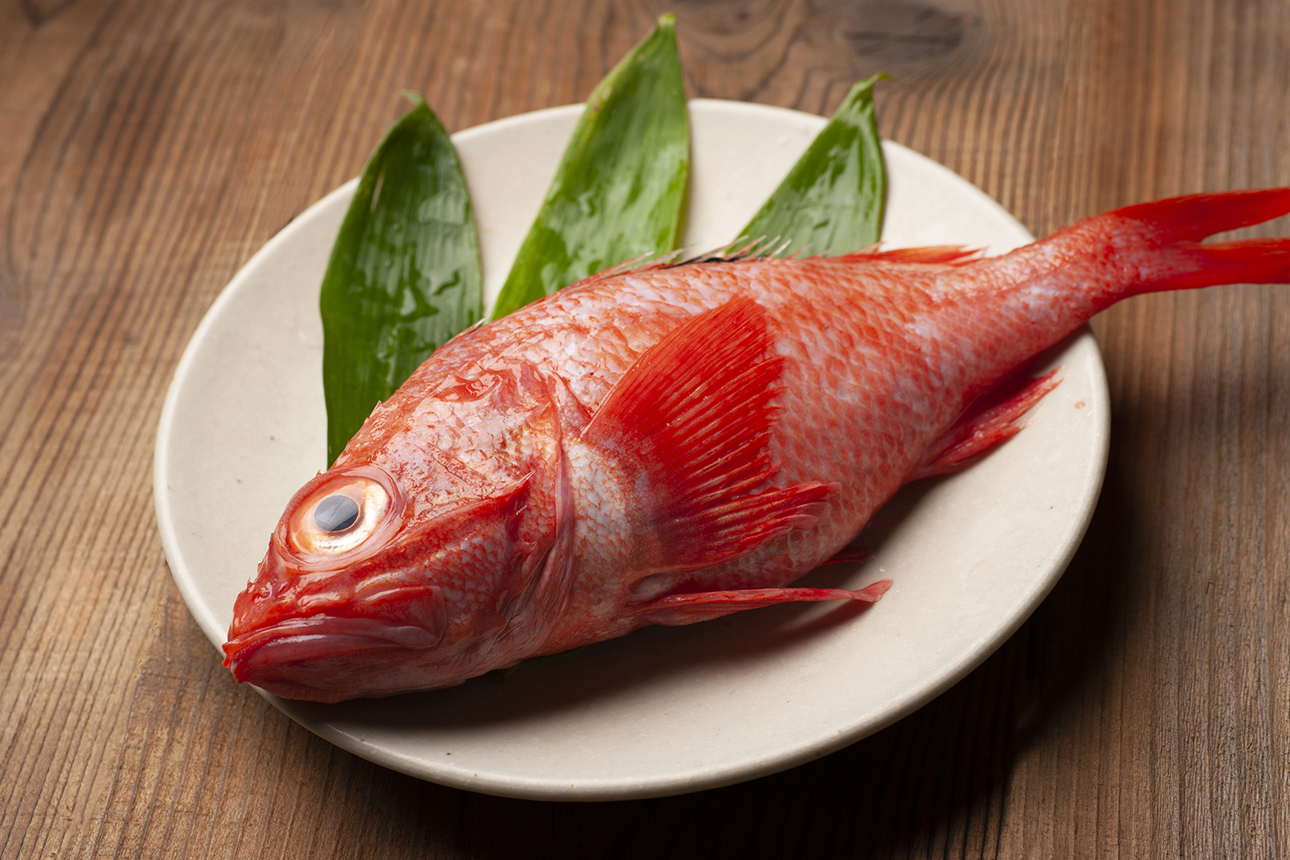
When in Abashiri, Try Fishing for a Rockfish Known as Kichiji or Kinki
This fish is known in English as the broadbanded thornyhead, or simply thornyhead, due to the spines on its head. It is a deep-sea fish inhabiting the Sea of Okhotsk and the Pacific Ocean off southern Hokkaido at depths of 150 to 1200 metres.
Characterized by its red body and big eyes, it typically measures around 30 cm in length. It’s a premium fish sold for about ¥3,500 per fish. Despite being a luxury fish, it’s a local flavour you really must try. Enjoy it in a rich, fatty simmered dish.
4. Spotlight on History: Abashiri Prison Museum
The most famous attraction in Abashiri is Abashiri Prison. Once feared as “Japan’s harshest prison”, it gained nationwide fame in the 1960s through the film series Abashiri Prison, based on this place.
It is Japan’s only prison museum, featuring buildings actually used in the late 19th century that were relocated and preserved. This museum goes beyond merely displaying old buildings; its distinctive feature is conveying the harsh history of the prisoners, the “unsung heroes of Hokkaido’s development”.
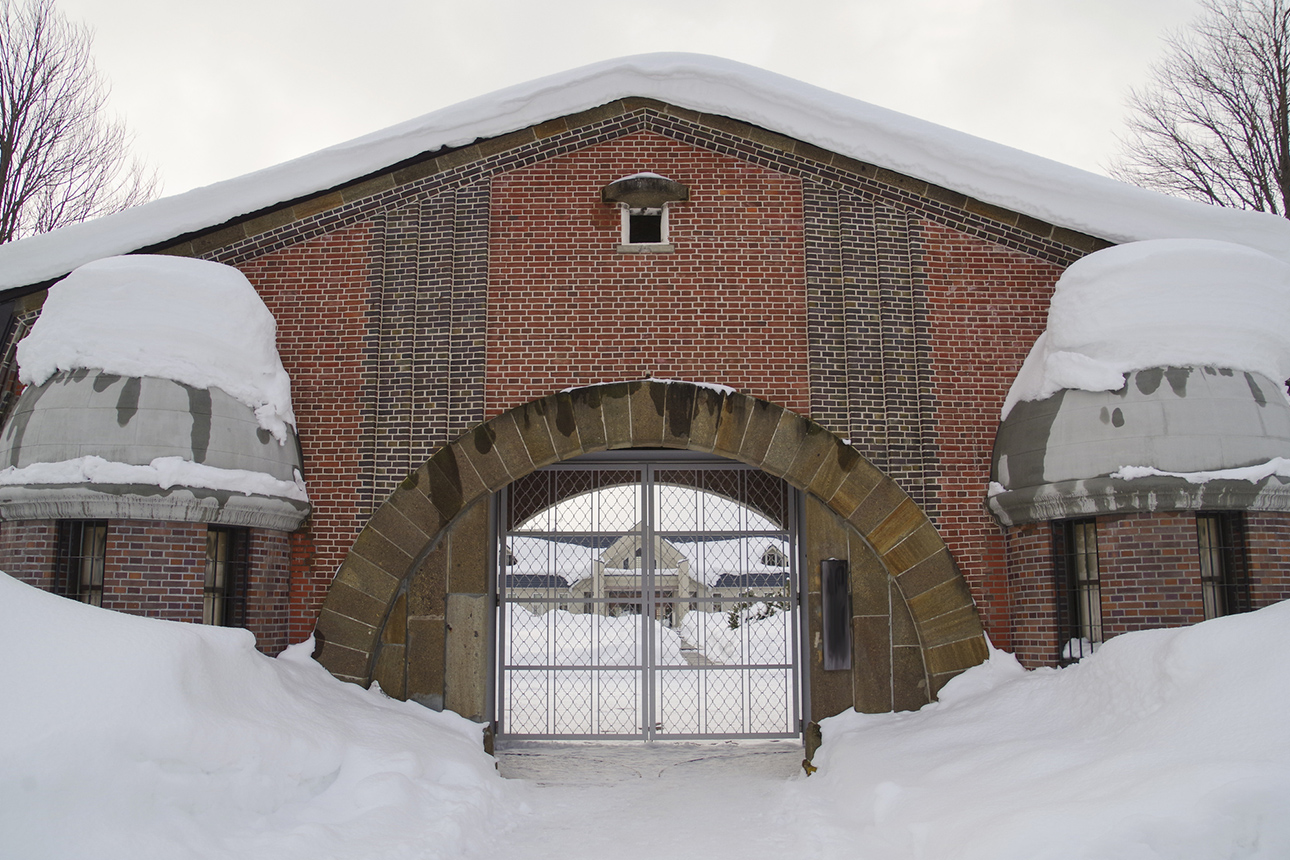
During the late 19th century Meiji era, rapid development of Hokkaido became an urgent necessity to counter Russia’s southward expansion policy. During this period, criminals gathered from across the nation were conscripted as labourers. Particularly during the construction of the Central Road, also known as the Prisoners’ Road, prisoners were chained together to prevent escape and forced into gruelling labour, repeatedly camping in the mountains. Many perished from the cold, malnutrition, and injuries.
This museum gives a deeper understanding of Hokkaido’s pioneering history and the hardships experienced by the prisoners who laid the foundations for modern Hokkaido.
The Five-Wing Radiating Single-Storey Prison Building
Also of architectural interest is the Five-Wing Radiating Single-Storey Prison Building, designated a National Important Cultural Property. Centred around a central guard post, five long corridors radiate outward, designed to allow a small number of guards to efficiently monitor the entire complex. Completed in 1912, this building is known as the world’s oldest and largest wooden prison.
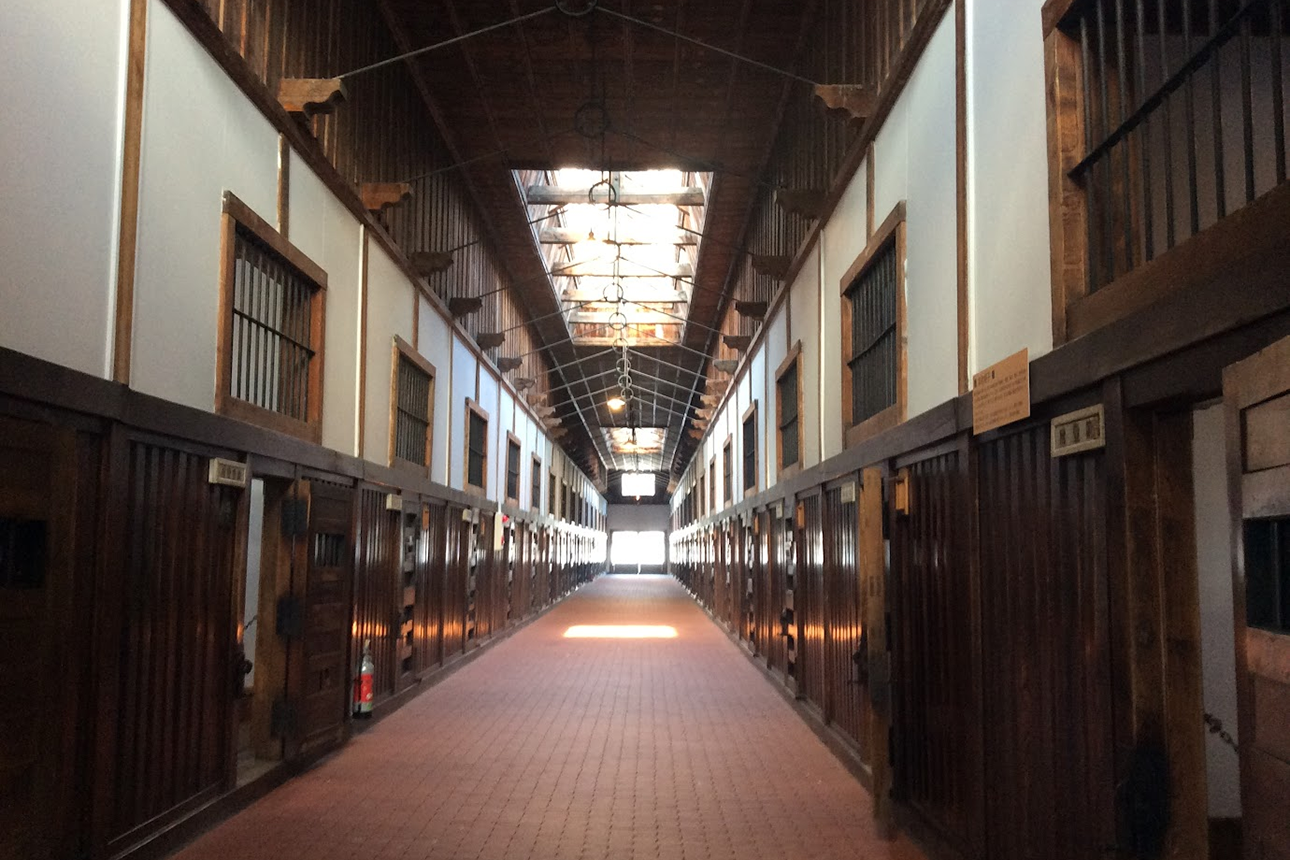
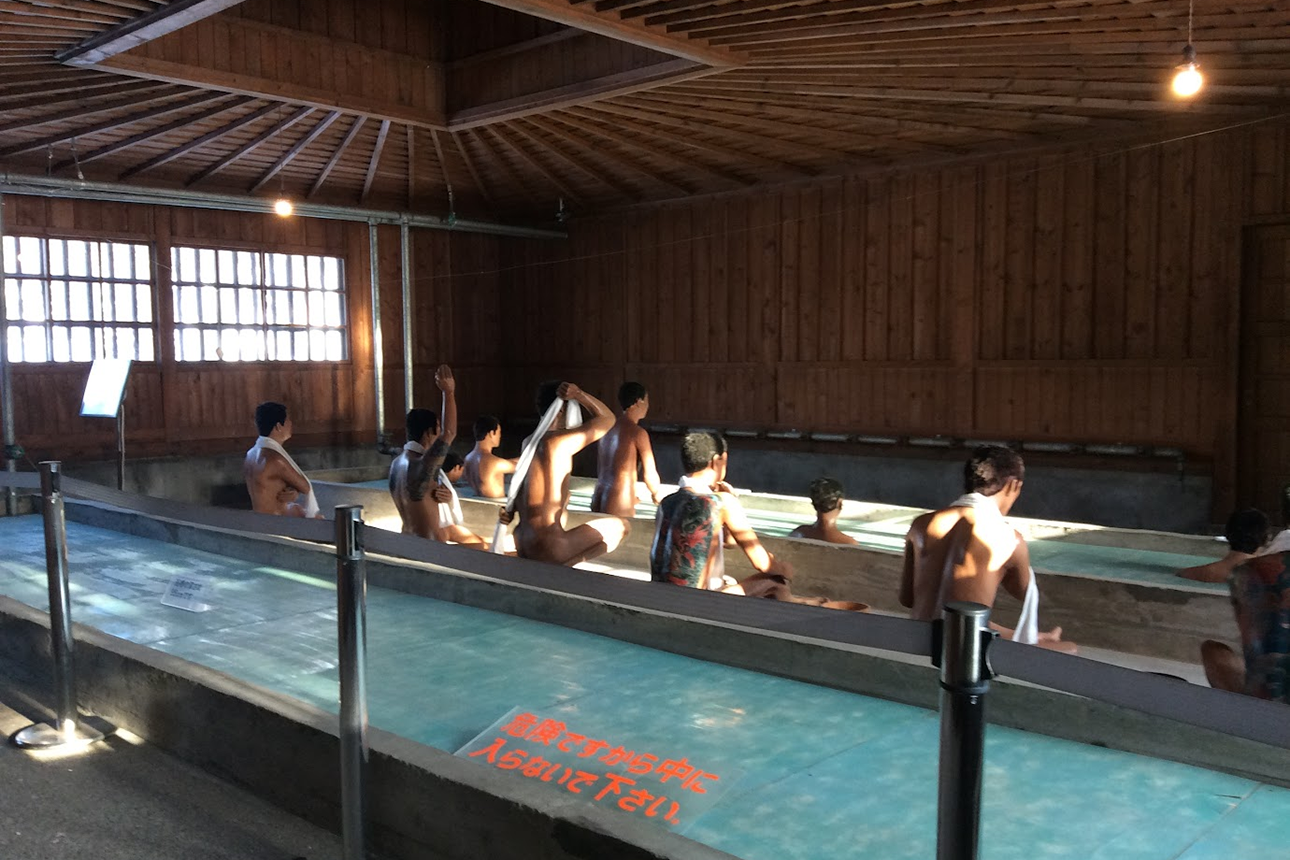
Throughout the vast grounds, meticulously crafted mannequins representing prisoners recreate scenes from the era, allowing visitors to observe at firsthand daily activities like meals, bathing, and hard labour.
Via this prison, once feared as a place “at the ends of the earth”, visitors can learn about modern Japan’s history and the preciousness of life, making it an essential stop on any Hokkaido tour.
It has also gained popularity among manga and anime fans as a setting featured in the popular series Golden Kamuy.
5. Experience the Culture: Northern Peoples’ Museum
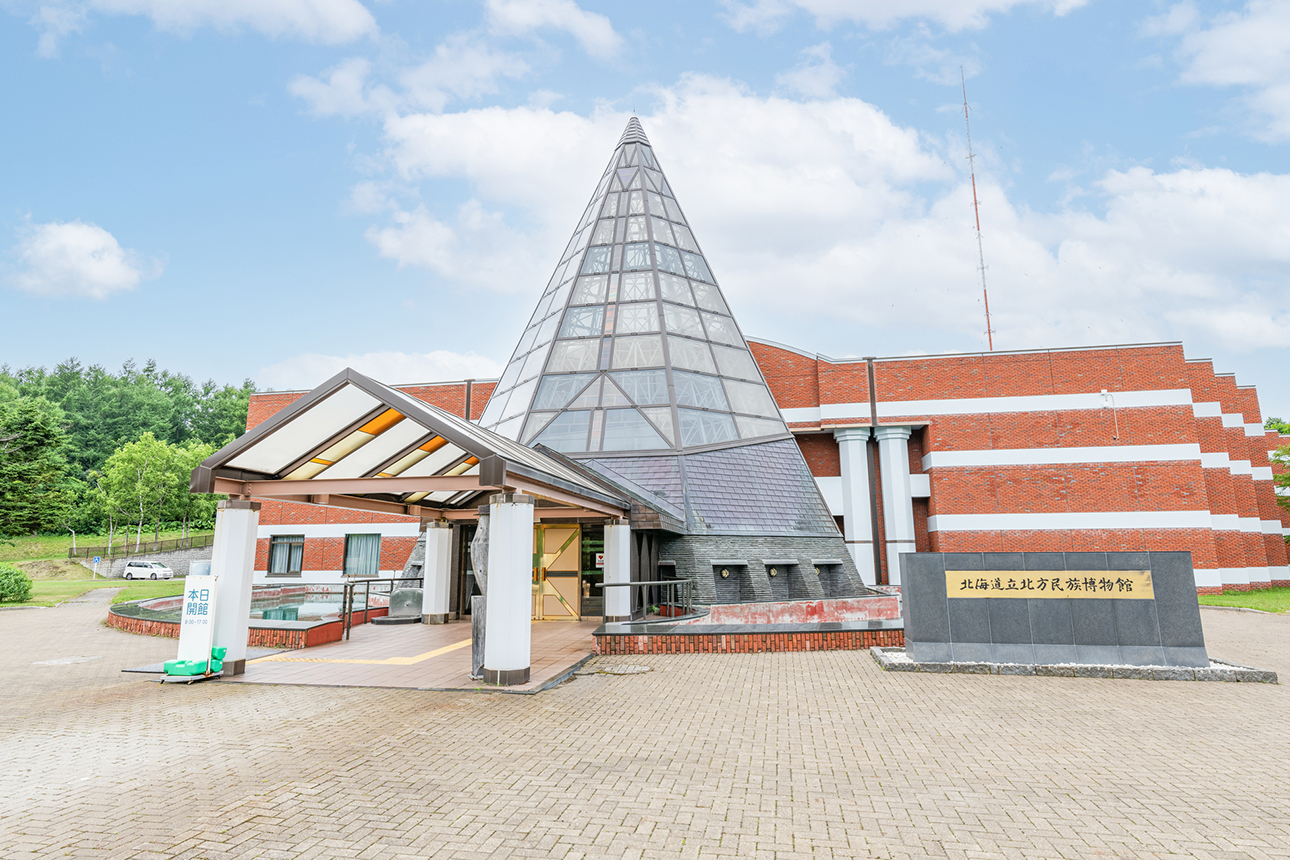
This museum showcases the wisdom of people living in the extreme cold, including the Ainu, Japan’s indigenous people. Clothing and tools made from animal skins are on display, allowing visitors to learn about the survival techniques, spirit, and wisdom of ancient peoples who lived in harmony with nature. Covering a wide range of northern peoples, from the Inuit of Greenland in the east to the Sami (Lapps) of Scandinavia in the west, the museum is organized thematically, and covers clothing, food, housing, livelihoods, spiritual culture, and cultural traditions. It also introduces prehistoric culture, focusing on the Okhotsk culture that once flourished along the coast of Hokkaido’s Sea of Okhotsk.
You can also experience the culture of the Ainu and thrill to the unique sounds of their musical instruments and the beauty of their embroidery.
6. Travel Advice: Navigating the Vast Area
While the Okhotsk region is very large, access from Tokyo is fairly good. Direct flights from Haneda to Memanbetsu, the nearest airport, take just under two hours. Access is better than you might imagine.
However, public transportation on the ground is limited, and attractions are scattered, making a car essential for travel. Driving on snowy roads, especially in winter, can be challenging for those unfamiliar with it.
We recommend a two or three-night stay based in Abashiri. Plan a relaxed itinerary that allows time to visit places like Monbetsu and Lake Saroma.
What We Support
Leave the challenging snowy road driving to the pros. Our experienced, multilingual guides will explain the region’s highlights and history. Our Hokkaido-based staff can create efficient itineraries and provide comfortable transportation. Leave reservations for popular icebreakers and locally acclaimed restaurants to us.
7. Conclusion: Your Next Journey to the Okhotsk Region
How did you find our introduction to the “untouched Hokkaido” of the Okhotsk area, including Abashiri? Its vast land and harsh climate have nurtured a rich natural environment. We invite you to experience the wonder of Hokkaido’s undiscovered beauty on your next journey.