Hokkaido boasts abundant natural beauty. The Kushiro region in eastern Hokkaido is home to three beautiful lakes, volcanoes, and wetlands, offering visitors a chance to enjoy unparalleled natural grandeur.
This area has two national parks, allowing visitors to experience the exceptional beauty of Hokkaido that cannot be found anywhere else.
This column introduces the charms of the Kushiro region, divided into two seasons. One is the white season, covered in snow and ice, and the other the green season, with its beautiful flowers and greenery.
Table of Contents:
1. What Is the Kushiro Region ?
– Red-crowned Cranes in Kushiro Marsh National Park
– Birdwatching
– Lake Akan: Frost Flowers, Smelt Fishing, Ice Festival
– Hot Springs
2. The White Season
– Red-crowned Cranes in Kushiro Marsh National Park
– Birdwatching
– Lake Akan: Frost Flowers, Smelt Fishing, Ice Festival
– Hot Springs
3. The Green Season
– Kushiro Marshland: Canoeing, Norokko Train
– Three Lakes in Akan Mashu National Park:Lake Akan / Lake Mashu / Lake Kussharo
– Mt. Io
4. Foods
– Katte-don
– Robata-yaki
– Ramen
1. What Is the Kushiro Region?
It is a Hokkaido region rich in nature centred around the city of Kushiro that has lakes, volcanos, and wetlands. Located in the eastern part of Hokkaido, it refers to the eight municipalities included in the city of Kushiro (the towns of Kushiro, Akkeshi, Hamanaka, Shibecha, Teshikaga, Shiranuka and Tsurui), and the area surrounding the city. Kushiro is the economic and transportation hub of eastern Hokkaido, and has two national parks: Kushiro Marsh National Park and Akan-Mashu National Park. It is a treasure trove of wildlife, home to two Special Natural Monuments. One is the red-crowned crane and the other is marimo, green algae balls which can only be seen in Lake Akan in Japan.
It also boasts rich fishing grounds where warm and cold currents meet, along with vast dairy farming areas, making it a region blessed with high-quality ingredients of dairy farming products like milk, cheese, ice cream and sweets.
It has relatively little snowfall in winter. From autumn to winter, it enjoys many clear days, making it a comfortable place to live. For winter sports, skating is more popular than skiing in this region.
Kushiro’s average August temperature is 18°C (64°F), making it a natural summer retreat. Some people come here to escape from the summer heat of Honshu, mainland Japan. Furthermore, while many people in Honshu suffer from hay fever caused by cedar pollen in spring, the Kushiro area doesn’t have native cedar and cypress trees, thereby attracting visitors seeking relief from hay fever.
2. The White Season (Winter)
Hokkaido’s winter is a harsh season enveloped in snow and ice. Yet, it is precisely during winter that Hokkaido reveals landscapes unique to this season. During blizzards or heavy snow fall, roads may close and travel becomes restricted. However, once the snow stops and the skies clear, a beautiful scene emerges: a land blanketed in pure white contrasted against a blue sky. Winter-only activities like skiing, snowshoeing and wakasagi (smelt) ice fishing can be enjoyed.
The Red-crowned Crane
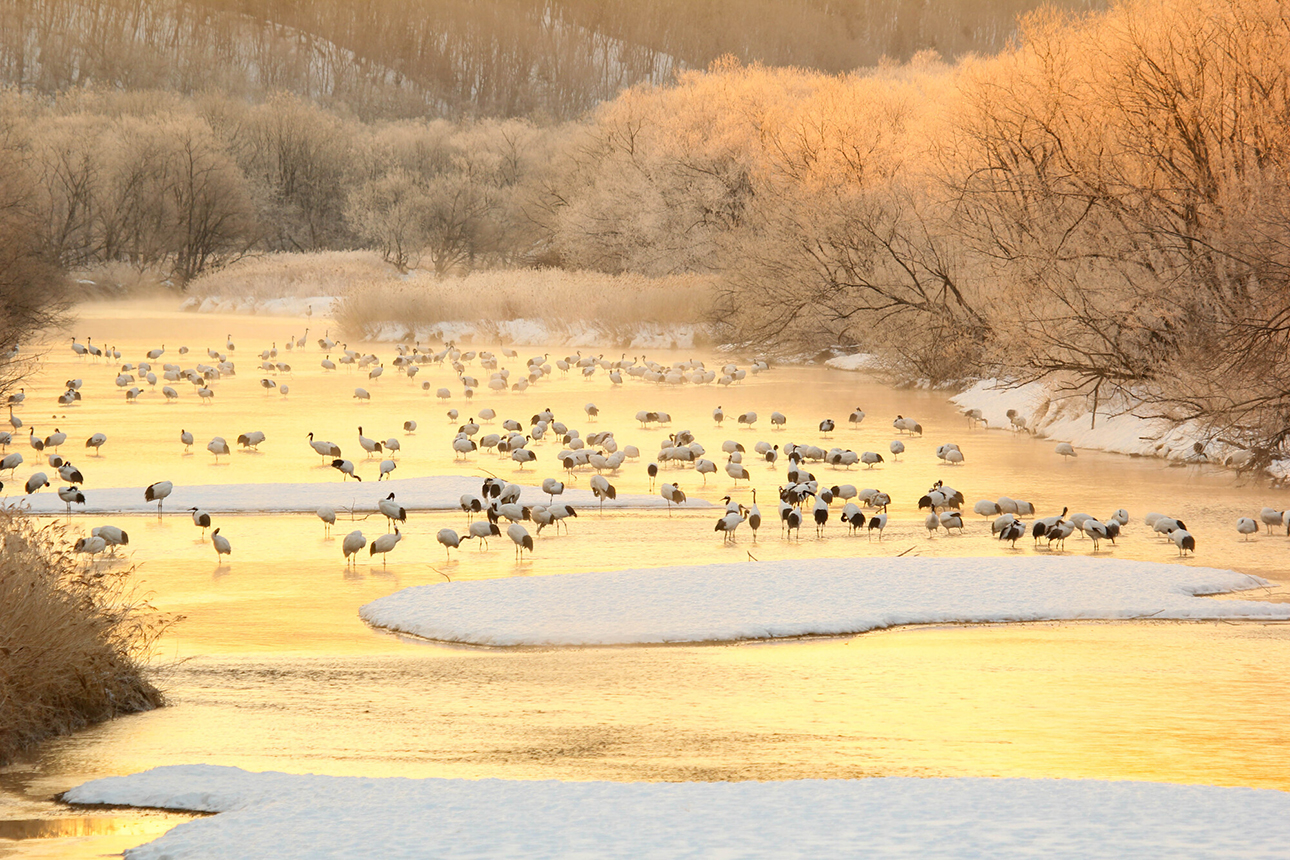
Red-crowned cranes are a must-see during the white season in Kushiro. This beautiful, large bird is a symbol of Hokkaido. The Ainu people call it the “deity of the wetlands”. Red-crowned cranes are a common sight in Hokkaido, especially in Kushiro and Tsurui, which is part of the Kushiro area. Tsurui means “where cranes dwell”. Winter is the season when red-crowned cranes find mates, and on the snowfields you might witness the mating dance they perform to attract partners. Many tourists and photographers visit from throughout Japan and overseas hoping to witness the dance.
While over 1,000 birds can now be observed throughout Hokkaido, the red-crowned crane was once on the brink of extinction. A century ago, these cranes inhabited various regions in Japan, but they were thought to have been hunted to extinction when Japan’s modernisation began in the late 19th century and development progressed.
However, dozens of cranes were discovered in the Kushiro Marsh, an area untouched by settlement due to its cold climate and the wet soil, which was difficult to transform into soil suitable for farming. Crane conservation efforts were launched by citizens and the municipal government. Local volunteers continued feeding them during the food-scarce winter months. Thanks to their efforts, the numbers of cranes grew, their habitat expanded, and they have now become a symbol of Kushiro.
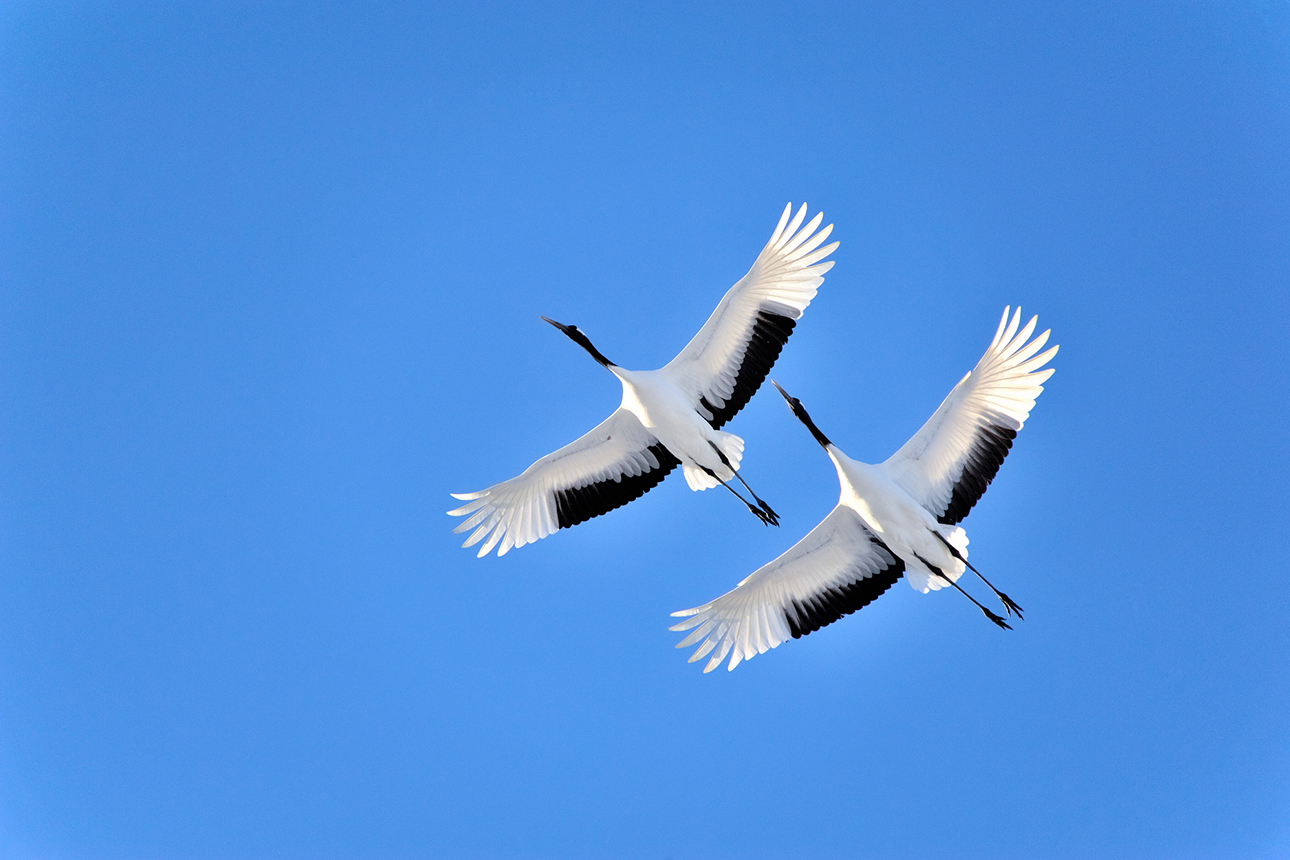
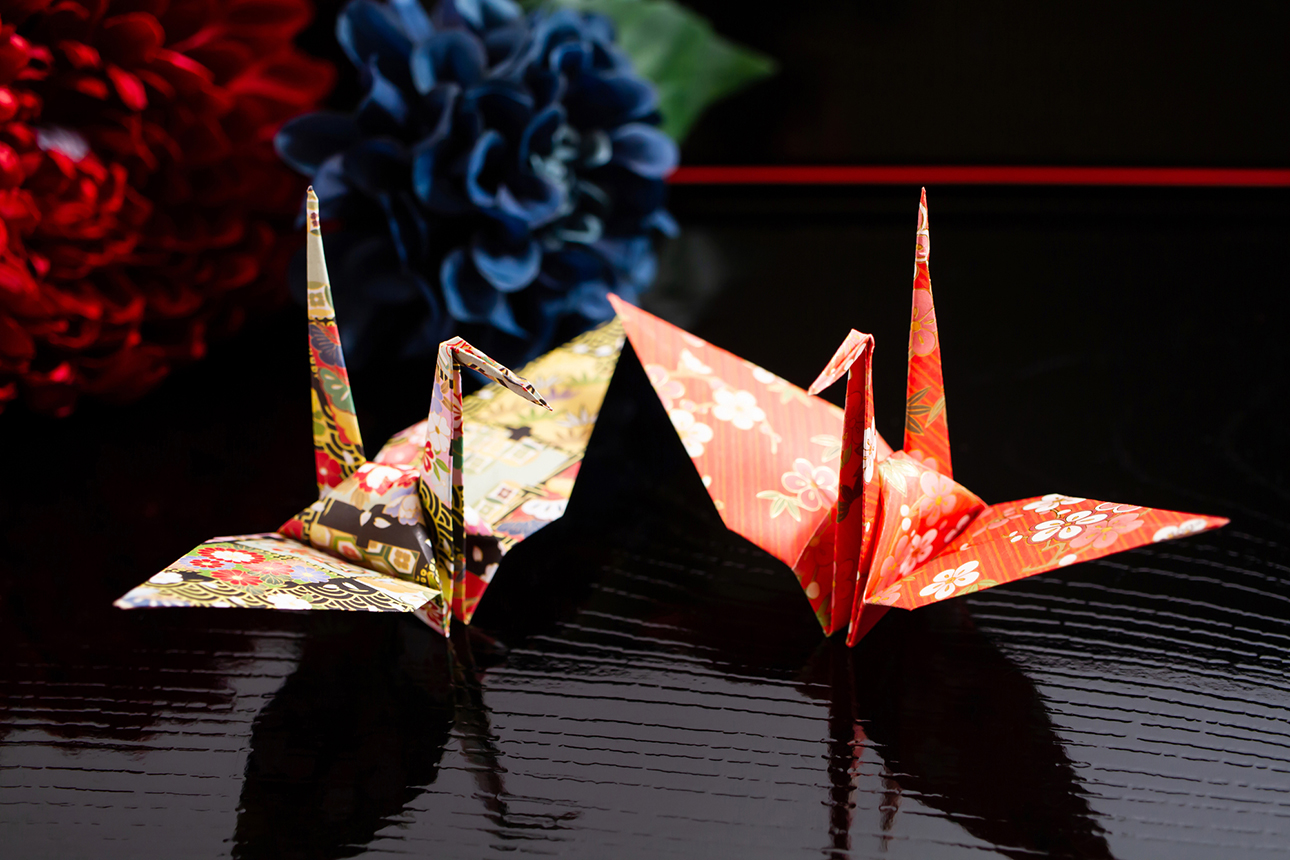
Driving through the outskirts of the city, you might spot pairs of cranes flying together. Red-crowned cranes are said to mate for life once they form a pair, making them a symbol of a happy marriage. A Japanese proverb goes, “Cranes live ten thousand years, turtles live a thousand”, so they are also a symbol of longevity and are considered auspicious birds. While the actual lifespan of a crane is about 40 years, this is considered long for a bird. The crane motif appears in various forms, such as family crests, celebratory envelopes, and kimono patterns for weddings. In origami, Japan’s traditional art of paper folding, the crane is one of the most commonly folded designs.
Birdwatching
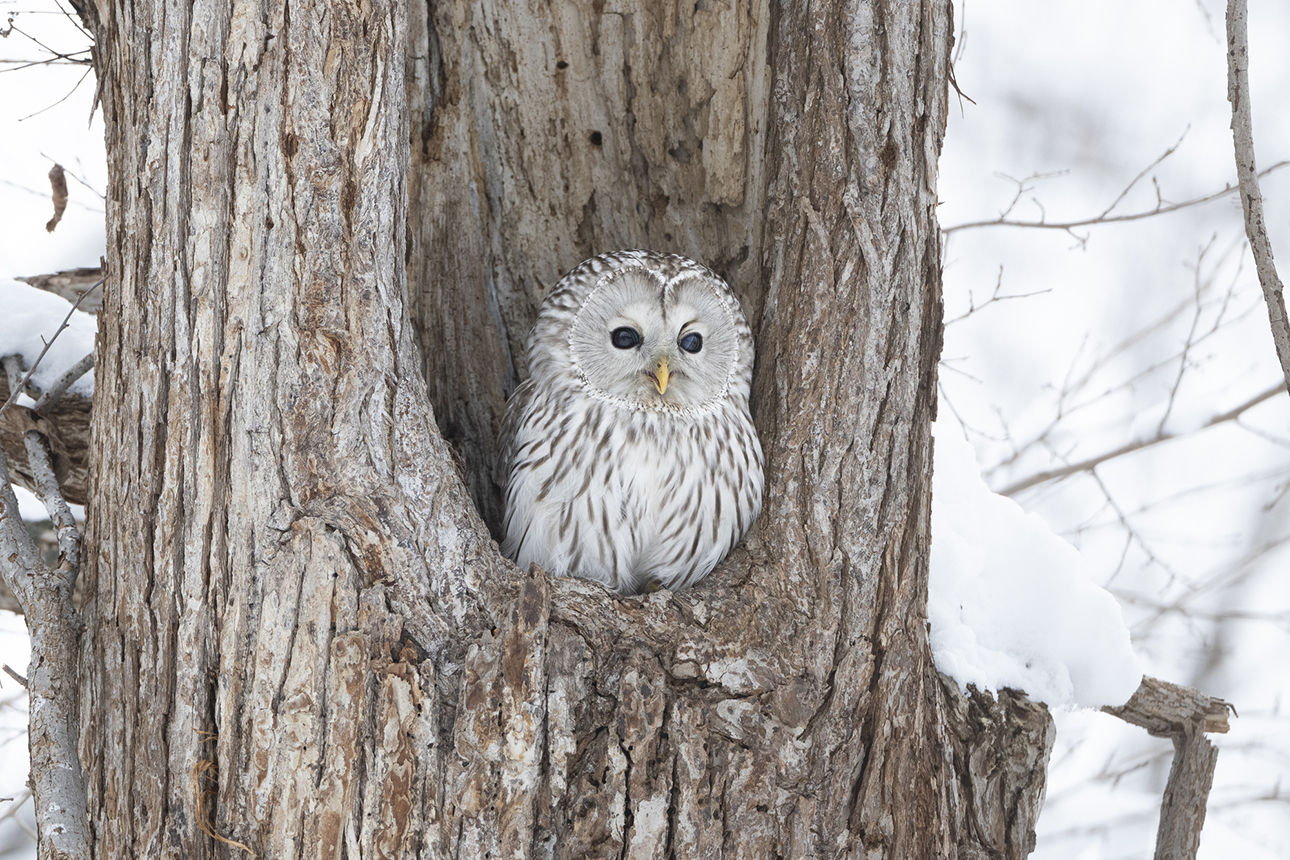
Eastern Hokkaido is a treasure trove of wild birds. In winter, the bare trees make it easier to see deep into the forest, making bird observation simpler. Here you can spot birds unique to this region, including endangered species like the Steller’s sea eagle, white-tailed eagle, and Blakiston’s fish owl.

You might even spot the popular Hokkaido long-tailed tit. A subspecies of the long-tailed tit found on Honshu, the Hokkaido long-tailed tit has a distinctive white head and is unique to Hokkaido. While plush toys and goods featuring this popular bird sell well in souvenir shops, the actual bird is hard to find in the woods because they are so small and quick to move, and only a few people have seen the real birds. Recently, birdwatching tours to find these birds have become popular.

Lake Akan
A beautiful lake surrounded by forests and volcanoes, located about an hour’s drive north of Kushiro City. It freezes completely in winter, allowing activities such as smelt fishing on the lake.
● Frost Flowers
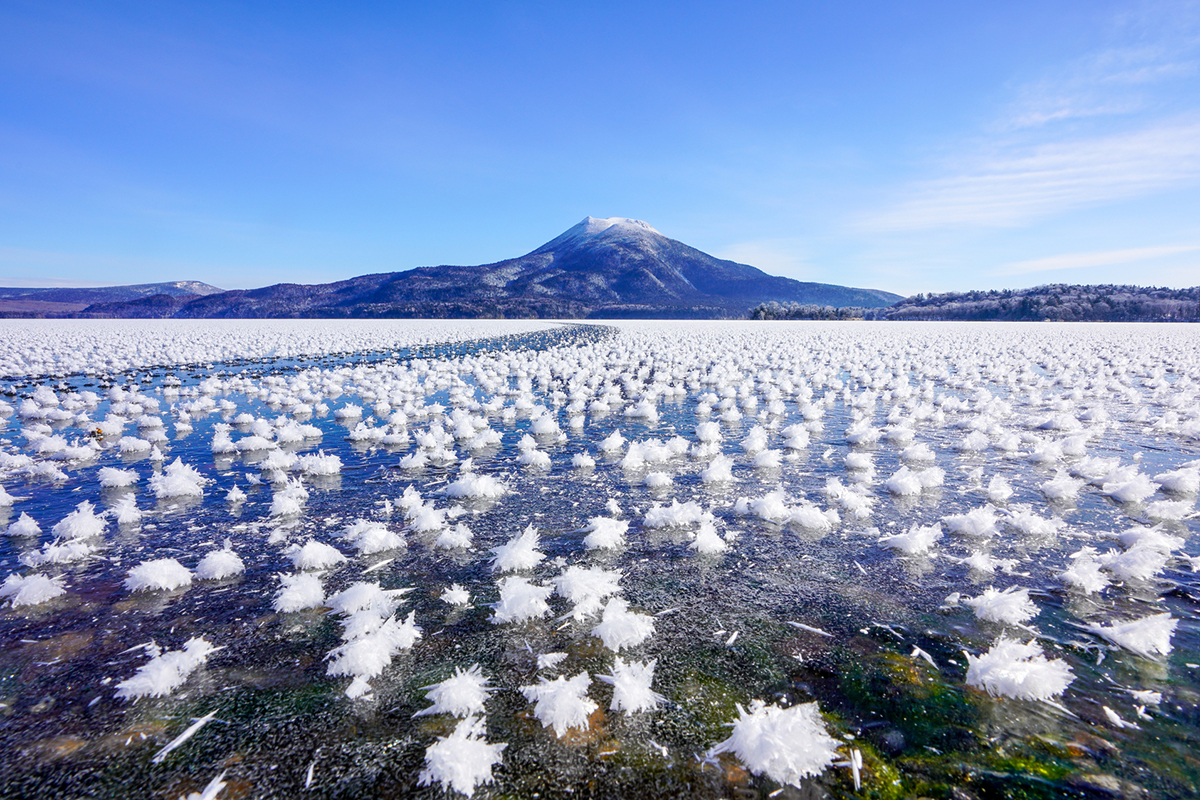
On cold mornings, the phenomenon known as “frost flowers” can be observed, where white ice crystals spread across the lake like a white flower garden.
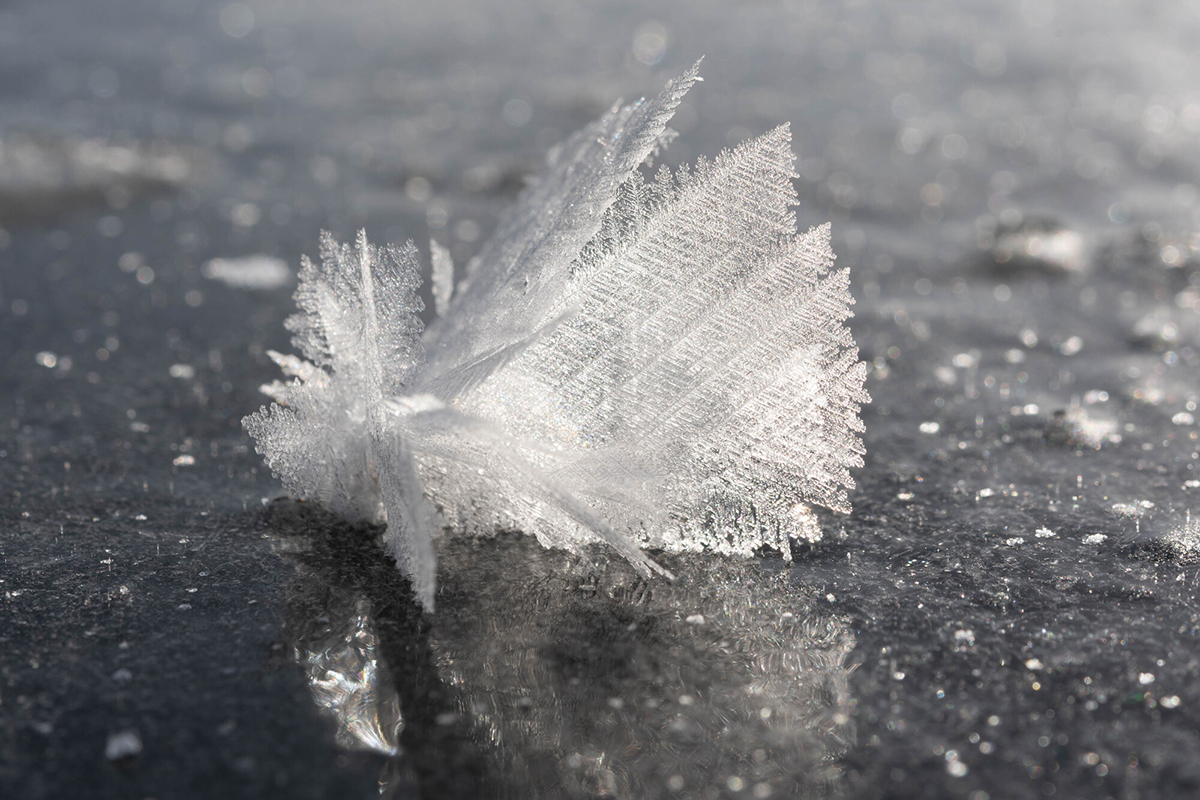
Feather-like ice crystals form in layers, resembling roses, and the sight of them covering the entire lake surface is breathtaking. Sometimes, a single crystal forms, called a “frost wing” or “angel feather.” They are so fragile they melt with just a breath, and are truly art created by nature.
This phenomenon only appears under specific conditions: temperatures below -15°C (5 °F), no wind, and a clear, early morning with no snow cover. It can only be seen in limited areas. Lake Akan, at an elevation of 420 meters and surrounded by mountains, is considered an ideal location where these conditions are easily met.
● Wakasagi (Smelt) Fishing
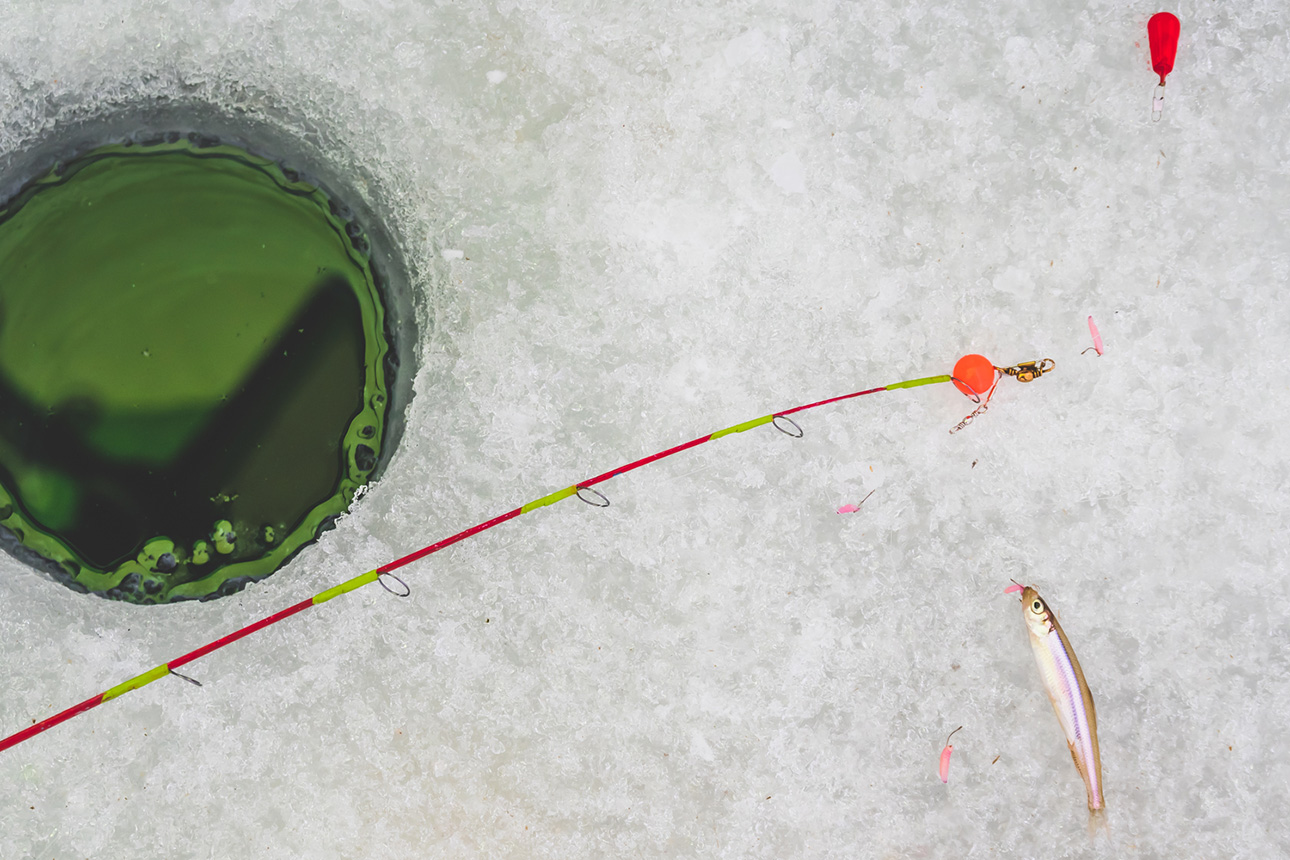
A winter tradition at Lake Akan is smelt fishing. On the lake, completely frozen and covered in thick ice, you drill a small hole in the ice, lower your fishing line, and wait patiently for the wakasagi, small fish about 10-20 cm long. While it’s quite cold outdoors in winter, colourful tents are set up on the ice, and small heaters are provided, making for a comfortable experience.
Freshly caught wakasagi are coated in batter and cooked as tempura for you. The freshly fried tempura is absolutely delicious.
● Lake Akan Ice Festival
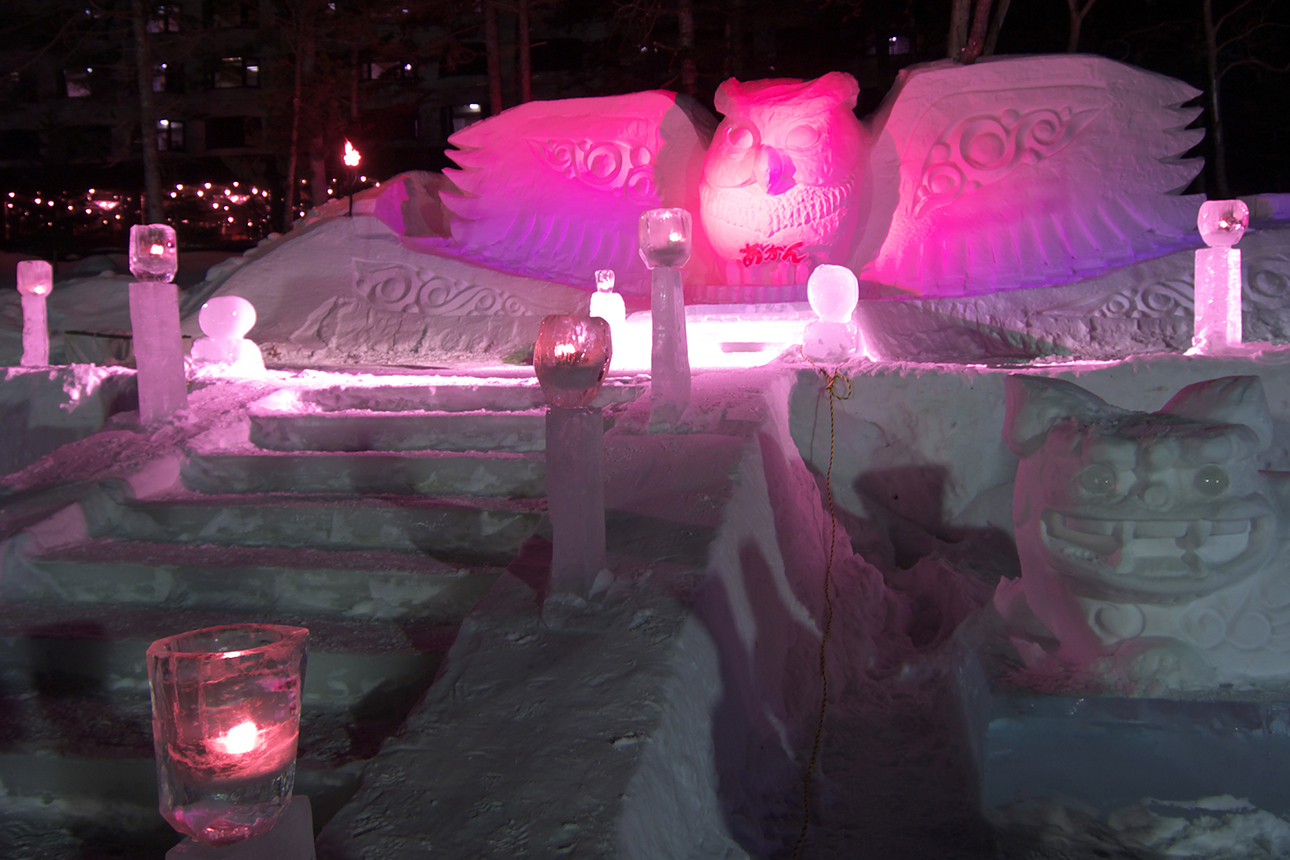
The Lake Akan Ice Festival is held from February to early March. You can experience snowmobiling and banana boat rides, and enjoy ceremonies by the indigenous Ainu people of Hokkaido and fireworks at night.
Hot Springs
This region boasts numerous charming hot springs. Around the lake, clusters of hotels offer various types of hot springs, and many tourists stay at these hotels to enjoy Akan.
Many hotels also offer day-trip bathing, allowing visitors to experience different kinds of hot springs without staying at those hotels. Some hot springs also feature open-air baths on the rooftops of buildings. Bathing in hot springs while taking in the magnificent views of snow-covered Lake Akan and the surrounding mountains promises to be a wonderful experience.
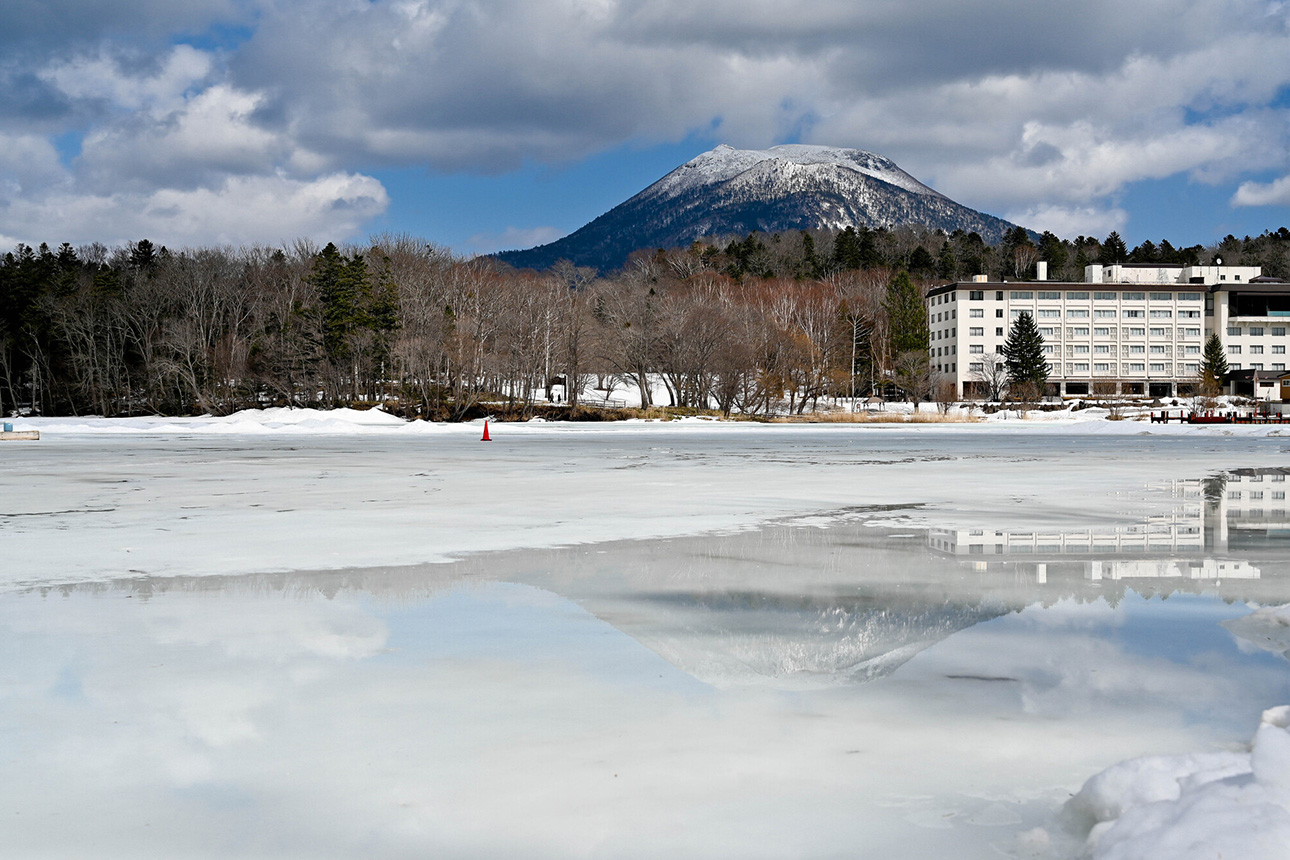
3. The Green Season (Spring to Autumn)
During the green season, you can fully enjoy the Kushiro Marshlands, three lakes and volcanos with various levels of activity. Let’s introduce them one by one.
Kushiro Marshlands
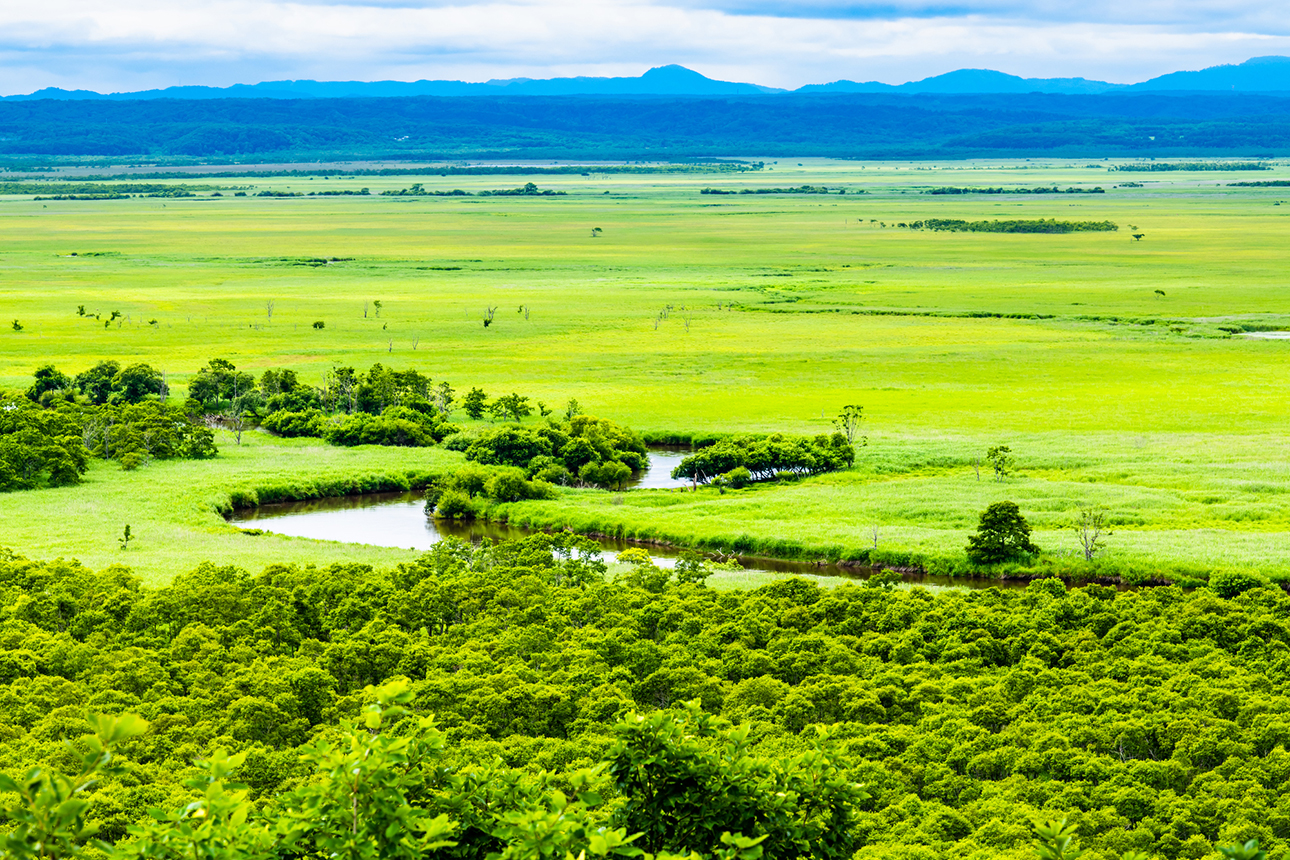
The Kushiro Marshlands consist of gentle hills surrounding Japan’s largest marshland, which is embraced by the Kushiro River and its tributaries flowing through eastern Hokkaido. The vast, untouched horizontal landscape is the area’s greatest attraction. It is also a treasure trove of diverse flora and fauna, including the red-crowned crane, a National Special Natural Monument. There are some observation decks and barrier-free boardwalks to enjoy the marsh landscape. There are also trails for longer walks.
● Canoeing
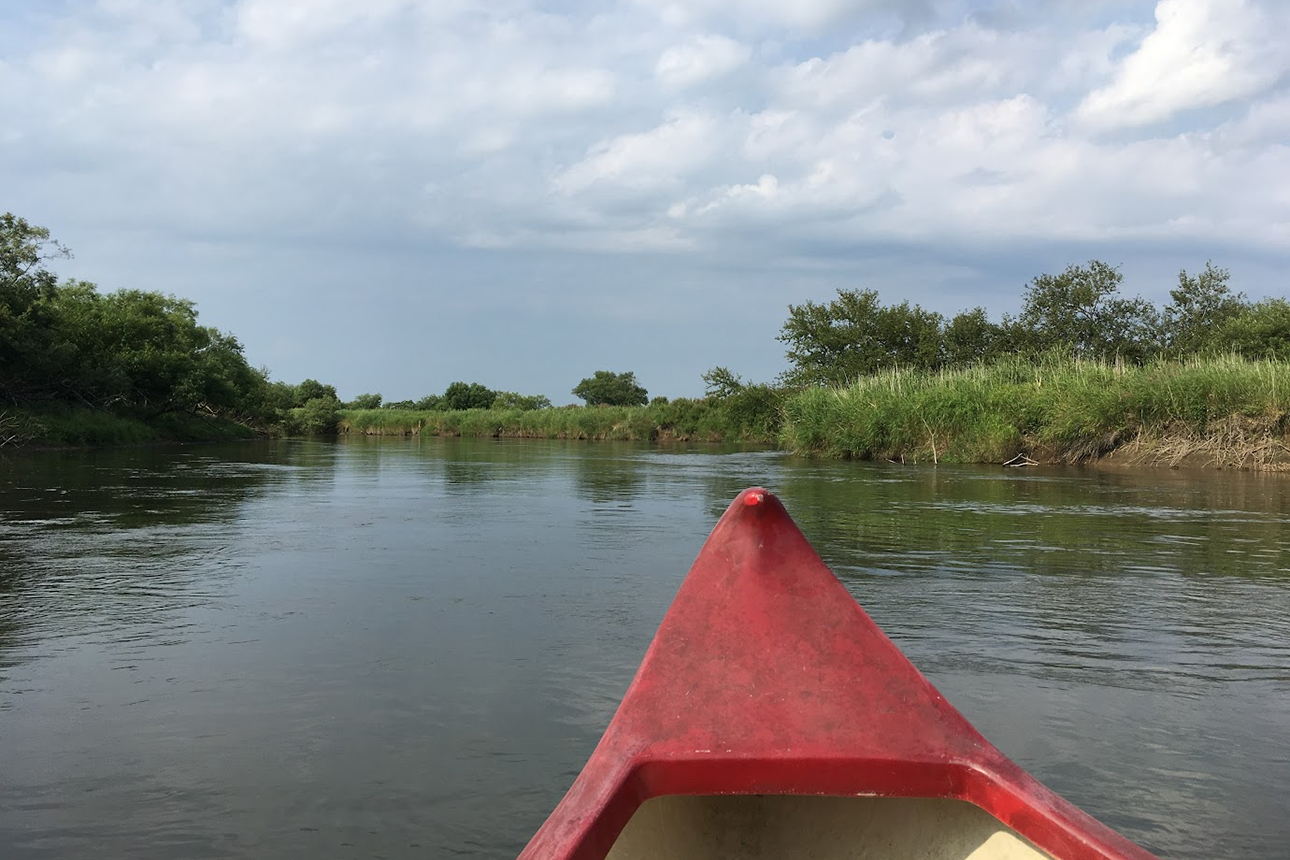
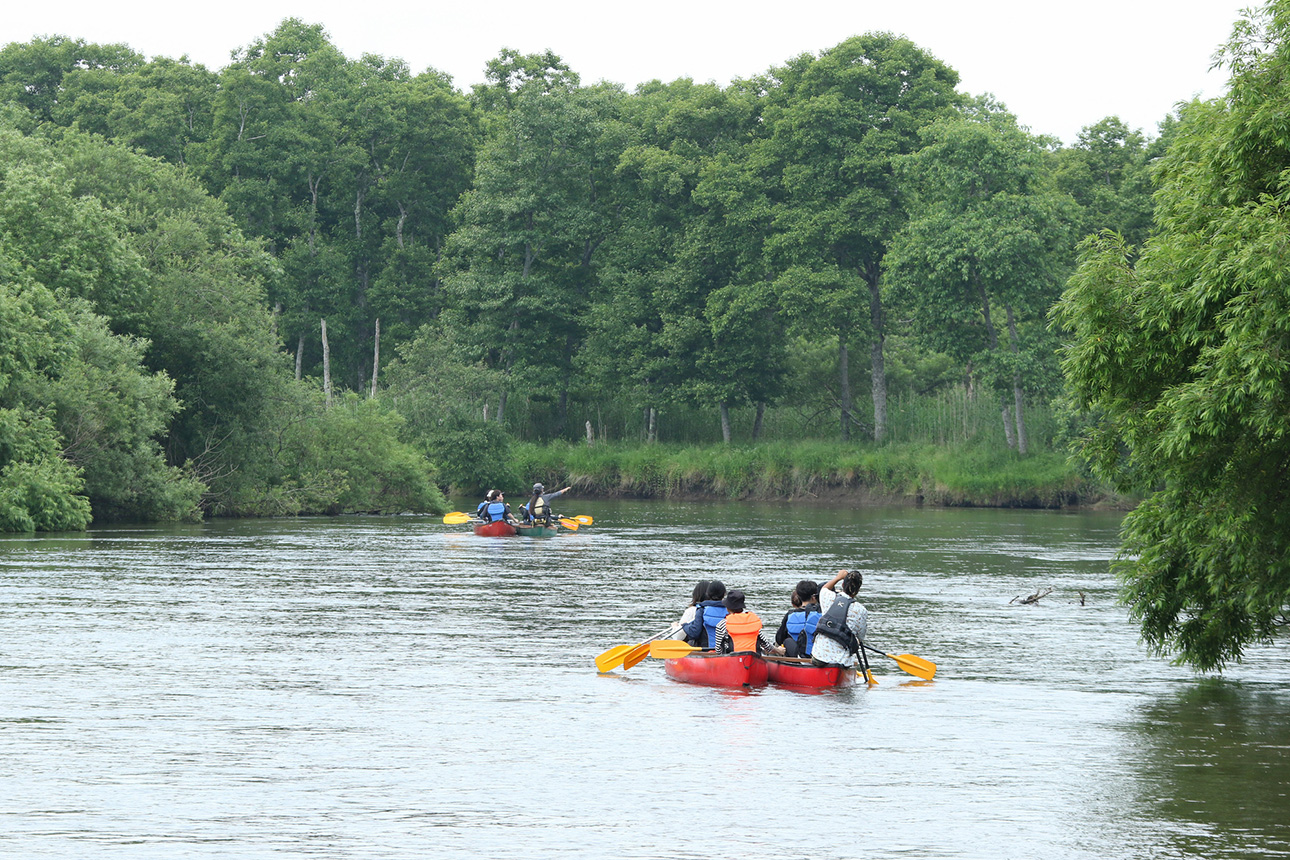
A particularly recommended activity is canoeing down the Kushiro River, which flows through the marsh. In the marsh, where there are no artificial sounds but only an expanse of silence, you can hear only the voices of birds and the sound of the wind. Paddling quietly down the river in a motorless boat, you may see wildlife such as Ezo deer, red-crowned cranes, and various birds on nearby bushes or tree branches. These encounters will surely become cherished memories of your journey.
● Norokko (Slow) Train
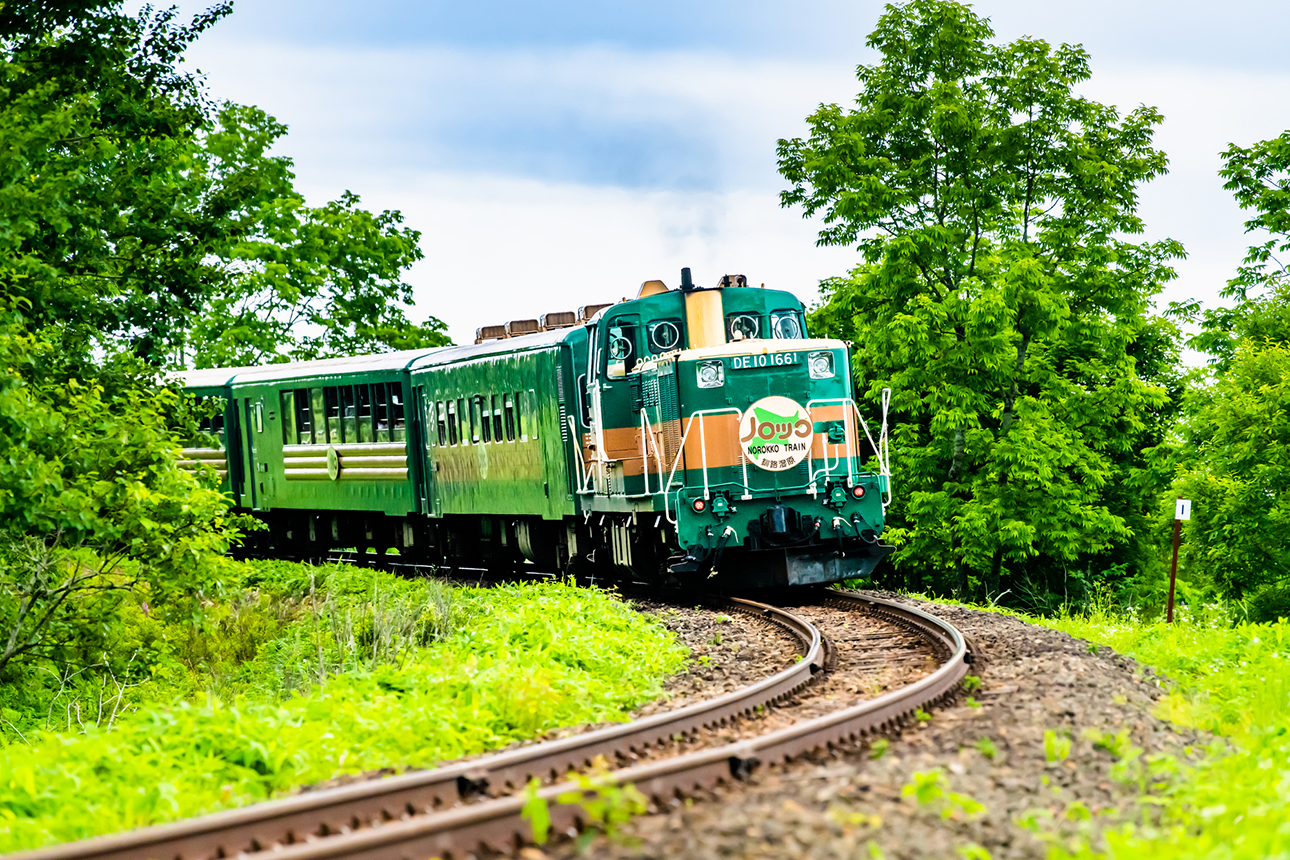
The Norokko Train, a sightseeing train that slowly traverses the wetlands, travels from Kushiro Station to Tōro Station in about 40 to 50 minutes. Through the train windows, you can enjoy the majestic scenery of the wetlands, the meandering Kushiro River, canoeing people and the Iwahoki Water Gate. You might even spot wildlife. The train runs slowly at scenic spots, allowing you to fully savour the charms of the wetlands.
Three Lakes in Akan Mashu National Park: Akan, Mashū, and Kussharo
This national park features three lakes and a group of active volcanoes in the inland region north of the Kushiro Marsh. Each lake has a different beauty.
● Lake Akan
It has already been introduced in the section on the white season, but it has other charms in the green season. Surrounded by forests, green Lake Akan is encircled by mountains such as Mt. Meakan and Mt. Oakan. Four islands lie in the centre of the lake, where visitors can enjoy sightseeing cruises. The lake totally freezes in winter, so sightseeing boats only operate during the green season.
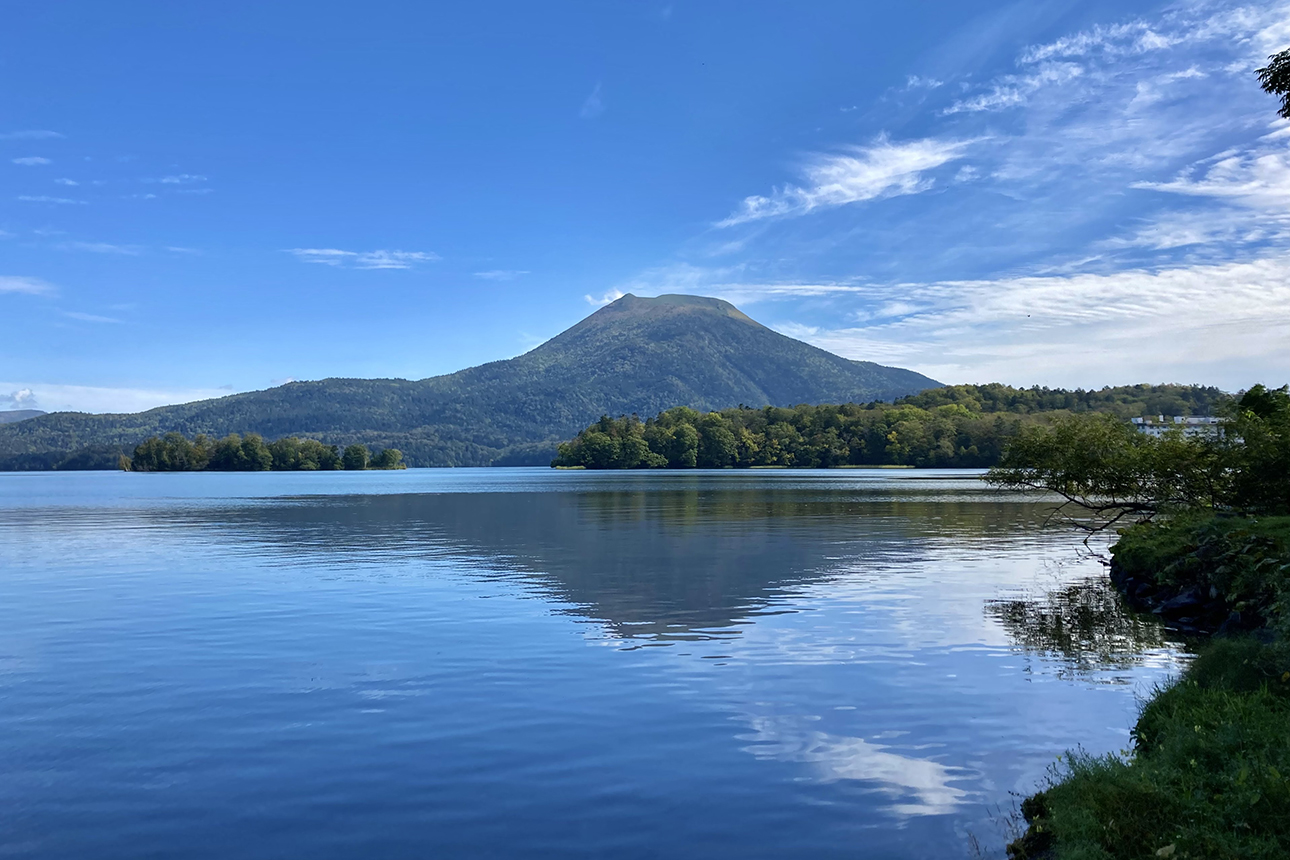
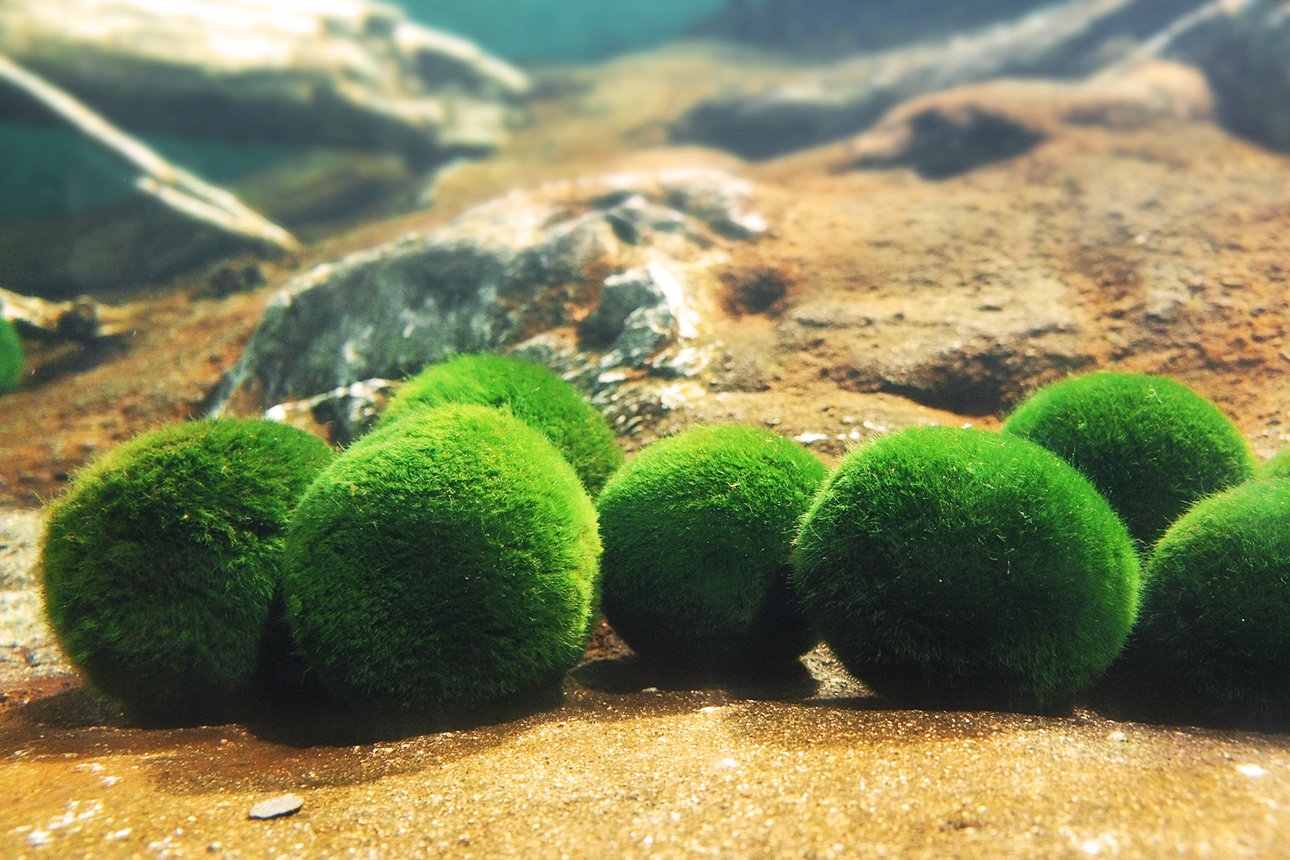
<Marimo>
Lake Akan is famous for its green, round algae balls called marimo, a National Natural Monument that can only be found here. You can see them by taking a sightseeing boat to the Marimo Exhibition and Observation Center on Churui Island. You can learn about the ecology of marimo and see the largest marimo in the lake.
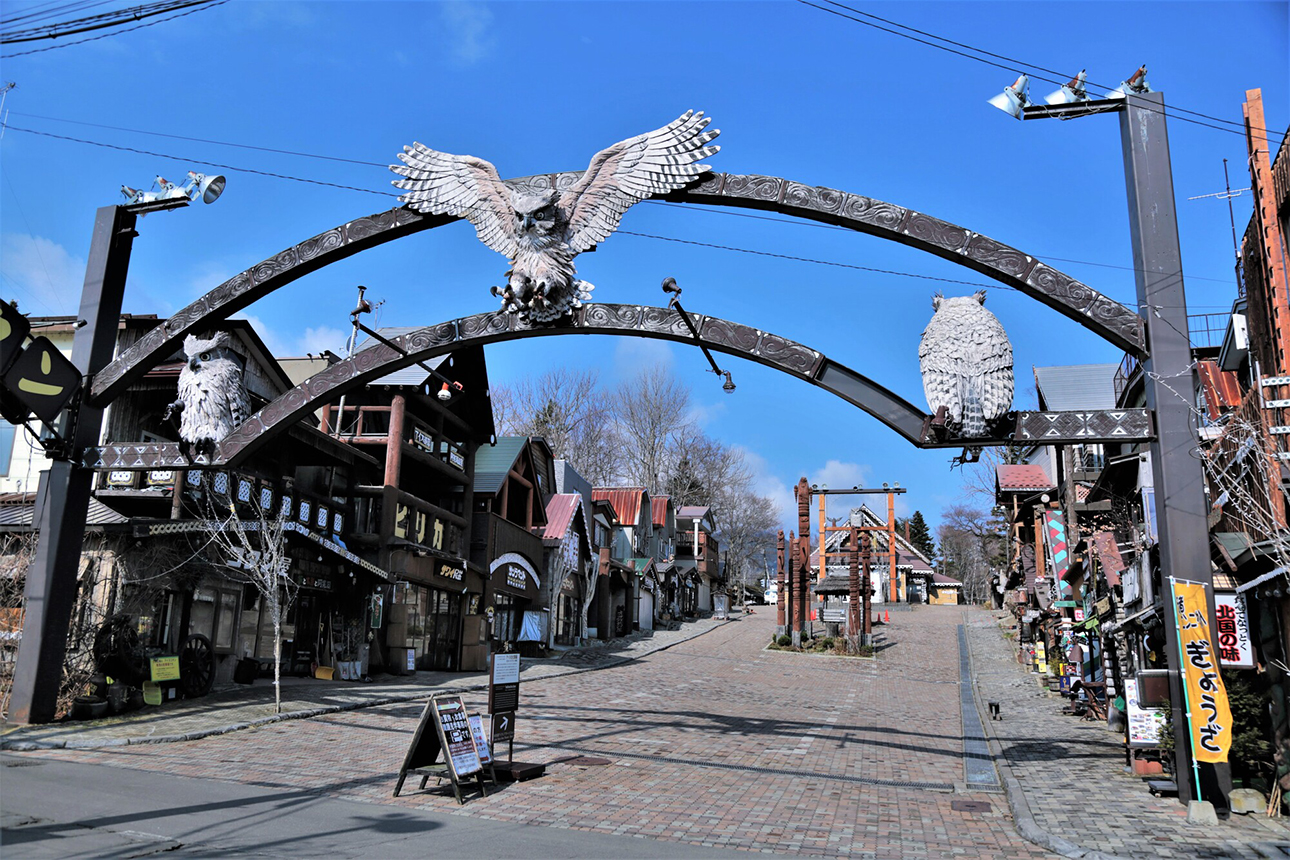
<Akan Ainu Kotan>
Located in Lake Akan Hot Springs resort, Ainu Kotan is one of Hokkaido’s largest Ainu settlements. Approximately 120 Ainu people live here, preserving their traditional culture and way of life. “Kotan” means “village” in the Ainu language. The place features folk craft shops, restaurants, and cafes. You can watch Ainu traditional dance and performances almost every day at Ikor, the Ainu theatre in the kotan. Ainu traditional dance has been designated a UNESCO Intangible Cultural Heritage.
<About the Ainu People>
The Ainu are Japan’s Indigenous people, primarily living in Hokkaido. Like Australia’s Aboriginal and Torres Strait Islander peoples, New Zealand’s Maori, and America’s Native Americans, they have lived in harmony with nature. They endured long-term discrimination and cultural suppression by other ethnic groups who later settled in the region. Today, Indigenous people’s rights are being reevaluated, and attention is being focused on their cultures.
The Ainu people believed that all things in this world have a spirit. The Ainu called spirits that are beyond human power, provide blessings, and are essential to their life “kamuy”, which means deity, and revered them. These include the mountain kamuy, the fire kamuy, the water kamuy, and so on. Brown bears and Blakiston’s fish owls were considered to be revered deities by the Ainu. Owls were treated as guardian spirits of the village. A wooden carved owl is placed at the entrance to Ainu Kotan.
<The Marimo Festival>
Held in early October, the Marimo Festival incorporates traditional Ainu culture and has been held since 1950 to preserve the endangered marimo, green ball algae, a Special Natural Monument.
Ceremonies to welcome the marimo and then to send them off are conducted in ancient, solemn rituals in the Ainu manner. Marimo are brought in by Ainu curving canoe and returned to the lake waters by the Ainu chief after the ritual. A torchlight procession and Ainu traditional dance performance is one of the highlights. Many tourists visit Akan to see this festival.
● Lake Mashū
Lake Mashū, called Kamuy-to (Lake of the Gods) in the Ainu language, is a caldera lake boasting world-class transparency with a maximum depth of 212 metres. Perched atop mountains, its clear surface reflects the sky’s colour, creating a deep blue hue known as “Mashū Blue,” which appears even more vivid on windless days.
While you cannot approach the lake surface because it is surrounded by cliffs, three observation decks—Mashū First Observation Deck, Mashū Third Observation Deck, and Ura-Mashū Observation Deck—offer views of the lake, the floating Kamuy-shu Island, and the towering Mount Mashū (Kamui-nupuri) rising beside it.

● Lake Kussharo
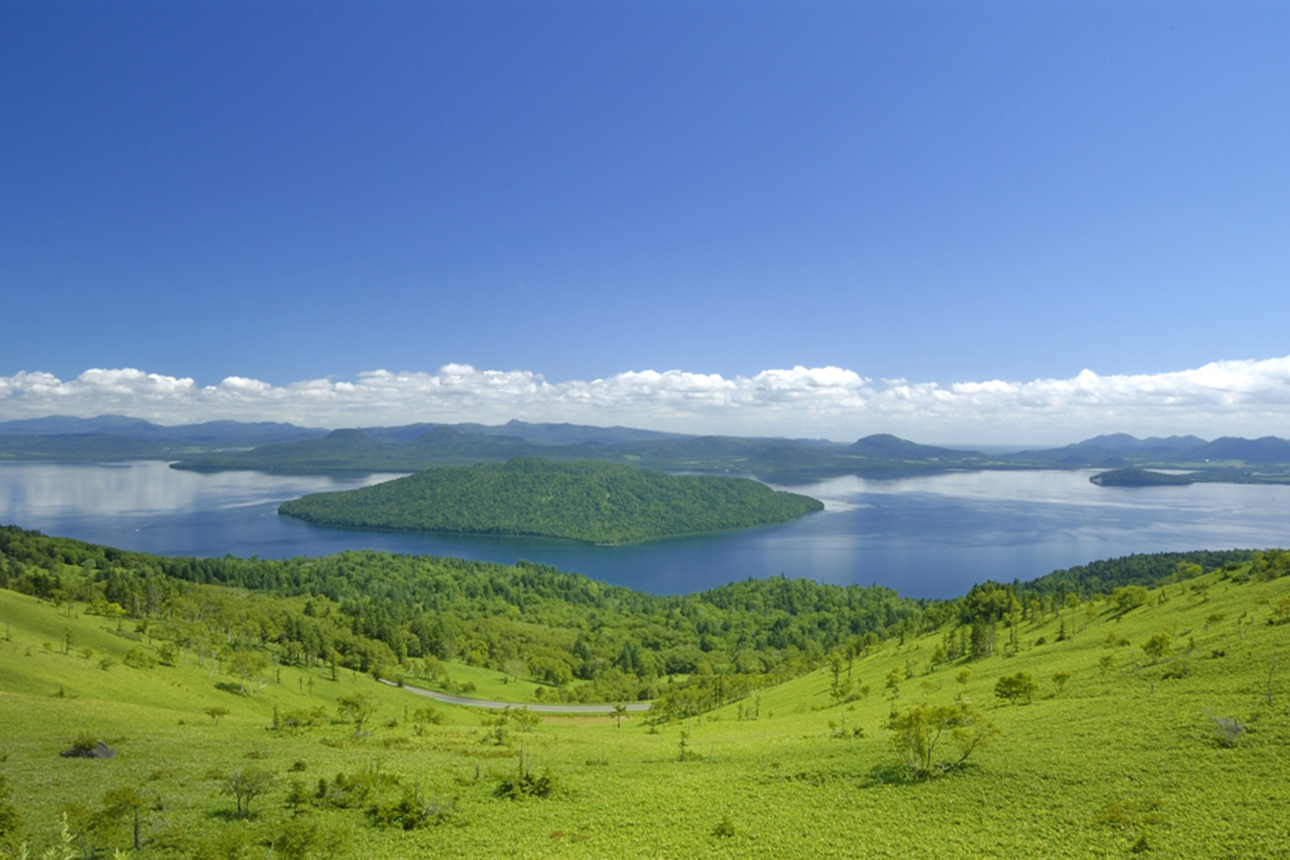
Japan’s largest caldera lake, with a circumference of 57 km, its name originates from the Ainu word “kucharo,” meaning the outlet of a lake or marsh. Numerous hot springs bubble up along the shores of this lake formed by volcanic activity. Digging into the lakeside sand reveals hot water, allowing visitors to create their own sand baths. Rustic open-air baths also dot the area.
The only river flowing out of Lake Kussharo is the Kushiro River, which connects to the Kushiro Marsh and flows into the Pacific Ocean.
Mt. Io(Sulphur Mountain)
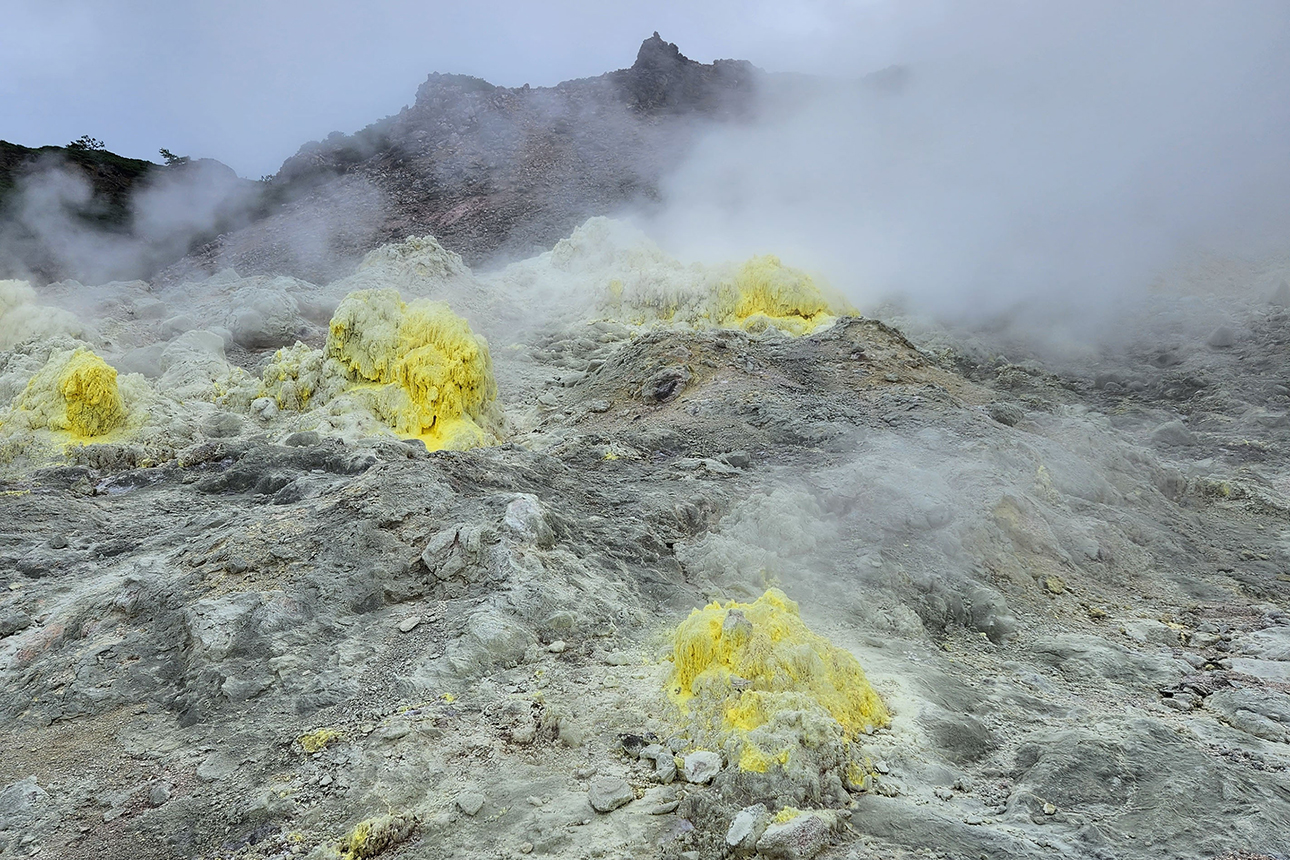
This name indicates, there are no trees or plants in the area surrounding this mountain. Steam blows up from various spots with a roaring sound, and the distinctive smell of sulphur permeates the air.
Once prosperous from sulphur mining, this mountain also laid the foundations for the development of the town of Teshikaga via the railway constructed to transport the mined sulphur. Just a few minutes’ walk from the car park brings you right up close to the fumaroles. Experience the dynamic pulse of the Earth firsthand. Nearby are Kawayu Hot Springs, where you can easily enjoy a foot bath.
4. Food
The Kushiro area has plenty of delicious food. Seafood, robata-yaki (Japanese-style barbecue) and ramen. Find your favourite food.
Katte-don
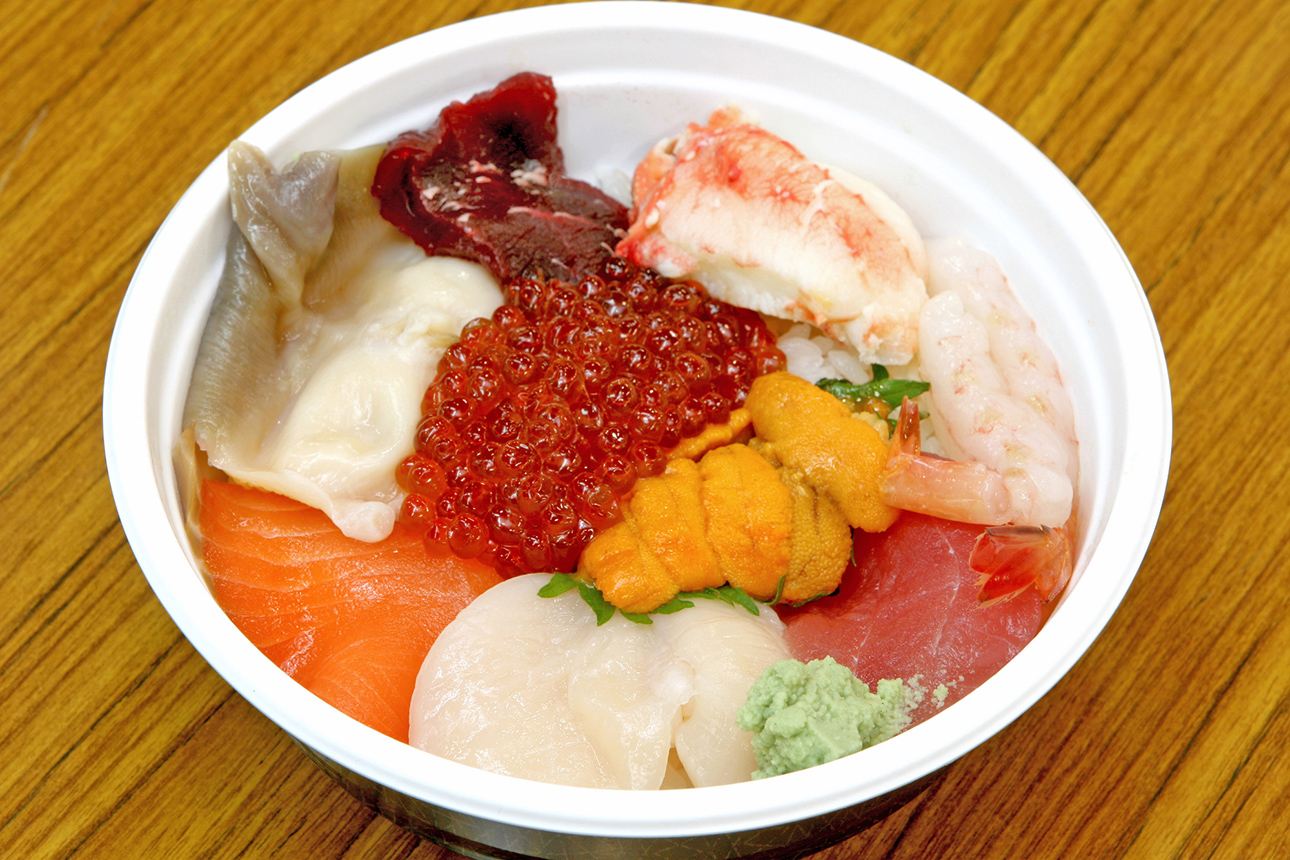
At Kushiro’s Washo Market, the specialty is the Katte-don—a bowl where you choose as much seafood as you like, pile it on rice, and eat it. You can also choose the amount of rice, allowing you to fully enjoy Kushiro’s delicious seafood.
Robata-yaki
Along the Kushiro Port waterfront there are rows of stalls serving Kushiro’s famous robata-yaki. You can enjoy hot, freshly grilled seafood like scallops, Atka mackerel and Pacific saury cooked right in front of you over charcoal grills.

Ramen
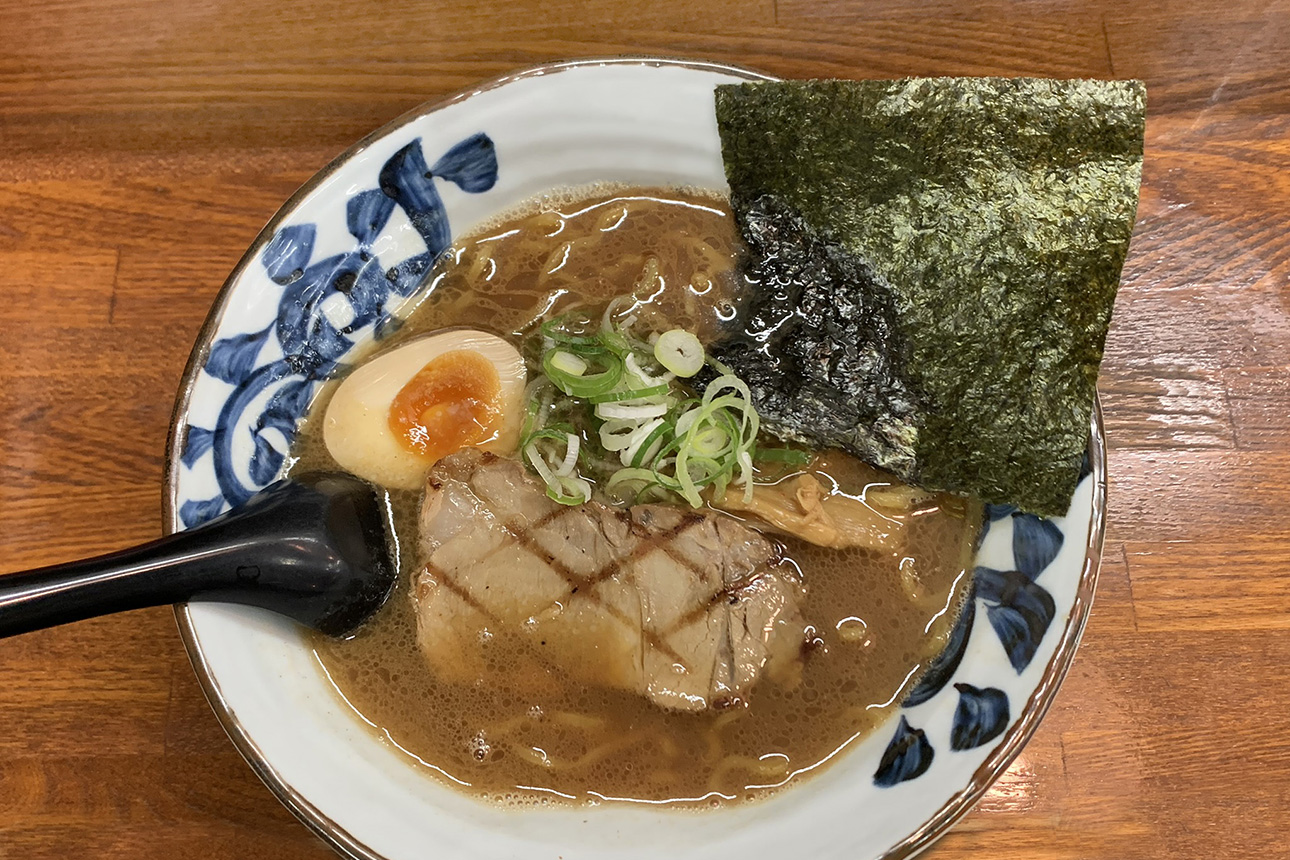
Teshikaga Ramen is a popular ramen shop in Teshikaga. It’s known for the distinctive taste of its ramen that highlights local ingredients. Using underground water from Lake Mashū, along with seafood from the Sea of Okhotsk and Hokkaido-grown wheat, it serves bowls packed with the bounty of Hokkaido. Many people wait in front of the restaurant at lunchtime. Gyokai-shibori-shoyu-ramen, (ramen with a rich seafood and soy sauce broth) is the most popular ramen in this shop.
Did you enjoy the charms of the Kushiro region in Hokkaido? This area offers completely different scenery in winter and summer. Both seasons are wonderful, and worth visiting. We encourage you to visit during both seasons and fully enjoy the Kushiro region.
For a comfortable trip, please entrust your travel arrangements to Hokkaido Takarajima Travel Agency.